How to Choose the Right Universal Robot Arm for Your Automation Needs?
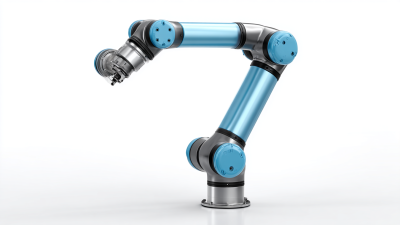
Selecting the right universal robot arm is crucial for successful automation. These robotic arms can enhance efficiency in various industries. However, with many options available, it can feel overwhelming.
When choosing a universal robot arm, consider your specific needs. Different models offer varying payload capacities, reach, and precision. Think about your application. Are you handling small components or larger items? What's the precision level required?
It's easy to overlook system integration. A universal robot arm must work seamlessly with your existing setup. Compatibility issues could lead to delays and extra costs. Take time to assess your workflow. Investing in the right technology ensures reliability and longevity.

When choosing a universal robot arm, it's essential to understand your automation requirements. Consider your operational needs first. Are you focusing on precision, speed, or a mix of both? Determine the tasks the robot will perform. Will it handle delicate parts or heavy components? These questions shape your decision-making process.
Tips: Identify the payload capacity needed for your applications. An arm with insufficient load capacity can lead to frequent breakdowns. Also, consider the workspace size. A compact design may suit small environments better, contributing to efficiency.
Evaluating the complexity of tasks is equally important. Some applications require advanced programming skills. Ensure your team is prepared for this. If programming is a challenge, you might face operational delays. Sometimes, a simpler solution can deliver better results.
Tips: Look for user-friendly interfaces to ease learning curves. It's worth balancing complexity with usability. Keep maintenance in mind, too. A reliable robot arm should have accessible support to ensure long-term use.
Evaluating Payload and Reach Specifications
Choosing the right universal robot arm involves understanding key specifications like payload and reach. Payload capacity is crucial. According to the International Federation of Robotics (IFR), industrial robots often need to handle weights ranging from 2 kg to over 100 kg. Choosing an arm that supports your heaviest components ensures efficiency.
Reach is equally important. The arm's reach determines its workspace and versatility. A study from RoboGlobal shows that robots with shorter reach may limit applications like assembly. A robot with a reach of 1 meter can access 60% more points than one with 0.5 meters of reach. For operations in confined spaces, a compact arm might be better suited.
It's imperative to balance these specifications with your unique automation needs. Evaluating potential configurations may reveal shortcomings. Analyzing real-world applications can refine choice. Consider production changes over time, as a robot that meets current needs might not suffice in the future. Always reassess how your automation can evolve.
Assessing Compatibility with Existing Equipment
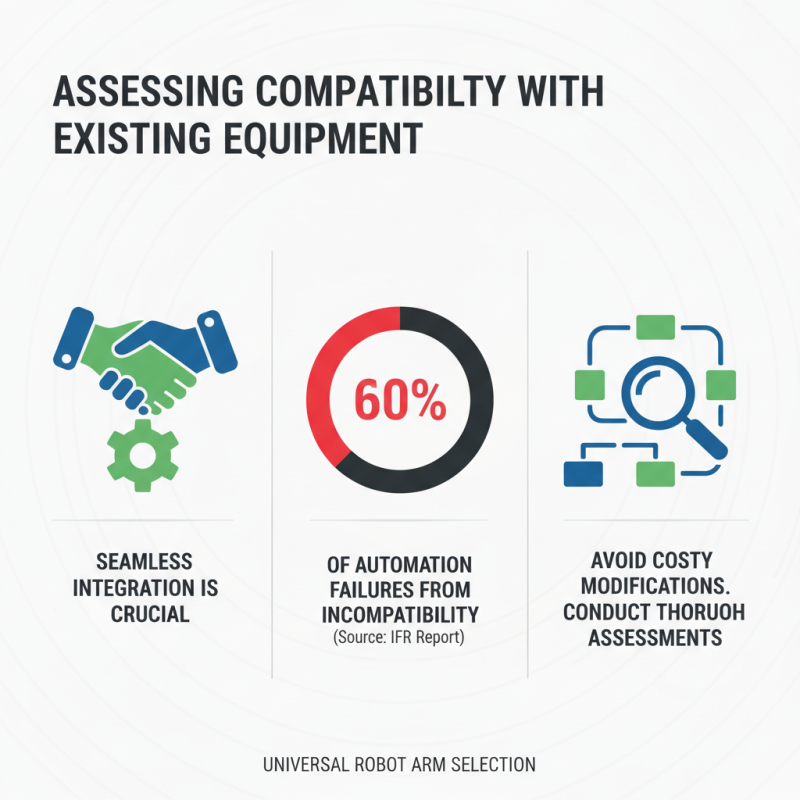
When selecting a universal robot arm, compatibility with existing equipment is crucial. A robotic arm must effectively integrate into your current workflow without significant modifications. According to a recent report by the International Federation of Robotics, nearly 60% of automation failures stem from incompatibility issues. This underlines the importance of thorough compatibility assessments.
Detailed analysis of your existing machinery is essential. Evaluate connector types, communication protocols, and physical dimensions. Many businesses overlook the nuances of integration, leading to costly downtimes. A survey by Automation World indicates that improper compatibility can delay production by up to 30%. If your robot arm does not align with your systems, it hampers efficiency and productivity.
Consider the future scope as well. Industries are evolving rapidly, and staying adaptable is vital. Your choice should not only meet current needs but also align with upcoming technologies. The right robot arm should enhance your operations and facilitate seamless upgrades. Sometimes, this requires tough decisions and reevaluations of older systems, which can be daunting but necessary for growth and innovation.
Exploring Software and Programming Flexibility
When selecting a universal robot arm, software flexibility is crucial. The ability to use various programming languages can enhance efficiency. Some arms support both graphical interfaces and coding, providing options for all skill levels. This adaptability can lead to quicker setup times and more customized automation solutions.
Tips: Assess your team's skill level. A team comfortable with coding might require different software than one that prefers graphical tools. Consider future growth; software that adapts to your evolving needs is invaluable.
Another point to consider is integration capabilities. A robot arm needs to connect with existing systems. Ensure the software supports common industry standards. This will ease data transfer and enhance collaboration across departments. It can also save time on troubleshooting and setup.
Tips: Test the software before finalizing your decision. A hands-on trial reveals its practicality. Seek feedback from operators who will use the system daily. Their insights are often overlooked but essential for effective implementation.
Determining Budget Considerations and Total Cost of Ownership
When considering a universal robot arm for automation, understanding the total cost of ownership (TCO) is crucial. The initial purchase price is just one component. According to a 2022 report by a leading industrial automation agency, TCO can be affected by factors such as operational efficiency, maintenance costs, and training needs. Basic calculations suggest that labor cost savings can offset equipment expenses within three to five years.
Operational costs depend heavily on how frequently the robot operates. Continuous use can lead to wear and tear, increasing maintenance expenses. Data from an industry survey shows that businesses can save up to 30% on labor by automating repetitive tasks. However, if a robot is underutilized, costs can escalate without corresponding benefits. This adds complexity to financial planning when ensuring the right fit for your operations.
Training is another often-overlooked aspect of TCO. Employees need adequate skills to operate and maintain robotic systems. Some reports indicate that companies have faced up to a 15% reduction in productivity due to insufficient training. Investing in employee education can mitigate this risk. Hence, it’s vital to look beyond just the acquisition cost. Balancing immediate financial outlay with long-term operational efficiency is key to making an informed decision.
Budget Considerations for Universal Robot Arms
This bar chart illustrates the estimated total cost of ownership for different categories of universal robot arms. The costs consider initial purchase, maintenance, and operational expenses. Choosing the right robot arm requires understanding these budget implications to align with your automation needs.