o p t i m a r o b o t i c s

Blogs

Best Cobot Solutions for Enhanced Efficiency in Manufacturing Processes

In the rapidly evolving landscape of manufacturing, companies are constantly seeking innovative solutions to enhance efficiency and productivity. One of the most promising advancements in this field is the integration of collaborative robots, or cobots, into manufacturing processes. These advanced cobot solutions are designed to work alongside human operators, augmenting their capabilities and streamlining workflows. This synergy not only maximizes output but also promotes a safer and more flexible working environment.

As manufacturers face the challenges of increasing demand and the need for cost-effective operations, cobot solutions are emerging as a vital component in modern production lines. These intelligent machines are capable of performing repetitive tasks, handling materials, and even conducting quality control checks—allowing human workers to focus on more complex and value-added activities. The implementation of cobots can thus lead to significant improvements in efficiency, reduced production times, and enhanced overall productivity.

In this exploration of the best cobot solutions available today, we will examine various applications and case studies that illustrate how these technologies are transforming manufacturing processes. Whether it’s reducing the burden on human labor or increasing the speed and precision of production, the adoption of cobots is paving the way for a new era in manufacturing efficiency.
Best Cobot Solutions for Enhanced Efficiency in Manufacturing Processes

Overview of Collaborative Robots (Cobots) in Manufacturing

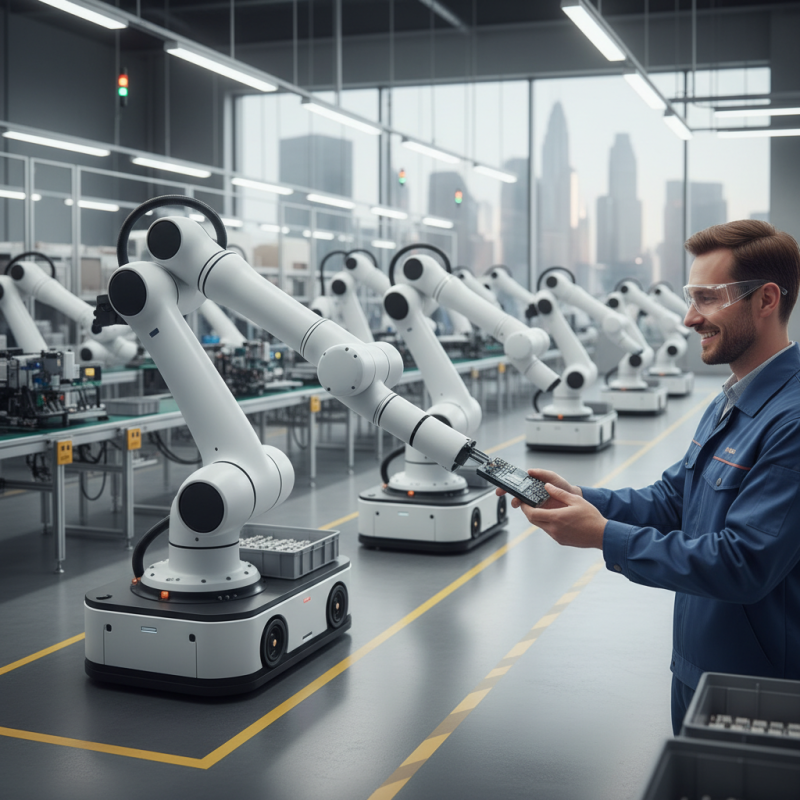
Collaborative robots, or cobots, are redefining manufacturing processes by seamlessly integrating with human workers to enhance efficiency and productivity. Unlike traditional industrial robots, cobots are designed to work alongside people without the need for extensive safety barriers, enabling a more flexible and adaptive work environment. This unique collaboration not only increases output but also improves worker safety and job satisfaction, making them an attractive option for various industries.

The rise of cobots in manufacturing is driven by their ability to handle repetitive tasks, allowing human employees to focus on more complex and value-added activities. Companies are increasingly adopting these robots to address challenges such as labor shortages and the need for agile production systems. As the market for collaborative robots is projected to expand significantly, the potential for these technologies to reshape the landscape of industrial work continues to grow, promising a future where automation and human labor work hand in hand for optimal results.

Best Cobot Solutions for Enhanced Efficiency in Manufacturing Processes

Cobot Type Payload Capacity (kg) Reach (mm) Applications Key Features
Standard Cobot 5 1300 Assembly, Pick and Place Easy programming, Flexible deployment
Heavy-Duty Cobot 10 900 Welding, Material Handling Robust design, Enhanced safety
Precision Cobot 3 800 Quality Inspection, Painting High accuracy, Fine motion control
Flexible Cobot 8 1100 Packaging, Sorting Adaptable to various tasks, User-friendly interface

Key Advantages of Implementing Cobots for Efficiency Boost

Collaborative robots, or cobots, are rapidly transforming the manufacturing landscape by providing significant advantages that enhance operational efficiency. A recent industry report highlighted that implementing cobots can increase productivity by up to 30% in various manufacturing settings. These lightweight, easy-to-program machines work alongside human operators, performing tasks such as assembly, welding, and quality control, thereby augmenting the existing workforce rather than replacing it.

The integration of cobots with the Internet of Things (IoT) adds another layer of efficiency, facilitating real-time data analysis and process optimization. As per a survey conducted among manufacturing companies, over 70% reported a reduction in downtime after deploying IoT-enabled cobot solutions. By continuously monitoring performance and identifying bottlenecks, businesses can respond swiftly to issues, thus streamlining their workflows and reducing operational costs. This synergy between cobots and IoT technology not only boosts efficiency but also empowers manufacturers to adapt to market demands with heightened agility.

Impact of Cobot Implementation on Manufacturing Efficiency

Leading Cobot Technologies Transforming Manufacturing Processes

Collaborative robots, or cobots, are revolutionizing the manufacturing landscape by enabling human-robot collaboration that enhances efficiency and productivity. Leading cobot technologies are designed to work alongside human operators without safety cages, making them particularly effective in tasks that require precision and dexterity. These intelligent machines can take on repetitive and mundane tasks, freeing up skilled workers to focus on more complex operations that require critical thinking and creativity.

Tips: When integrating cobots into your manufacturing processes, ensure that they are programmed to work seamlessly with existing workflows. Regular training sessions for your staff can enhance collaboration and help them maximize the benefits of this technology.

Additionally, many modern cobots come equipped with advanced sensor technology that allows them to adapt to their environment in real time. This adaptability not only boosts efficiency but also minimizes the likelihood of errors. Manufacturers should prioritize the selection of cobots that offer user-friendly interfaces and easy programming capabilities, making it simpler for teams to implement and adjust them as production needs evolve.

Tips: Consider starting with pilot projects to evaluate the effectiveness of cobots in your specific production context. This approach allows you to measure performance and make data-driven decisions on full-scale implementation.

Case Studies: Successful Integration of Cobots in Industry

Best Cobot Solutions for Enhanced Efficiency in Manufacturing Processes

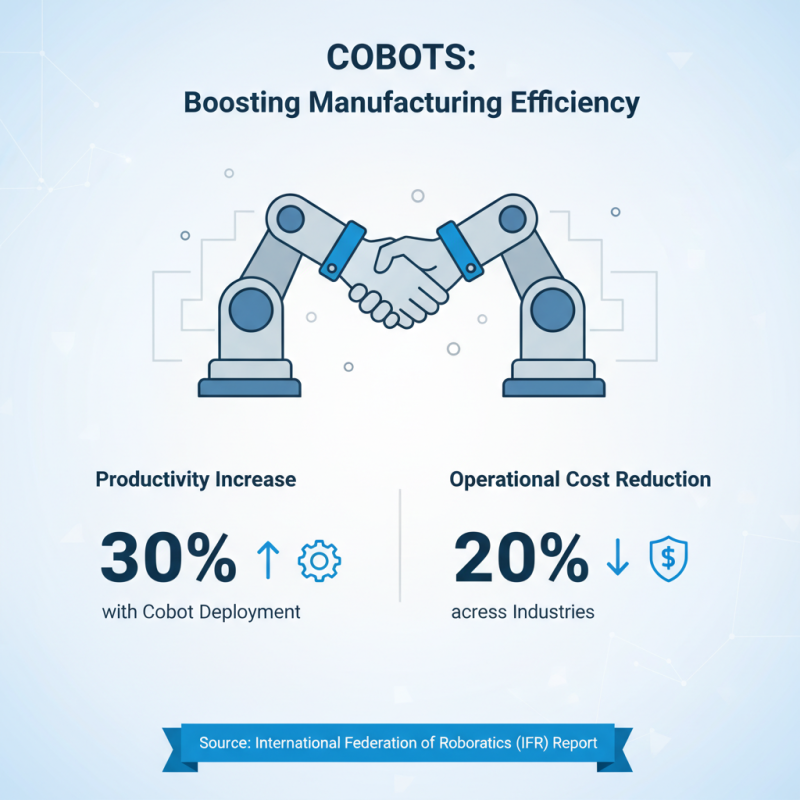
Collaborative robots, or cobots, have become essential in optimizing manufacturing efficiency across various industries. A report by the International Federation of Robotics (IFR) highlights that the deployment of cobots has contributed to a 30% increase in productivity levels while simultaneously reducing operational costs by about 20%. These numbers reflect a growing trend towards automation for higher efficiency and flexibility in production processes.

Several case studies illustrate the successful integration of cobots in manufacturing. For instance, a leading automotive manufacturer implemented cobots on its assembly line, where they were tasked with repetitive tasks such as screwing and part placement. This integration not only minimized human error but also allowed human workers to focus on more complex tasks, resulting in a 15% reduction in assembly time. Similarly, a food packaging company reported a 25% increase in output after introducing cobots to handle packaging and palletizing operations, demonstrating their ability to enhance speed without compromising quality. Such examples underscore the transformative impact of cobots in driving efficiency in modern manufacturing environments.

Future Trends and Innovations in Cobot Solutions for Manufacturing

Best Cobot Solutions for Enhanced Efficiency in Manufacturing Processes

The advanced landscape of manufacturing is experiencing a transformative shift with the integration of collaborative robots, or cobots. According to a report by the International Federation of Robotics (IFR), the global market for cobots is projected to grow at an astonishing compound annual growth rate (CAGR) of 42% from 2020 to 2025, reaching a market value of $12.3 billion. This surge is largely driven by increased demand for automation solutions that enhance productivity while maintaining workforce flexibility. Industries are increasingly recognizing the need for intelligent automation systems that not only boost efficiency but also ensure safety in collaborative work environments.

Future trends indicate that innovations in cobot solutions will focus on enhanced interoperability and artificial intelligence. For instance, ABI Research forecasts that by 2025, the number of deployed cobots in manufacturing will surpass 2.5 million, escalating the importance of smart connectivity among machines. Innovative features such as advanced vision systems and machine learning algorithms are expected to empower cobots to perform more complex tasks, thus further optimizing production lines. As manufacturers continue to embrace these cutting-edge technologies, the synergy between human workers and cobots will redefine operational efficiencies and open up new avenues for growth within the sector.

Brands

Proudly Trusted by Top Suppliers Worldwide

Let us know and we will automate, together to fit your industrial needs.

Clients

Proudly Trusted by Top Companies Worldwide

Do you need Help? Get in touch.

X

Please fill out the form below and we will get back to you as soon as possible.

    Subscribe our newsletter & get updates