o
p
t
i
m
a
r
o
b
o
t
i
c
s

Make a Call


Make a Call
Blogs
What Is an Energy Storage Connector?
An Energy Storage Connector links battery modules, power-conversion equipment, and control systems. It carries current while maintaining a stable electrical and mechanical interface. Inside a battery cabinet, that may mean a compact, touch-safe connection exposed to vibration, heat, and repeated service work. Small part. Big consequences.
The scale of deployment makes connector design increasingly important. The International Energy Agency’s Batteries and Secure Energy Transitions report says global energy-storage capacity must grow sixfold by 2030, reaching 1,500 gigawatts in its net-zero scenario. That expansion will require connections that support high current, limit resistance-related heating, and remain dependable across demanding operating conditions. A connector is not a substitute for sound system engineering, though. Poor installation or unsuitable ratings can undermine even a well-designed component.
Dr. Imre Gyuk, a longtime U.S. Department of Energy energy-storage program leader, has described storage as “the key to a clean energy future.” The phrase captures the larger purpose, but connectors deserve closer attention than they often receive. Their contact resistance, temperature rise, insulation, and locking method affect practical system performance. Buyers should check manufacturer specifications and test evidence, not rely on appearance alone. A metal housing can look reassuring. It proves very little. This introduction examines what an Energy Storage Connector does, how its key features matter, and what engineers should verify before choosing one. Some details vary by system; that uncertainty deserves honest treatment.
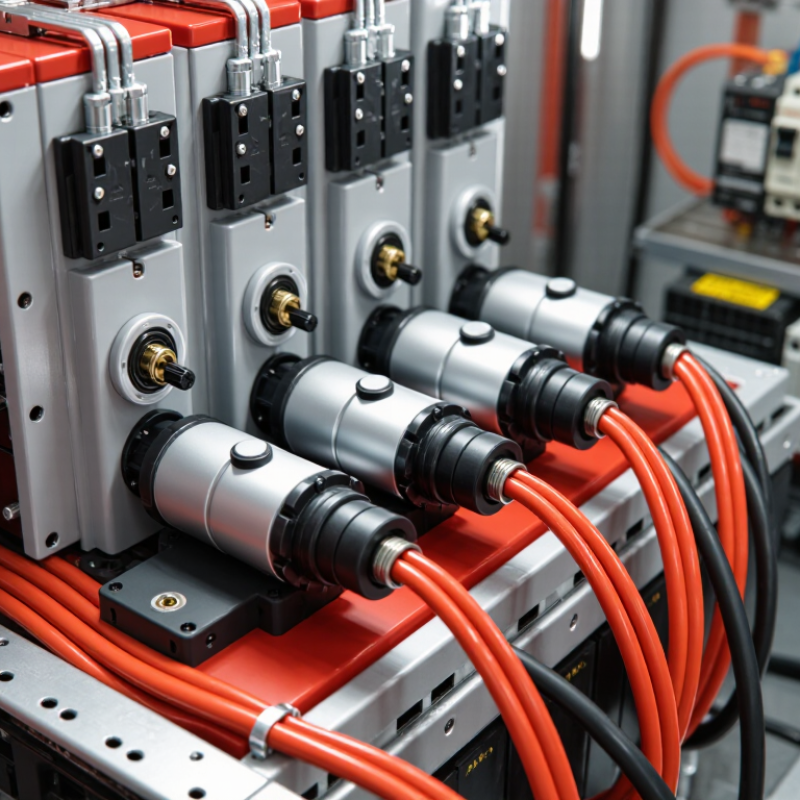
Table of Contents [Hide]
Definition and Core Function of an Energy Storage Connector
An energy storage connector is an engineered electrical interface between battery modules, racks, and power-conversion equipment. It carries direct-current power across a defined connection point. Some designs also transmit monitoring signals or include an interlock circuit. Its core function is to maintain a secure, low-resistance path while keeping live conductors insulated from people and nearby equipment. Small part. Large consequence.
In a battery rack, the connector must match the system’s voltage, current, polarity, and cable size. A loose or poorly seated contact can create heat; damaged insulation can expose hazardous voltage. The IEA’s 2024 Batteries and Secure Energy Transitions report provides a sense of the scale: its net-zero pathway calls for 1,500 GW of global energy storage capacity by 2030, including 1,200 GW of batteries. That forecast does not prescribe connector designs, but it highlights why dependable connections matter across growing installations. A connector is sometimes treated as a simple plug. That assumption deserves a second look: fit, locking, insulation, and clear maintenance procedures all affect how reliably the system operates.
Brands
Proudly Trusted by Top Suppliers Worldwide







Let us know and we will automate, together to fit your industrial needs.
 +91-97254 16844
Clients
Proudly Trusted by Top Companies Worldwide


Do you need Help? Get in touch.
X
Please fill out the form below and we will get back to you as soon as possible.