o
p
t
i
m
a
r
o
b
o
t
i
c
s

Make a Call


Make a Call
Blogs
10 Gate Valve Buying Tips for Global Buyers
Buying a gate valve for international service is rarely a simple catalog decision. The wrong choice may cause leakage, difficult maintenance, or costly production delays.
Industry specialist Philip L. Skousen, author of Valve Handbook, stated, “Valve selection must begin with the service conditions, not the valve price.” This principle remains practical for global buyers. A stainless-steel gate valve may suit corrosive water, while a carbon-steel model may perform better in ordinary oil service. The details matter. Fluid temperature, pressure, media, pipe size, and operating frequency should guide every specification.
This guide presents ten buying tips for evaluating a gate valve with greater confidence. It considers body materials, pressure ratings, end connections, sealing design, actuation, testing, documentation, and supplier capability. Buyers should also review inspection reports, certificates, drawings, and packaging before shipment. A photograph cannot confirm internal quality.
Small details can create large problems. A mismatched flange standard may delay installation. Poorly protected threads can arrive damaged. Incomplete traceability can weaken project control. These risks are easy to underestimate.
No checklist is perfect. Real projects often include unclear specifications, changing delivery schedules, or limited technical information. That is why careful questions matter. Ask how the valve was tested. Ask whether replacement parts are available. Ask who supports the product after delivery.
The best purchase is not always the cheapest one. It is the gate valve that matches the application, arrives properly documented, and performs reliably over time.
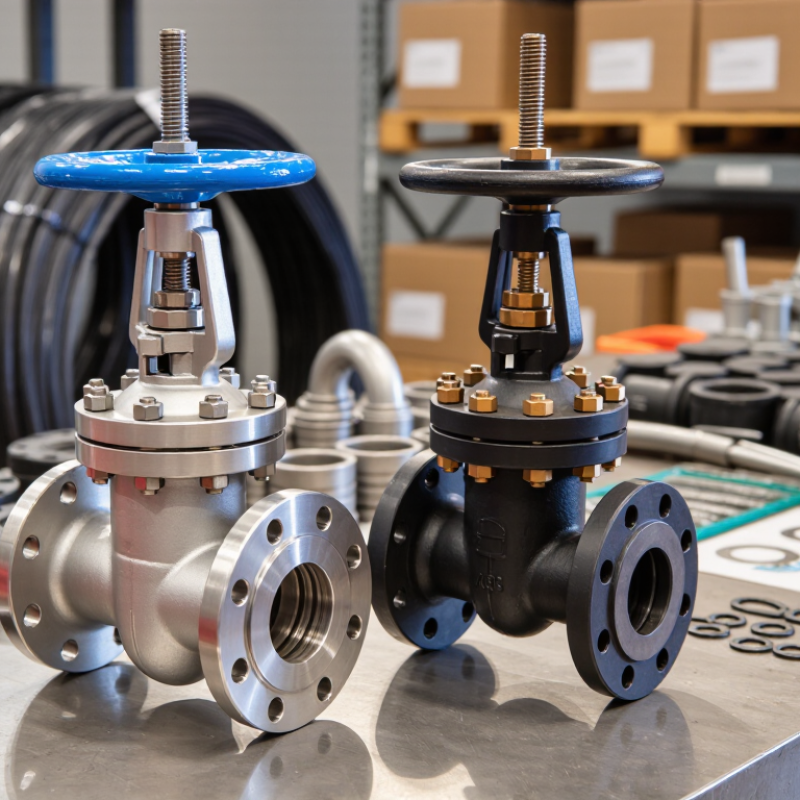
Table of Contents [Hide]
Define Gate Valve Types and Their Best Applications
Gate valve selection starts with the service, not the purchase price. A rising-stem wedge gate valve suits water, steam, and general process lines where full isolation matters. Its visible stem position helps operators confirm whether the valve is open or closed. For buried pipelines, a non-rising stem design saves vertical space. However, stem condition becomes harder to inspect. That practical compromise is often missed.
Knife gate valves handle slurry, paper stock, and dry bulk materials better than standard wedge designs. Their thin gate cuts through suspended solids, but they are not ideal for throttling. Parallel slide gate valves can serve high-temperature steam systems, especially where thermal expansion affects seating. API 600 and MSS SP-70 provide useful dimensional and testing references for industrial gate valves. Check the actual edition and project specification.
Market evidence also supports careful classification. Grand View Research’s 2024 industrial valves analysis places the global market at more than USD 75 billion in 2023, with energy and water infrastructure among major demand areas. That figure does not mean every application needs a heavy-duty valve. In my experience, buyers sometimes overspecify pressure class while overlooking corrosion, actuator clearance, or maintenance access. A valve that fits the catalog may fail beside a muddy trench, hot pipe, or restricted handwheel. Define the medium, pressure, temperature, installation space, and isolation duty before comparing quotations. Small details decide long-term reliability.
Brands
Proudly Trusted by Top Suppliers Worldwide







Let us know and we will automate, together to fit your industrial needs.
 +91-97254 16844
Clients
Proudly Trusted by Top Companies Worldwide


Do you need Help? Get in touch.
X
Please fill out the form below and we will get back to you as soon as possible.