o
p
t
i
m
a
r
o
b
o
t
i
c
s

Make a Call


Make a Call
Blogs
What Is a FOC Motor Controller and How Does It Work?
A Foc Motor Controller uses field-oriented control to regulate a motor’s magnetic field and torque. Instead of switching motor phases in a simple sequence, it coordinates their currents as a rotating electrical vector. This approach can make a motor quieter and smoother, especially at low speeds. It is commonly used with permanent-magnet synchronous motors and brushless AC motors in robotics, electric vehicles, and industrial equipment.
Inside the controller, sensors or estimation algorithms track the rotor’s position. The controller transforms measured phase currents into two components: one associated with magnetic flux, and another with torque. It then adjusts these currents and sends switching commands to an inverter, which supplies carefully timed power to the motor. Fast feedback matters. A poorly tuned system can feel jerky, run hot, or respond slowly, even when its hardware is capable.
The details vary. Some systems use encoders or Hall sensors; others estimate rotor position from electrical signals. Sensorless control can reduce hardware, but may be less reliable at very low speeds. That trade-off is easy to overlook. This guide explains what a Foc Motor Controller does, how its control loop works, and which design choices affect performance. Real results depend on motor characteristics, current sensing, software tuning, and operating conditions—not just the controller’s label.
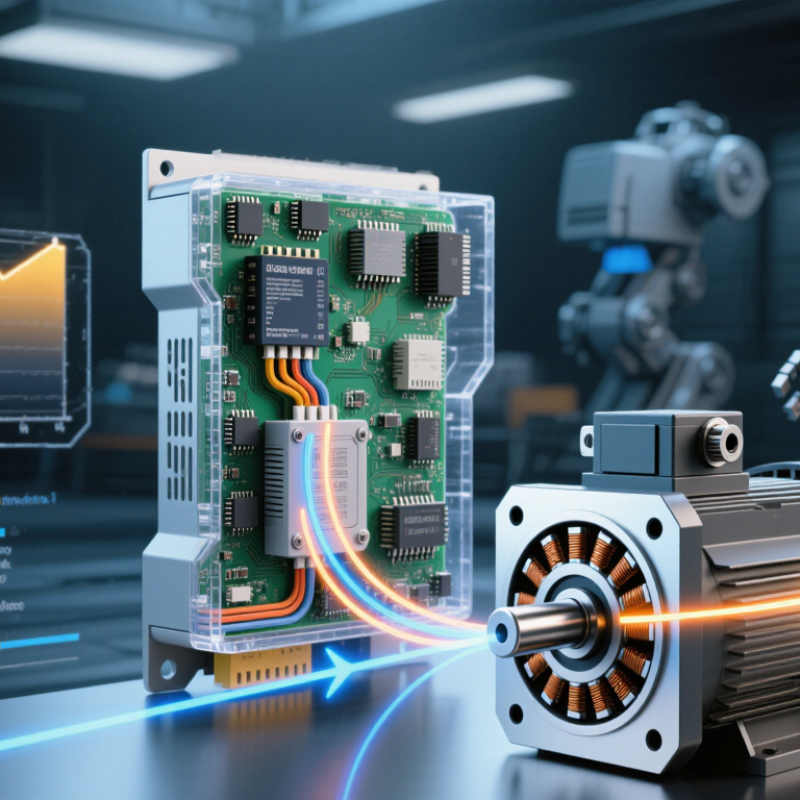
Table of Contents [Hide]
FOC Fundamentals: Regulating Motor Torque and Flux in the d–q Frame
A field-oriented control (FOC) controller separates motor current into two components using the rotating d–q reference frame. The d-axis current controls magnetic flux; the q-axis current produces torque. A controller measures phase currents, estimates rotor position, then transforms the readings into this frame. It adjusts each current through feedback loops and sends switching commands to the inverter. The math looks clean. Real motors are less tidy.
For a surface-mounted permanent-magnet motor, designers often target near-zero d-axis current below base speed, directing more current toward torque. At higher speeds, negative d-axis current can weaken the effective field and extend the operating range. This balance depends on motor parameters, temperature, and current limits. IEA’s 2011 report, Energy-Efficiency Policy Opportunities for Electric Motor-Driven Systems, estimated that motor-driven systems use about 45% of global electricity. That scale makes efficient control valuable, but FOC alone cannot guarantee efficiency; tuning and system design matter.
Tips: Check current-sensor offsets before tuning the d–q loops. A small offset can create unwanted torque ripple. Confirm rotor-angle estimates under changing loads, too. One detail is easy to overlook: a neat simulation may not capture real sensor noise.
Brands
Proudly Trusted by Top Suppliers Worldwide







Let us know and we will automate, together to fit your industrial needs.
 +91-97254 16844
Clients
Proudly Trusted by Top Companies Worldwide


Do you need Help? Get in touch.
X
Please fill out the form below and we will get back to you as soon as possible.