o
p
t
i
m
a
r
o
b
o
t
i
c
s

Make a Call


Make a Call
Blogs
Why Fuel Pump Commutators Fail and How to Fix Them?
A failing fuel pump can leave a vehicle silent at the worst possible moment. Sometimes, the warning begins with a weak hum, slow starting, or brief hesitation under load. Inside the motor, the Fuel Pump And Commutator assembly transfers electrical current through rotating copper segments. Brush contact keeps the pump running, but that contact gradually changes with heat, vibration, and wear.
Commutator failure often appears as burned bars, deep grooves, uneven coloring, or heavy carbon dust. Small sparks may occur when brushes lose consistent contact. Excessive resistance can then reduce pump speed and fuel pressure. Low system voltage, contaminated fuel, restricted filters, and poor electrical connections can increase this stress. A technician should confirm pressure, voltage, current draw, and ground quality before blaming the commutator. Guessing wastes time.
The repair decision requires practical judgment. Some pumps allow motor servicing, while many modern modules are designed for complete replacement. Opening a fuel system without proper ventilation, approved tools, and manufacturer procedures creates avoidable danger. Use service data, insulated test equipment, and verified replacement parts. Do not rely on sound alone.
A useful inspection records the pump’s noise, pressure stability, connector condition, and current pattern. Heat marks around the terminals deserve attention. So do intermittent faults.
Even experienced technicians can misread a worn commutator as a simple relay problem. That possibility deserves reflection. A careful diagnosis separates brush wear from wiring faults, blocked filters, and failing regulators. This article explains why commutators fail, how symptoms develop, and which repair path offers dependable performance without replacing parts blindly.
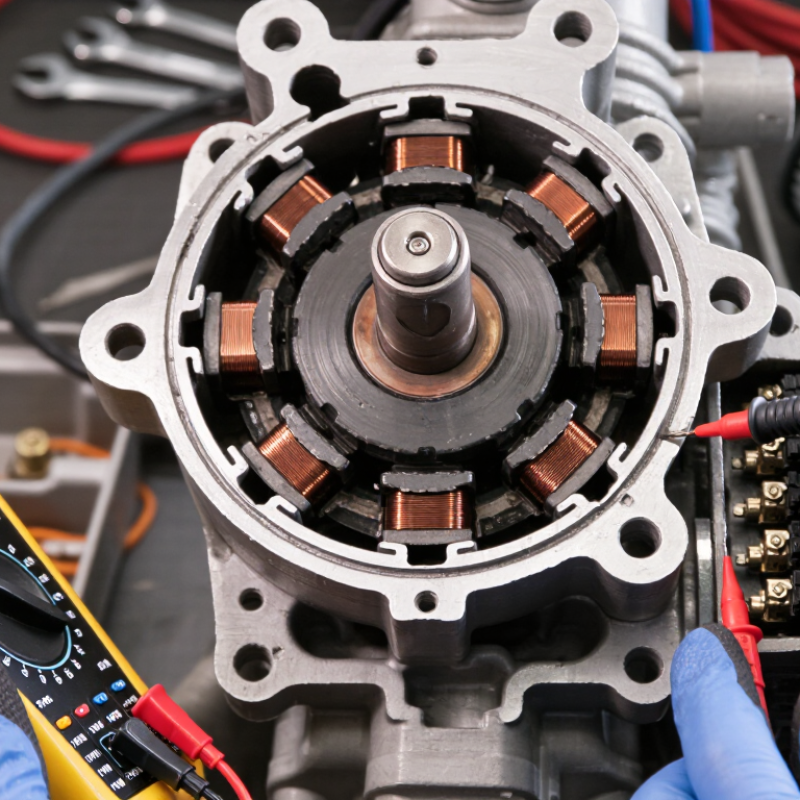
Table of Contents [Hide]
Fuel Pump Commutators Explained: Copper Segments in 12–14.4 V DC Systems
Why Fuel Pump Commutators Fail and How to Fix Them?
A fuel pump commutator is more than a rotating contact. It contains copper segments that transfer current to the armature through carbon brushes. In a 12–14.4 V DC system, these segments switch current rapidly while the motor spins. Each segment must remain smooth, insulated, and evenly spaced. Small defects can create visible arcing, unstable pump speed, and reduced fuel delivery.
Heat, brush dust, low voltage, and contaminated fuel pump interiors can accelerate wear. A grooved copper surface may catch the brush edge. Pitted segments can increase electrical resistance. The pump may sound rough. It may also draw higher current than normal. Field technicians should measure voltage at the pump terminals, then compare current draw with the service specification. Voltage alone can mislead.
The diagnosis is not always clean. A dark commutator does not automatically mean failure. Mild discoloration may be normal, while raised copper edges require closer inspection. Disconnect power before testing. Use a magnifier to check for burned segments, loose connections, or uneven wear. Lightly cleaning a serviceable commutator may help, but aggressive sanding can remove critical copper thickness. Do not bridge the insulating gaps between segments. If segments are cracked, badly worn, or electrically open, replacing the motor or complete pump module is usually more reliable than repairing the commutator. Recheck terminal voltage under load. A weak connector or damaged ground can imitate commutator failure.
Brands
Proudly Trusted by Top Suppliers Worldwide







Let us know and we will automate, together to fit your industrial needs.
 +91-97254 16844
Clients
Proudly Trusted by Top Companies Worldwide


Do you need Help? Get in touch.
X
Please fill out the form below and we will get back to you as soon as possible.