o
p
t
i
m
a
r
o
b
o
t
i
c
s

Make a Call


Make a Call
Blogs
What Is a Grid On Inverter and How Does It Work?
A Grid On Inverter, more commonly called a grid-tied or on-grid inverter, connects renewable electricity with a utility network. It converts the solar panels’ direct current into synchronized alternating current. That current must match the grid’s voltage, frequency, and phase. Small differences matter.
Professor Remus Teodorescu, a respected power-electronics researcher, has described the inverter as “the heart of a photovoltaic system.” This comparison is practical. The inverter manages energy conversion, monitors electrical conditions, and communicates with protective equipment. In a rooftop system, it may also track maximum power while sunlight changes behind clouds. A clear afternoon can produce steady output. A passing shadow can change it within seconds.
The process sounds simple. It is not. Sensors measure the grid continuously. Control software adjusts switching devices thousands of times per second. If the utility supply fails, anti-islanding protection must disconnect the system. This protects repair workers and prevents unstable operation. Grid standards and installation rules also vary by region, so technical details should never be guessed.
This guide explains how a Grid On Inverter works, where it fits in a solar installation, and why its safety functions are essential. It will examine efficiency, monitoring, grid synchronization, and common system limitations. The terminology is slightly imperfect, too. “Grid On Inverter” is widely understood, although “on-grid inverter” is usually more precise. That small distinction matters when comparing products, specifications, and professional advice.
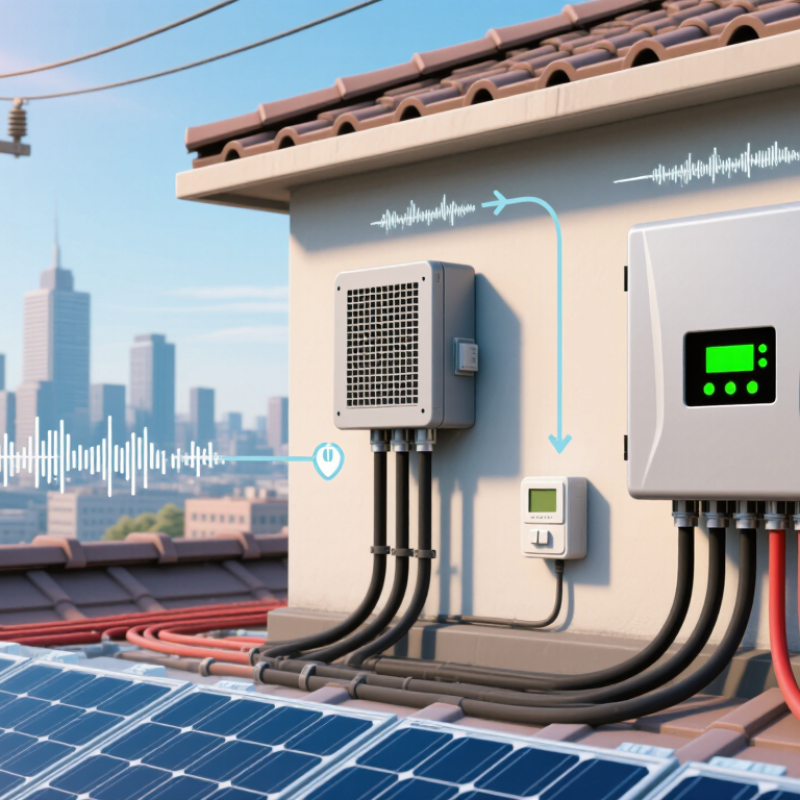
Table of Contents [Hide]
What Is a Grid-Tied Inverter?
A grid-tied inverter connects a solar array to the public electricity grid. Solar panels produce direct current, or DC, while household circuits use alternating current, or AC. The inverter converts DC into usable AC and matches the grid’s voltage, frequency, and phase. This synchronization must be precise.
During sunny hours, solar power can run lights, appliances, and other loads in the building. If production exceeds demand, the remaining electricity may flow through a meter toward the grid, subject to local rules and an approved interconnection agreement. When clouds reduce output, the building draws electricity from the grid as usual. It feels seamless. Until the grid fails.
A certified grid-tied inverter normally stops exporting power during an outage. This safety function, called anti-islanding protection, helps prevent energizing lines during maintenance. A battery-based system may provide backup power, but it needs suitable isolation equipment and correct configuration. It is not enough to add a battery casually.
Installation requires attention to cable sizing, grounding, overcurrent protection, ventilation, and local electrical requirements. A qualified professional should test the system under different operating conditions. In practice, monitoring data can reveal unexpected shading, loose connections, or gradual performance loss. Even accurate equipment can produce disappointing results when roof orientation or household demand is overlooked. Planning is often less simple than the sales diagram suggests.
Brands
Proudly Trusted by Top Suppliers Worldwide







Let us know and we will automate, together to fit your industrial needs.
 +91-97254 16844
Clients
Proudly Trusted by Top Companies Worldwide


Do you need Help? Get in touch.
X
Please fill out the form below and we will get back to you as soon as possible.