o
p
t
i
m
a
r
o
b
o
t
i
c
s

Make a Call


Make a Call
Blogs
How to Choose a Non Cartridge Mechanical Seal in 2026?
Choosing a Non Cartridge Mechanical Seal in 2026 requires more than matching shaft diameter and pump model. Process conditions decide whether a seal survives. Pressure, temperature, fluid chemistry, shaft movement, and installation quality all matter.
Grand View Research estimates that the global mechanical seals market will continue growing through 2030, supported by chemical processing, water treatment, energy, and manufacturing demand. Fortune Business Insights also projects steady expansion over the coming decade. These reports show market momentum, but forecasts cannot identify the correct seal face for a hot, abrasive slurry. That decision still requires engineering judgment.
Tribology specialist Dr. Michael M. Khonsari has emphasized, “A seal failure is often a lubrication failure before it becomes a hardware failure.” This observation is highly relevant to Non Cartridge Mechanical Seal selection. A dry-running carbon face, blocked flush line, or misaligned shaft can destroy a carefully specified seal within hours.
Small details matter. Check the 2,850-rpm shaft, the 120°C process fluid, and the abrasive particles visible in the drained sample. Review API 682 practices where applicable, while confirming the manufacturer’s actual design limits. Do not assume every “standard” seal is interchangeable.
That sounds obvious. It is not.
Non-cartridge designs can offer lower purchase costs and easier component-level customization. They can also demand greater installation discipline. This guide compares materials, balance design, elastomers, operating limits, and maintenance risks. It also questions a common assumption: the cheapest seal may become the most expensive choice after repeated leakage, downtime, and hurried replacement.
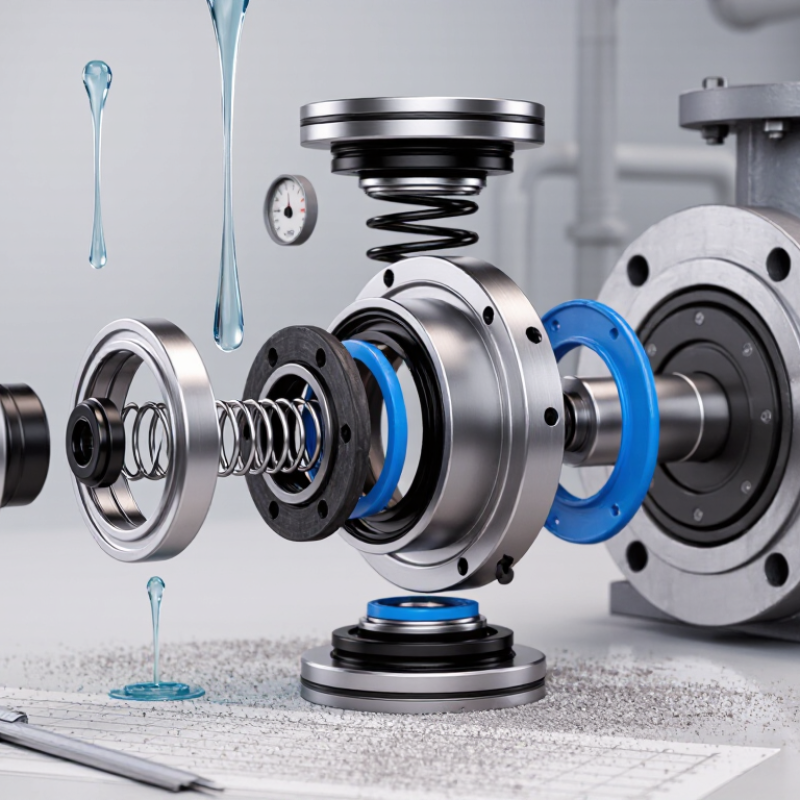
Table of Contents [Hide]
What Is a Non-Cartridge Mechanical Seal?
A non-cartridge mechanical seal is a pump sealing assembly installed piece by piece. Its rotating face, stationary face, spring, O-ring, and gland are separate components. Unlike a cartridge seal, it does not arrive factory-set on a sleeve. The technician positions each part directly on the shaft and inside the seal chamber. This design can reduce purchase cost and fit older equipment. It also demands more attention during installation.
In 2026, selection should start with the pump shaft diameter and seal chamber dimensions. Check operating pressure, temperature, speed, and fluid properties before choosing materials. A carbon face may suit clean water, while harder faces handle abrasive service better. Elastomer choice matters when chemicals or heat can swell the O-ring. Measure the spring length and setting dimension. Small errors can cause leakage. Keep faces clean. Really clean. A fingerprint or fiber may create an early drip.
Experienced technicians also inspect shaft runout, sleeve wear, and chamber squareness. These details often explain failures blamed on the seal itself. A non-cartridge seal offers flexibility, but that flexibility is not free. Individual parts can simplify repairs, yet installation time may increase. I would not choose it only because the price is lower. The better choice depends on maintenance skill, available tools, and repeatable measurements. Even careful work can reveal that the pump is already worn. That condition deserves correction before fitting a new seal.
Brands
Proudly Trusted by Top Suppliers Worldwide







Let us know and we will automate, together to fit your industrial needs.
 +91-97254 16844
Clients
Proudly Trusted by Top Companies Worldwide


Do you need Help? Get in touch.
X
Please fill out the form below and we will get back to you as soon as possible.