o
p
t
i
m
a
r
o
b
o
t
i
c
s

Make a Call


Make a Call
Blogs
2026 How to Choose LED Stop Turn Tail Lights?
Choosing the right LED stop turn tail in 2026 requires more than comparing brightness, price, or online ratings. A reliable lamp must communicate braking, turning, and rear presence clearly in changing conditions. Rain, dust, vibration, tinted lenses, and weak vehicle wiring can all affect performance. The best choice begins with the vehicle’s voltage, socket type, mounting space, and intended use.
Automotive lighting consultant Daniel Stern has stated, “A lamp is not merely a light source; it is part of the vehicle’s communication system.” That principle remains important when evaluating LED stop turn tail products. A quality unit should provide a fast response, stable thermal control, even light distribution, and dependable sealing. Check the lens pattern carefully. Excessive glare is not the same as useful visibility.
Small details matter. Inspect the connector. Feel the housing.
In practical testing, compare the lamp during daylight, dusk, and heavy rain. Look for rapid flashing, uneven brightness, radio interference, or heat around the base. Some products appear powerful in photographs but perform poorly behind older lenses. That difference is easy to miss.
A thoughtful buyer should also review warranty terms, manufacturer testing, and replacement availability. Certifications can support trust, but they do not replace vehicle-specific verification. Even experienced installers can overlook polarity or load compatibility. I have found that “plug-and-play” claims sometimes need closer questioning. The perfect LED stop turn tail does not exist for every vehicle. Fit, beam control, durability, and real-world visibility must be balanced together. That is where careful selection begins.
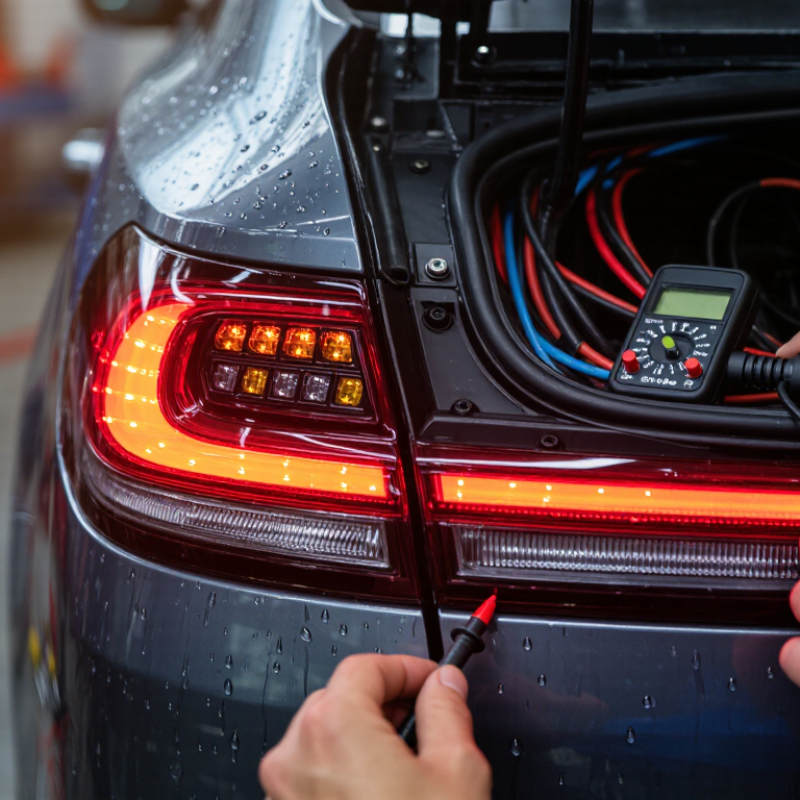
Table of Contents [Hide]
What Are LED Stop Turn Tail Lights and How Do They Work?
2026 How to Choose LED Stop Turn Tail Lights?
LED stop turn tail lights combine three lighting functions in one rear housing. The tail function glows dimly when the vehicle lights are on. The stop function becomes noticeably brighter when the brake pedal is pressed. The turn function flashes on the selected side. Three signals. One compact unit.
Inside, light-emitting diodes convert electrical current into light with little delay. A control circuit regulates current and prevents unstable brightness. A heat path remains important, because LEDs create less heat than bulbs but still warm their circuit board. Poor heat control can shorten service life. It is easy to overlook.
When choosing a unit, check the vehicle voltage and connector layout carefully. Confirm that the housing fits the existing mounting space. A sealed lens with a strong water-resistance rating helps protect contacts from rain and road spray. The flashing rate also matters. Some vehicles need a compatible flasher or load control to avoid rapid blinking. Test every function after installation, including the dim tail glow, bright braking light, and both turn signals. In practical inspections, wiring errors often appear as weak brightness or a reversed function. I would not trust appearance alone. A lamp can look excellent and still perform poorly after several wet, cold nights.
Brands
Proudly Trusted by Top Suppliers Worldwide







Let us know and we will automate, together to fit your industrial needs.
 +91-97254 16844
Clients
Proudly Trusted by Top Companies Worldwide


Do you need Help? Get in touch.
X
Please fill out the form below and we will get back to you as soon as possible.