o
p
t
i
m
a
r
o
b
o
t
i
c
s

Make a Call


Make a Call
Blogs
How to Choose Overlay Welded Pipe for Your Project?
Choosing the right Overlay Welded Pipe begins with understanding the environment, not simply comparing prices. A pipe carrying abrasive slurry faces different demands from one exposed to seawater, hydrogen, or high-temperature chemicals. The overlay alloy, base-pipe grade, weld process, and finished thickness must work together. A bright surface alone proves very little.
John C. Lippold, a respected welding engineer and professor emeritus at The Ohio State University, describes the discipline simply: “Welding is both a science and an art.” That idea matters when selecting Overlay Welded Pipe. Metallurgical dilution can change corrosion resistance. Heat input can influence hardness and cracking risk. Poor surface preparation may leave hidden defects beneath an attractive finish. Small details become expensive failures.
A reliable selection process starts with measurable service conditions. Record the fluid chemistry, operating temperature, pressure, flow speed, and expected wear pattern. Specify minimum overlay thickness after machining, not before. Ask for procedure qualification records, chemical analysis, hardness results, and non-destructive testing reports. Confirm how the pipe will be transported, installed, and repaired.
There is no universal “best” overlay. That is the uncomfortable part. A nickel alloy may resist corrosion well, yet cost more than the project allows. A carbide-rich layer may resist abrasion, but it can be difficult to machine. Even experienced teams can overlook cyclic loading or thermal expansion. This guide explains how to compare materials, manufacturing controls, inspection evidence, and lifecycle value before approving a pipe for service.
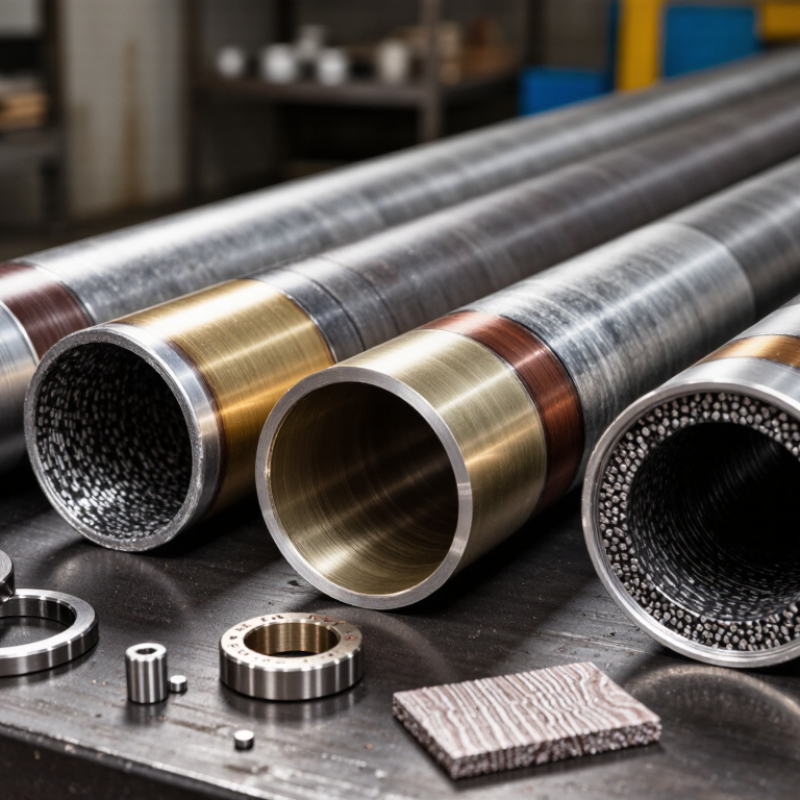
Table of Contents [Hide]
Understanding Overlay Welded Pipe and Its Applications
How to Choose Overlay Welded Pipe for Your Project?
Understanding Overlay Welded Pipe and Its Applications
Overlay welded pipe combines a structural steel pipe with a corrosion- or wear-resistant alloy layer. The base pipe carries pressure, while the overlay protects the internal surface. Common overlay materials include stainless steel, nickel alloys, and chromium-rich hardfacing metals. Selection depends on fluid chemistry, temperature, pressure, flow velocity, and solid-particle content.
The NACE IMPACT study estimated global corrosion costs at about 2.5 trillion US dollars annually, equal to 3.4% of global GDP. Its findings also indicated that effective corrosion management could reduce losses by 15% to 35%. These figures explain why overlay systems can be practical in chemical lines, offshore equipment, power plants, mining pipelines, and slurry transport.
Details matter. Ask for overlay thickness, dilution control, hardness, porosity limits, and bond-test results. Check whether the welding procedure matches the service temperature and thermal cycling. For sour environments, material selection should align with ISO 15156 requirements. For abrasive slurry, hardness alone may mislead; impact resistance and actual particle size also matter.
A pipe can look excellent and still fail early.
Independent inspection should include visual checks, ultrasonic testing, and dimensional verification. In my experience, project teams sometimes specify alloy chemistry first and operating conditions later. That order creates avoidable risk. A better choice connects laboratory data with field evidence, maintenance access, and the real failure history of similar piping.
Brands
Proudly Trusted by Top Suppliers Worldwide







Let us know and we will automate, together to fit your industrial needs.
 +91-97254 16844
Clients
Proudly Trusted by Top Companies Worldwide


Do you need Help? Get in touch.
X
Please fill out the form below and we will get back to you as soon as possible.