o
p
t
i
m
a
r
o
b
o
t
i
c
s

Make a Call


Make a Call
Blogs
How to Choose the Best 18650 Battery for Your Needs?
Choosing the best 18650 Battery is not simply a search for the highest capacity number. A cell marked “3,500 mAh” may perform poorly in a high-drain flashlight, power tool, or portable energy device. Chemistry, discharge limits, temperature, age, and manufacturer quality matter just as much. Small details matter.
The International Energy Agency reported that global battery demand for electric vehicles reached 750 GWh in 2023, increasing by about 40% from the previous year. This growth has intensified attention on cell performance, supply-chain traceability, and responsible testing. BloombergNEF’s 2024 Battery Price Survey also recorded an average lithium-ion battery pack price of 115 dollars per kWh, showing why efficiency and service life remain important purchasing factors. These figures do not directly define every 18650 Battery, but they reveal the wider industry’s priorities: reliable energy density, controlled costs, and measurable safety.
This guide compares practical specifications rather than attractive labels alone. It examines nominal voltage, true capacity, continuous discharge rating, internal resistance, protection circuits, and operating temperature. Independent testing remains valuable. Manufacturer datasheets should be checked against credible laboratory results, including IEC 61960 and relevant UL safety requirements. A protected cell may not fit every device. An unprotected cell may create unacceptable risks in unsuitable equipment. That distinction is easy to overlook. Some recommendations may also change as new chemistries and verified testing methods appear. Careful selection means matching the cell to the device, not choosing the biggest number on the package.
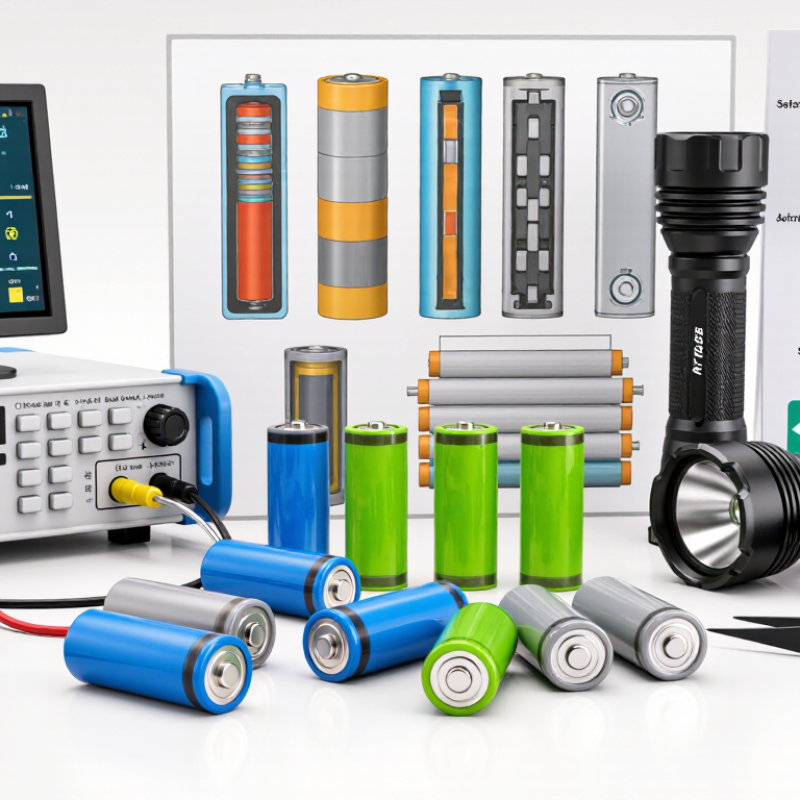
Table of Contents [Hide]
Understand the Key Specifications of 18650 Batteries
How to Choose the Best 18650 Battery for Your Needs?
Understanding specifications matters more than choosing the highest advertised capacity. An 18650 cell usually has a nominal voltage of 3.6 or 3.7 volts. It reaches about 4.2 volts when fully charged. Capacity appears in milliamp-hours, or mAh, and indicates how long the cell may run a device. Higher capacity often means longer runtime, but not always stronger performance.
The continuous discharge rating is equally important. It shows how much current the cell can safely provide during regular use. Ignore impressive “pulse” numbers unless the manufacturer explains the test conditions. Internal resistance also matters. A cell with lower resistance usually produces less voltage drop and heat under load. Check the datasheet, verify the dimensions, and avoid cells with dents, torn wraps, or unusual heating.
Tips: Match the battery to your device’s voltage and current requirements. Use a charger designed for the cell type. Do not mix cells with different ages or capacities. Protected cells can be longer, so measure the available space carefully. Buy from a reliable supplier, and inspect the printed specifications for inconsistencies.
I would not choose capacity alone. That shortcut sounds practical, but it can fail in high-drain equipment. Real performance depends on temperature, age, charging habits, and the device itself. Testing with a suitable battery analyzer gives better evidence than packaging claims. Even then, measurements have limits. A safe choice is usually the balanced one, not the most powerful-looking cell.
Brands
Proudly Trusted by Top Suppliers Worldwide







Let us know and we will automate, together to fit your industrial needs.
 +91-97254 16844
Clients
Proudly Trusted by Top Companies Worldwide


Do you need Help? Get in touch.
X
Please fill out the form below and we will get back to you as soon as possible.