o p t i m a r o b o t i c s

Blogs

How to Choose the Best Welding Robot?

Choosing the best welding robot requires more than comparing prices, payloads, or advertised speed. The International Federation of Robotics reported 541,302 industrial robot installations worldwide in 2023. That figure signals strong automation demand. It does not guarantee success on your shop floor.

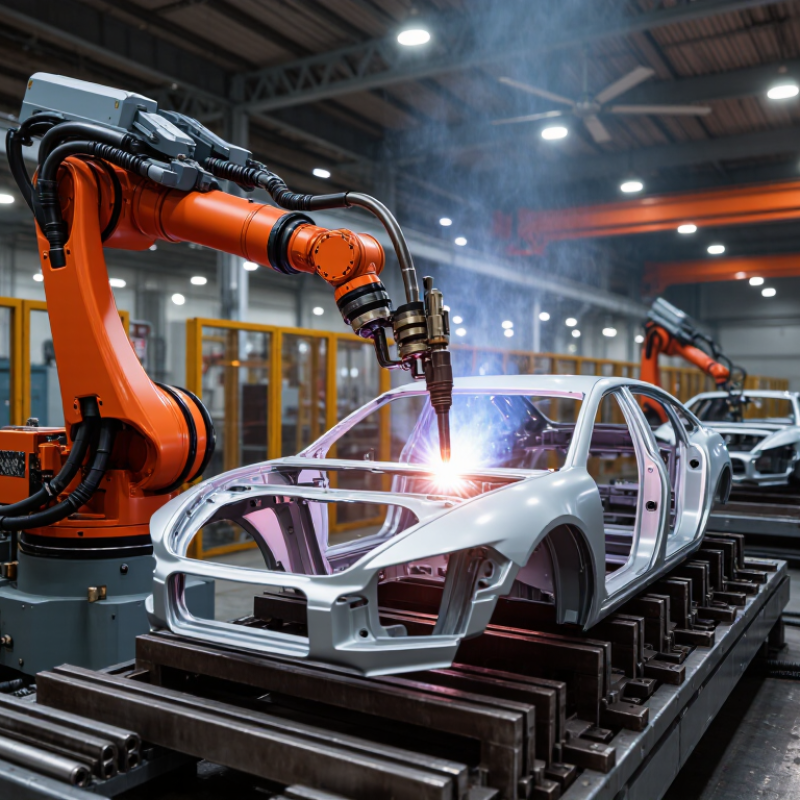
A welding robot must match the actual process. Check torch access, fixture accuracy, payload, reach, duty cycle, and programming time. Examine bead consistency under heat, spatter, changing joint gaps, and production dust. A six-axis arm may look ideal on paper. It can still fail when the fixture flexes or the cable package restricts movement. The best system also includes safety controls, fume extraction, seam tracking, offline programming, and practical operator training.

Christopher L. Mapes, former Lincoln Electric chairman and CEO, described automation as “not about replacing people; it’s about making people more productive.” That principle matters here. A welding robot should reduce repetitive exposure and improve repeatability, while experienced welders retain process judgment. Industry reports often emphasize productivity, but they sometimes understate integration delays and maintenance skills. That is where buyers can miscalculate.

Use measurable trials before signing a purchase order. Record cycle time, arc-on time, rework, changeover minutes, and training hours. Test real parts, not showroom samples. No scoring model is perfect. Still, a disciplined comparison exposes weak assumptions and supports a safer, more reliable investment.
How to Choose the Best Welding Robot?

Understanding Welding Robot Types and Their Core Functions

Choosing a welding robot starts with its mechanical type and the workpiece geometry. Articulated robots offer six-axis movement, making them suitable for curved frames, fillet welds, and changing torch angles. Cartesian or gantry systems provide rigid, straight-line travel across large structures. Collaborative robots can support lower-volume production, but their payload and speed may limit heavy welding. They are not automatically safer in every setup.

Core functions matter more than appearance. A capable system should control torch travel, wire feeding, arc voltage, and welding current consistently. Through-arc sensing can detect joint variations during welding, while laser or camera sensors can locate seams before the arc starts. Positioners rotate the workpiece and reduce awkward torch angles. Industry 4.0 reports increasingly link robot value with data collection, traceability, and predictive maintenance, not only motion.

The International Federation of Robotics reported 541,302 industrial robot installations worldwide in 2023 in World Robotics 2024. That figure shows strong automation demand, but it does not prove every welding cell will pay back quickly. The Welding Robots Market report by MarketsandMarkets identifies automotive and heavy manufacturing as major application areas. Still, production volume, joint access, fixture accuracy, and operator skill determine results. A practical trial should measure arc-on time, rework, changeover time, and training effort. Small details matter. My own caution: a polished demonstration can hide difficult programming and poor access around real assemblies. Choose the robot after testing representative parts, not showroom samples.

Defining Production Needs, Materials, and Welding Requirements

Choosing the best welding robot starts with production facts, not catalog features. The International Federation of Robotics reported 541,302 industrial robot installations worldwide in 2023. Robot density reached 162 units per 10,000 manufacturing employees. These figures show adoption, not automatic suitability.

Define daily output, takt time, part variation, and available floor space. A practical shop-floor lesson is simple: unstable fixturing can defeat an advanced robot. Record joint types, welding positions, bead lengths, and acceptable rework rates. The U.S. Bureau of Labor Statistics projects a 2% decline in welding employment from 2023 to 2033, while still expecting about 42,600 annual openings. Labor pressure matters, but automation should support skilled judgment rather than erase it.

Material selection changes the decision. Carbon steel, stainless steel, and aluminum require different heat control, wire feeding, shielding gas, and torch movement. Aluminum often exposes weak fixturing and inconsistent wire delivery. Measure thickness ranges and thermal distortion before choosing a power source or torch package. Specify penetration, appearance, spatter limits, and inspection methods. Seam tracking may help, but it cannot repair poor joint preparation. I would also test the hardest real part, not the easiest sample. That choice is less impressive in a demonstration, yet more honest for production planning.

Comparing Robot Reach, Payload, Accuracy, and Flexibility

How to Choose the Best Welding Robot?

Comparing Robot Reach, Payload, Accuracy, and Flexibility

Robot reach should match the actual weld zone, not the widest catalog figure. Measure fixture height, part depth, torch angle, and operator clearance. A six-axis robot may reach the joint, yet still struggle to approach it smoothly. Reach matters. During shop-floor trials, I check wrist rotation near corners and inspect cable movement through every programmed path. Poor routing can reduce access and increase maintenance.

Payload includes the torch, cables, collision sensor, and mounting hardware. Payload comes later. A robot operating near its limit may show slower motion and more vibration. Select a realistic reserve, especially for long torches or heavy positioners. Cycle-time claims also need verification with the intended wire, gas flow, joint design, and safety limits. A short demonstration can hide production weaknesses.

Accuracy has two meanings: absolute positioning and repeatability. Repeatability may be excellent, while fixture errors still place the weld incorrectly. Use calibrated measurements and several test parts, not one successful bead. Flexibility depends on more than extra axes. Quick program changes, accessible controls, reliable sensing, and adaptable fixtures often matter more. I once favored maximum reach and later found that programming complexity slowed changeovers. That decision needed more reflection. A balanced evaluation should record bead quality, cycle time, access, operator workload, and maintenance observations under realistic production conditions.

How to Choose the Best Welding Robot?

Comparing robot reach, payload, accuracy, and flexibility

The chart compares representative industrial welding robot configurations using a normalized 0–100 capability index. Reach and payload are based on typical working ranges of approximately 1.4–2.6 m and 6–20 kg. Accuracy reflects repeatability, where lower repeatability error receives a higher score. Flexibility considers workspace access, wrist articulation, and suitability for varied welding positions. Higher scores indicate stronger capability, but the best choice depends on workpiece size, torch weight, joint accessibility, and required cycle time.

Evaluating Programming, Safety, Integration, and Maintenance

How to Choose the Best Welding Robot?

A welding robot should be judged on programming, not just speed. In practical shop-floor evaluations, technicians should test a complete weld cycle. Can they teach points quickly? Can they adjust torch angles without rewriting the entire program? Clear interfaces reduce setup errors, especially during short production runs. Offline programming can save time, but only when the digital model matches the real fixture. That detail is often underestimated.

Safety needs more than an emergency stop. Check guarding, door interlocks, light curtains, and controlled restart procedures. Watch the robot move through its full range. Look for pinch points near fixtures, cables, and positioners. Operators should understand alarms without guessing. A polished demonstration can mislead. Real safety appears during faults.

Integration determines whether the robot improves the whole cell. Confirm communication with the welding power source, fixture sensors, extraction system, and production records. Signal failures should be visible and easy to trace. Maintenance access also matters. Technicians need space to replace liners, clean nozzles, inspect cables, and reach service panels. Ask for preventive maintenance intervals and spare-part availability. Some systems look efficient until routine cleaning becomes awkward. A short trial with actual materials, operators, and fixtures reveals more than a sales specification.

Calculating Total Cost, Productivity, and Long-Term Value

Choosing a welding robot should begin with total cost, not the purchase price. Include the robot, positioner, tooling, sensors, programming, guarding, installation, training, maintenance, energy, and consumables.

The International Federation of Robotics reported 541,302 industrial robot installations worldwide in 2023, showing strong adoption.

Adoption alone does not prove profitability. A spreadsheet can still lie.

Measure real production data before buying. Record arc-on time, weld length, changeovers, downtime, rework, scrap, and operator hours for several weeks. A robot may run quickly but wait beside a slow fixture.

Calculate cost per acceptable weld, not cost per hour. The American Welding Society has projected a shortage of over 330,000 welding professionals by 2028, increasing the value of stable automated capacity. Yet integration quality matters more than the headline labor saving.

Long-term value includes repeatability, safer task allocation, software support, spare-part access, and technician training. Request a pilot using your actual joints, wire, fixtures, and cycle times.

Then compare payback under normal, optimistic, and weak-demand scenarios.

My first estimate would probably be too optimistic. That is useful.

A credible decision also includes a five-year maintenance reserve and a plan for product changes. The IFR World Robotics 2024 report confirms continued global investment, but market growth cannot compensate for poor process design.

Productivity must be observed on the factory floor.

Brands

Proudly Trusted by Top Suppliers Worldwide

Let us know and we will automate, together to fit your industrial needs.

Clients

Proudly Trusted by Top Companies Worldwide

Do you need Help? Get in touch.

X

Please fill out the form below and we will get back to you as soon as possible.

    Subscribe our newsletter & get updates