o
p
t
i
m
a
r
o
b
o
t
i
c
s

Make a Call


Make a Call
Blogs
How to Choose the Right Spray Gun for Your Project?
Choosing the right Spray Gun can determine whether your project looks polished or painfully uneven. The decision affects coverage, material waste, working speed, and surface texture. A small furniture panel needs different control than a vehicle body or a large workshop wall. The wrong gun may create dry spray, heavy edges, or frustrating runs.
Jon Kosmoski, founder of House of Kolor and an experienced custom-painting authority, offers a practical reminder: “The gun is an extension of your hand.” That idea matters. A professional Spray Gun cannot rescue poor preparation, incorrect pressure, or unsuitable paint viscosity. It must match your material, surface, compressor, and finishing expectations. It also needs to feel balanced after several minutes of use.
This guide examines the details that are easy to overlook. We will compare gravity-feed and siphon-feed designs, nozzle sizes, spray patterns, air requirements, and transfer efficiency. Your paint type matters. So does your workspace. A compact compressor may struggle with a high-demand gun, even when the product specifications look impressive.
There is no universally perfect choice. That is the uncomfortable part. Many buyers focus on price and overlook cleaning time or replacement parts. I have seen attractive finishes fail because the operator ignored airflow and test-panel results. A short spray test can reveal more than a long product description.
The best Spray Gun is not always the most expensive model. It is the one that gives you predictable control, manageable maintenance, and a finish you can repeat.
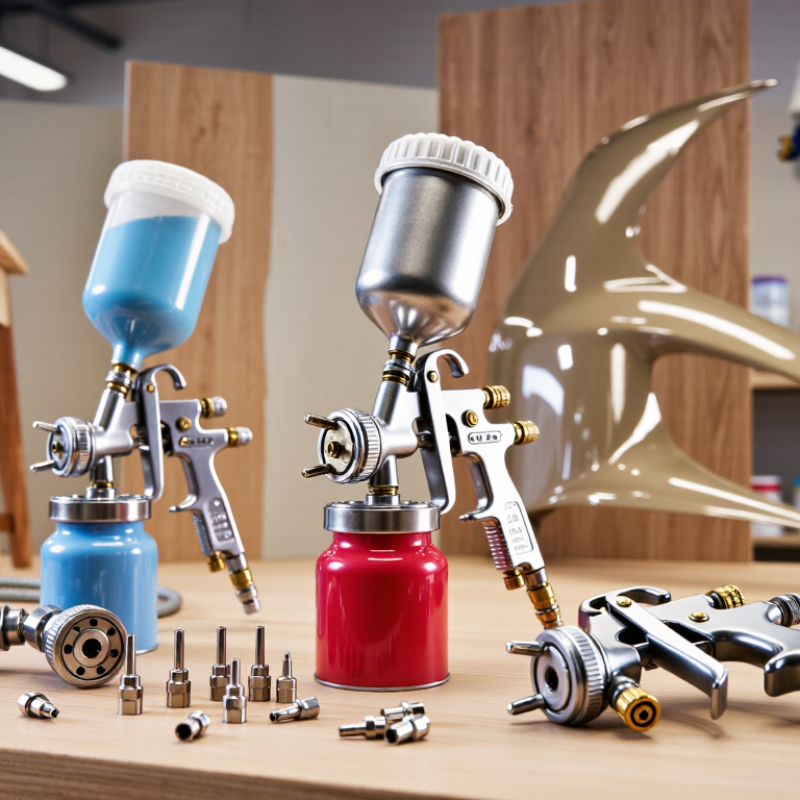
Table of Contents [Hide]
Understanding Spray Gun Types and Their Core Differences
How to Choose the Right Spray Gun for Your Project?
Understanding spray gun types starts with transfer efficiency, finish control, and material thickness. Conventional guns use higher air pressure and create more overspray. They can produce a fast, wet coat, but waste more material. HVLP guns work with lower pressure and deliver a softer spray pattern. They suit furniture, cabinets, and controlled workshop jobs. LVLP guns need less air volume, making them useful with smaller compressors. Airless guns use fluid pressure instead of compressed air. They handle thick coatings quickly, including exterior paint and protective finishes. Air-assisted airless systems add air control for smoother results.
According to South Coast AQMD Rule 1151, compliant spray equipment commonly targets at least 65% transfer efficiency. That figure matters. Higher transfer efficiency can reduce clouding, cleanup, and wasted coating. A 2024 Grand View Research analysis also projects continued growth in the global spray gun market, driven by construction and industrial finishing demand. Market growth does not mean one gun fits every project. That assumption needs challenging. I have seen users choose airless equipment for small panels, then struggle with heavy edges and cleaning.
Tips: Match the nozzle to the coating, not only the surface. Check the technical data sheet for recommended tip size and pressure. Test on cardboard first. Keep the gun perpendicular and maintain a steady distance. A two-second trigger delay can create a visible wet spot. Also inspect compressor output under load, because its advertised capacity may look better than real performance. A small mistake here can ruin an otherwise careful finish.
Brands
Proudly Trusted by Top Suppliers Worldwide







Let us know and we will automate, together to fit your industrial needs.
 +91-97254 16844
Clients
Proudly Trusted by Top Companies Worldwide


Do you need Help? Get in touch.
X
Please fill out the form below and we will get back to you as soon as possible.