o
p
t
i
m
a
r
o
b
o
t
i
c
s

Make a Call


Make a Call
Blogs
Why Choose Insulated Wire Terminals for Safe Connections?
Every electrical connection carries a small but important responsibility: keeping current contained, stable, and predictable. In workshops, loose strands can spread beneath a screw terminal, causing heat, vibration, or intermittent faults. Insulated Wire Terminals offer a practical barrier around the crimped connection. Their sleeves help prevent accidental contact and reduce exposure to abrasion during installation. A properly selected terminal also supports cleaner routing inside control panels, vehicles, appliances, and low-voltage equipment. The result is not merely a neater appearance. It is a connection that can be inspected, tested, and maintained with greater confidence. Still, insulation alone cannot correct poor crimping. That detail is easy to underestimate.
This article examines why these terminals are chosen for safe connections and how experienced technicians evaluate them. It considers wire size, terminal material, insulation quality, crimp-tool compatibility, and the demands of heat, moisture, and movement. Reliable work begins with manufacturer specifications, then continues with careful stripping, full conductor insertion, and a firm pull test. Small checks matter. Industry guidance and product documentation provide the foundation, while hands-on inspection reveals issues a checklist may miss. A terminal may look secure yet fail under vibration if the crimp is shallow or uneven. I have learned that “almost tight” is not a useful standard. Good practice is repeatable, visible, and supported by testing. Readers will also see where insulated designs have limits, because safe engineering depends on honest choices rather than attractive assumptions.
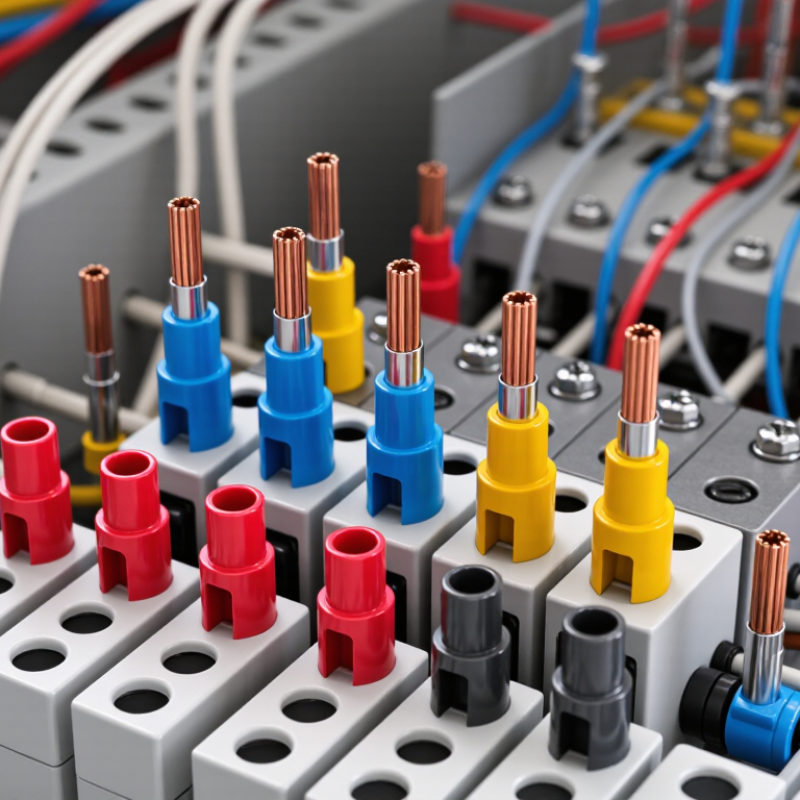
Table of Contents [Hide]
What Are Insulated Wire Terminals?
Insulated wire terminals are crimp connectors with a metal contact covered by a nonconductive sleeve. The sleeve helps prevent accidental contact, short circuits, and conductor damage near the connection point. Common forms include ring, fork, butt, and quick-disconnect terminals. Each design fits a different installation need.
A properly crimped terminal creates stable electrical and mechanical contact. It also keeps loose strands contained inside the connector. The NFPA Home Structure Fires report for 2016–2020 linked electrical distribution and lighting equipment to about 7% of reported home fires. Insulated terminals cannot remove every hazard. They can, however, reduce exposed-conductor risks when selected and installed correctly. Testing requirements in UL 486A-486B address wire-terminal connections, including mechanical strength and current-carrying performance. A terminal may look secure and still fail. That detail is easy to miss.
Tips: Match the terminal size to the wire gauge and load. Strip only the recommended insulation length. Use a calibrated crimping tool, not ordinary pliers. After crimping, pull the wire firmly. No movement should occur. Check the sleeve for cuts, gaps, or heat damage. In damp or vibrating areas, review the terminal’s environmental rating before installation. Recheck your method against the manufacturer’s instructions and applicable electrical codes. Mistakes happen, even during routine work.
Brands
Proudly Trusted by Top Suppliers Worldwide







Let us know and we will automate, together to fit your industrial needs.
 +91-97254 16844
Clients
Proudly Trusted by Top Companies Worldwide


Do you need Help? Get in touch.
X
Please fill out the form below and we will get back to you as soon as possible.