o
p
t
i
m
a
r
o
b
o
t
i
c
s

Make a Call


Make a Call
Blogs
What Is a Lightning Arrestor and How Does It Work?
A Lightning Arrestor is a protective device designed to limit dangerous voltage surges caused by lightning. It gives excess electrical energy a controlled path toward the grounding system. Without this path, a surge may travel through power cables, communication lines, or metal equipment. The result can be damaged insulation, burned circuit boards, or a sudden power failure.
In practical installations, the device remains inactive during normal operation. When voltage rises sharply, its internal components respond within a very short time. Metal-oxide varistors and spark-gap designs are common examples. Each design behaves differently under heat, repeated surges, and electrical faults. Therefore, selecting a Lightning Arrestor requires more than checking its maximum voltage rating. System voltage, grounding quality, impulse current, and installation location all matter.
A strong protection plan also includes short conductors and proper bonding. Long, coiled wires can increase voltage during a lightning event. I have seen protective equipment installed correctly but connected to poor grounding, which greatly reduced its value. That detail is easy to overlook. No arrestor can guarantee complete protection. Lightning is unpredictable, and nearby strikes can create complex surge paths. Regular inspection should check loose connections, corrosion, heat damage, and the device’s status indicator. Manufacturer instructions and recognized electrical standards should guide every installation. This article explains how a Lightning Arrestor works, where it is used, and why grounding deserves equal attention. The technology is reliable, but the installation still needs careful judgment.
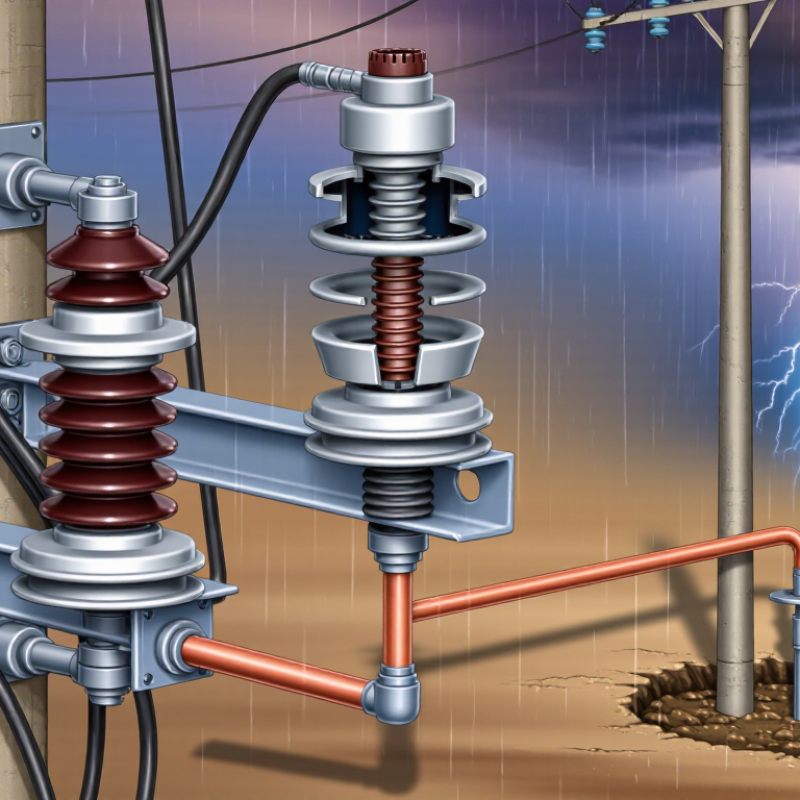
Table of Contents [Hide]
Definition and Purpose of a Lightning Arrestor
What Is a Lightning Arrestor and How Does It Work?
Definition and Purpose of a Lightning Arrestor
A lightning arrestor protects electrical systems from dangerous transient overvoltage. It does not stop lightning or absorb the entire strike. Instead, it redirects excess electrical energy toward ground.
Most modern arrestors use metal-oxide varistors. Under normal voltage, the device remains nearly inactive. During a surge, its resistance drops sharply. This action limits the voltage reaching transformers, control panels, cables, and sensitive equipment. The arrestor then returns to its normal state.
Terminology can be confusing. A lightning rod helps intercept a direct strike outside a structure. A lightning arrestor works mainly inside the electrical system. Both need effective grounding and bonding. Without them, the surge has nowhere safe to travel. A damaged grounding connection can make good equipment perform poorly.
NOAA’s National Severe Storms Laboratory estimates that the United States experiences about 25 million lightning flashes each year. NOAA also notes that lightning can reach around 1 billion volts. These figures explain why small voltage protection devices need correct installation. The International Electrotechnical Commission’s IEC 62305 series also emphasizes coordinated protection, earthing, and risk assessment.
Tips: Install protection at the service entrance and near sensitive loads. Keep grounding conductors short and straight. Check arrestors after major storms. A warning indicator should not be ignored. Protection ratings also deserve review; an oversized confidence can be dangerous. No arrestor makes a building completely lightning-proof.
Brands
Proudly Trusted by Top Suppliers Worldwide







Let us know and we will automate, together to fit your industrial needs.
 +91-97254 16844
Clients
Proudly Trusted by Top Companies Worldwide


Do you need Help? Get in touch.
X
Please fill out the form below and we will get back to you as soon as possible.