o
p
t
i
m
a
r
o
b
o
t
i
c
s

Make a Call


Make a Call
Blogs
What Is Printed Decorative Paper and How Is It Used?
Printed Decorative Paper is a specialized surface material used to create realistic wood, stone, textile, and abstract patterns. It is commonly printed by gravure technology, then impregnated with resin for furniture panels, flooring, doors, and interior fixtures. A printed roll may appear thin, yet it controls the visual identity of a finished board. Small registration errors can make a wood grain look unnatural.
The market is growing steadily. Grand View Research valued the global decorative laminates market at approximately USD 7.9 billion in 2023. Its report projects continued growth through 2030, supported by furniture production, renovation, and commercial interiors. Smithers’ The Future of Decorative Papers to 2028 also highlights demand for higher-quality finishes, digital printing, and more efficient material use. These reports describe related markets, not Printed Decorative Paper alone. That distinction matters.
In practice, manufacturers evaluate paper weight, ink adhesion, color consistency, resin absorption, and surface wear. Designers also consider how lighting changes a printed pattern across a large wall or cabinet door. A sample may look perfect under showroom lighting but appear too warm in daylight. This is where technical testing becomes essential. FSC-certified fiber, water-based inks, and lower-emission resins are receiving greater attention. However, sustainability claims still require evidence, not attractive labels. The industry has progress to show, but its data is not always comparable. A careful buyer should examine test methods, certification scope, and product performance before choosing a decorative paper system.
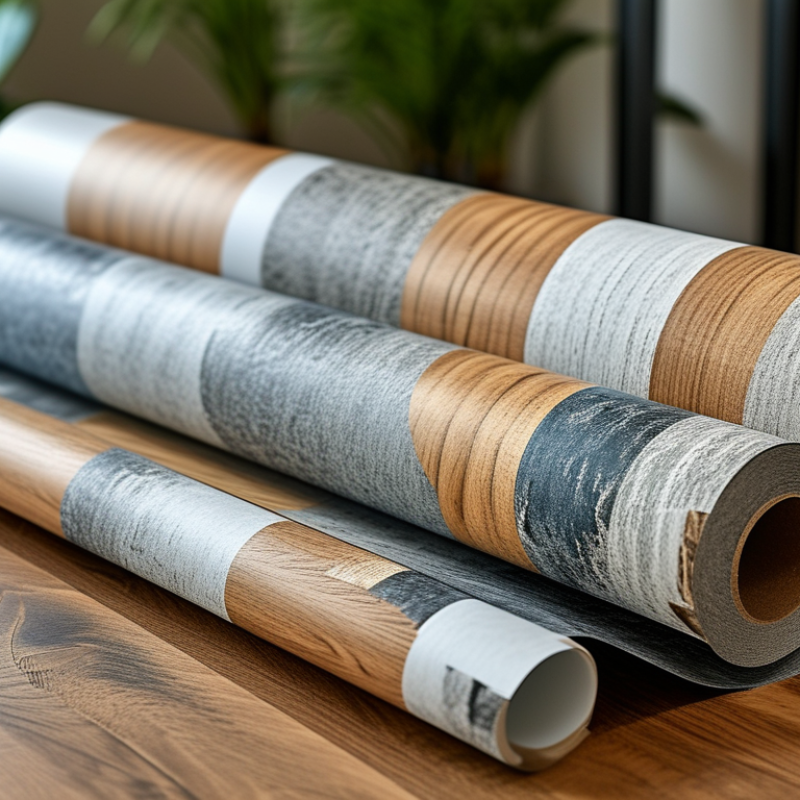
Table of Contents [Hide]
Definition and Basic Characteristics of Printed Decorative Paper
Printed decorative paper is a specially designed paper used to add color, texture, and visual character to interior surfaces. It usually carries printed wood grains, stone patterns, solid colors, or textile-like effects. Manufacturers may coat or impregnate it to improve strength and surface performance.
Its basic characteristics include a lightweight structure, flexible handling, and good ink absorption. However, these features vary by paper grade and production method. After treatment, the paper can become more resistant to moisture, abrasion, fading, and heat. It is commonly applied to furniture panels, flooring surfaces, wall panels, doors, and other laminated products. The final appearance depends on print clarity, color consistency, paper smoothness, and accurate pattern alignment. A small alignment error can make a large panel look unnatural.
Tips:Check the paper under natural and artificial light. Compare several sheets for shade differences. Feel the surface for wrinkles, loose fibers, or uneven coating. Storage also matters; excessive humidity may affect flatness and printing quality. In practice, visual inspection is useful, but it is not enough for every project. Performance should also be confirmed through suitable tests and installation conditions. That balance is sometimes overlooked.
Brands
Proudly Trusted by Top Suppliers Worldwide







Let us know and we will automate, together to fit your industrial needs.
 +91-97254 16844
Clients
Proudly Trusted by Top Companies Worldwide


Do you need Help? Get in touch.
X
Please fill out the form below and we will get back to you as soon as possible.