o
p
t
i
m
a
r
o
b
o
t
i
c
s

Make a Call


Make a Call
Blogs
What Is Rolled Metal and What Types Are Available?
Rolled Metal is produced by passing heated or cold metal through rotating rolls. The pressure reduces thickness and improves dimensional consistency. This process creates sheet, plate, strip, coil, and several structural forms. Steel, aluminum, copper, brass, and titanium are common choices. Each material behaves differently under rolling, forming, welding, and corrosion exposure.
The market scale explains its importance. The World Steel Association reported approximately 1.89 billion tonnes of crude steel production in 2023. The International Aluminium Institute recorded about 70.6 million tonnes of primary aluminum production during the same year. These figures do not represent rolled output directly. However, they show the industrial foundation behind rolled products. Manufacturing lines, building facades, vehicle panels, food cans, and heat exchangers all depend on controlled metal thickness.
Choosing the correct type requires more than comparing appearance or price. Hot-rolled steel offers practical strength and lower processing costs. Cold-rolled steel usually provides tighter tolerances and a smoother surface. Aluminum rolled products reduce weight and resist atmospheric corrosion. Copper strip supports electrical conductivity and thermal transfer.
The boundary is not always tidy.
Terminology also varies between suppliers and regions. A “plate” in one specification may resemble “heavy sheet” elsewhere. Buyers should verify alloy grade, temper, thickness tolerance, surface finish, and test documentation. ASTM standards, EN specifications, and mill certificates help establish reliability. Still, paperwork cannot replace application knowledge. A material that performs well indoors may fail near saltwater. This guide examines what Rolled Metal means, how rolling changes its properties, and which types suit different engineering demands. Some comparisons remain simplified, because real performance depends on processing history, design loads, and service conditions.
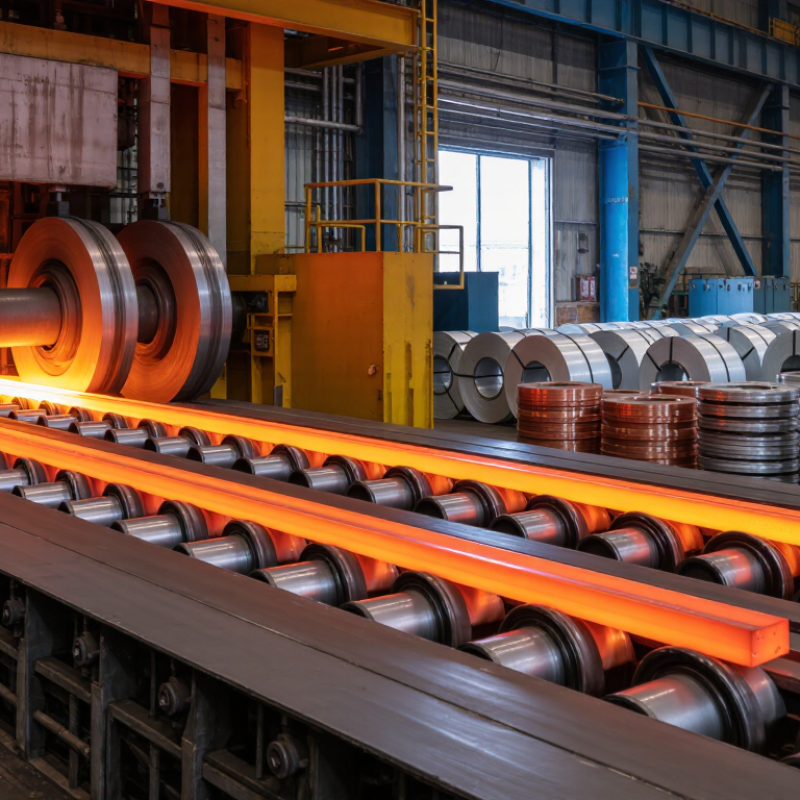
Table of Contents [Hide]
Definition and Basic Principles of Rolled Metal
Rolled metal is metal shaped by passing it between rotating rolls. The rolls apply pressure and reduce the material’s thickness. This process can also change its width, surface, and internal structure. The basic principle is controlled deformation, not cutting. The metal remains continuous as it moves through the rolling mill.
Hot rolling happens above the metal’s recrystallization temperature. Heat makes the material easier to deform and supports large thickness reductions. Steel slabs may leave the mill as plates, sheets, or long structural sections. Aluminum and copper can also be hot rolled. The finished surface may show scale or mild unevenness. It is practical, but rarely perfect.
Cold rolling occurs below the recrystallization temperature, often near room temperature. It produces thinner gauges, tighter dimensions, and a smoother surface. However, the metal becomes harder and less ductile as deformation increases. Annealing may restore some flexibility. That matters. Common rolled forms include sheet, plate, strip, foil, bar, and coil. Their names describe shape and size, not automatically quality. In real production, roll pressure, temperature, lubrication, and speed must work together. A simple diagram can hide these variables. Even experienced operators may need to adjust settings after inspecting edge cracks, waviness, or thickness readings.
Brands
Proudly Trusted by Top Suppliers Worldwide







Let us know and we will automate, together to fit your industrial needs.
 +91-97254 16844
Clients
Proudly Trusted by Top Companies Worldwide


Do you need Help? Get in touch.
X
Please fill out the form below and we will get back to you as soon as possible.