o
p
t
i
m
a
r
o
b
o
t
i
c
s

Make a Call


Make a Call
Blogs
What Is a Tipper Vehicle and How Does It Work?
A Tipper Vehicle is a work truck designed to carry and discharge loose materials efficiently. It is common on construction sites, farms, quarries, and road projects. Sand, gravel, soil, and demolition debris can be loaded into its open tipping body. The body then lifts, allowing gravity to move the material through the rear or side opening.
The lifting process usually depends on a hydraulic system. A pump sends pressurized fluid to a hydraulic cylinder, which raises the body from the chassis. The operator controls this movement from the cab. Some vehicles use a power take-off connected to the engine or transmission. The exact design varies with the vehicle’s size, payload rating, and intended application. It is not complicated. But it must be respected.
In practical use, the driver should confirm that the load is distributed evenly before tipping. Uneven ground can reduce stability, especially when the body is raised. The tailgate, hydraulic lines, tires, and locking mechanisms also require regular inspection. Manufacturer instructions provide the most reliable guidance for operating limits and maintenance intervals. Real job sites are rarely perfect. Material may stick, visibility may be poor, or the ground may change unexpectedly. That is why experienced operators pause when conditions feel uncertain. A Tipper Vehicle can save considerable loading time, yet productivity should never replace careful judgment. Understanding its components and working cycle helps readers choose suitable equipment, recognize potential problems, and operate more responsibly.
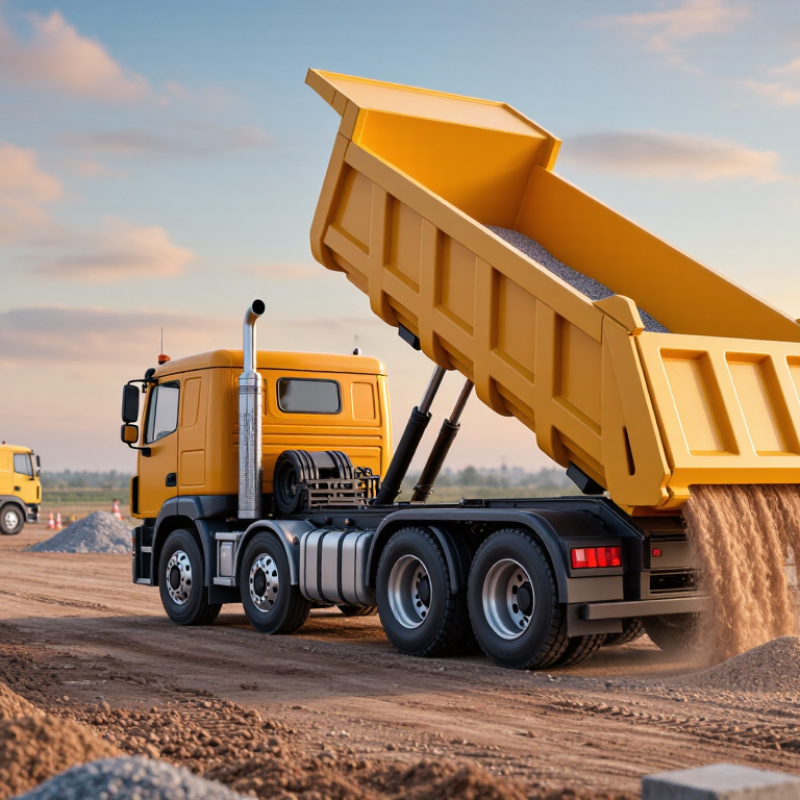
Table of Contents [Hide]
What Defines a Tipper Vehicle? Types, Payloads, and 10–40 t Capacity Classes
A tipper vehicle carries loose material in a hydraulic body that tilts backward or sideways. The raised bed lets gravity discharge soil, gravel, sand, asphalt, or demolition debris. Its defining features are a reinforced body, hydraulic lifting system, chassis frame, and stable load distribution. The European Commission’s 2023 road freight statistics recorded more than 1.9 trillion tonne-kilometres across EU road transport. This scale explains why payload planning matters, even on short construction routes.
Tipper classes are commonly grouped by payload rather than body size. Light units may carry 10–15 tonnes, while medium models usually handle 16–25 tonnes. Heavy construction tippers often operate between 26 and 40 tonnes. A 40-tonne rating does not mean every load should reach 40 tonnes. Axle limits, terrain, moisture, and body volume can reduce the practical payload. The U.S. Federal Highway Administration’s Freight Facts and Figures 2023 projects domestic freight demand to rise from about 17.7 billion tons in 2020 to 25.1 billion tons by 2050. That pressure favors higher-capacity vehicles, but bigger is not always better.
Operators should match payload to material density and route length. One cubic metre of wet soil can weigh roughly 1.7 tonnes. Loose aggregate may vary widely. A body that looks half full can still overload an axle. Field checks remain essential. Payload sensors help, but they are not infallible. The uncomfortable lesson is simple: published capacity describes a limit, not a promise of efficient operation.
| Capacity Class | Typical Vehicle Type | Common Axle Configuration | Typical Payload | Typical Gross Vehicle Weight | Typical Body Volume | Typical Tipping Direction | Suitable Materials and Applications | Key Operating Characteristics |
|---|---|---|---|---|---|---|---|---|
| 10–15 t | Light rigid tipper truck | 4×2 or 6×2 | 10–15 t | Approximately 16–22 t | 8–14 m³ | Rear tipping | Urban construction, landscaping, road maintenance, sand, gravel, soil, and general aggregates | Compact chassis, relatively small turning circle, and good suitability for narrow roads and restricted construction sites. |
| 16–20 t | Medium rigid tipper truck | 6×2 or 6×4 | 16–20 t | Approximately 25–32 t | 12–18 m³ | Rear tipping or three-way tipping | General earthmoving, aggregate delivery, municipal work, and medium-scale infrastructure projects | Balances payload, maneuverability, and operating cost; the 6×4 layout provides better traction on uneven ground. |
| 21–30 t | Heavy rigid tipper truck | 6×4 or 8×4 | 21–30 t | Approximately 32–44 t | 16–24 m³ | Rear tipping | Quarries, major road projects, mining support, demolition debris, crushed rock, and bulk excavation | High structural strength and strong traction; an 8×4 chassis distributes heavy loads across more axles. |
| 31–40 t | Extra-heavy rigid tipper truck or road-legal articulated tipper | 8×4, 10×4, or articulated combination | 31–40 t | Approximately 44–60 t, depending on regulations and configuration | 22–32 m³ | Rear tipping | Large quarries, major earthworks, large-scale civil engineering, and high-volume aggregate transport | Designed for high production rates; route access, axle limits, braking performance, and local legal weight limits are critical. |
| Articulated 25–40 t | Articulated dump truck with a separate tractor and tipping trailer unit | Powered articulated chassis, commonly with multiple driven axles | 25–40 t | Approximately 45–70 t | 18–30 m³ | Rear tipping | Off-road mines, large earthmoving projects, soft ground, steep haul roads, and remote construction sites | Articulation improves terrain-following ability and maneuverability, while the vehicle is generally not intended for unrestricted public-road use at full off-road capacity. |
| Standard rear tipper | Rigid truck with a hinged dump body | 4×2, 6×4, 8×4, or 10×4 | Usually 10–40 t | Determined by chassis, axle limits, and local regulations | Selected according to payload density and operating conditions | Rear | Rock, soil, sand, gravel, asphalt, demolition material, and general bulk solids | The body rotates upward around rear hinges. A hydraulic cylinder raises the front of the body so the load slides out through the open rear gate. |
| Side tipper | Tipper body that discharges laterally | Commonly 6×4, 8×4, or trailer-based configurations | Typically 15–40 t | Varies by chassis and axle arrangement | Typically 15–35 m³ | Left or right side | Road construction, embankment work, aggregate placement, and sites where rear clearance is limited | Can unload faster in certain conditions and is useful where reversing space is restricted; the unloading surface must be stable to reduce rollover risk. |
| Three-way tipper | Body capable of tipping to the rear or either side | Usually 4×2 or 6×2 | Approximately 10–20 t | Approximately 16–32 t | 8–18 m³ | Rear, left side, or right side | Urban utilities, road repairs, landscaping, and sites with limited positioning space | Offers greater placement flexibility, although the additional pivoting and locking mechanisms can add weight and maintenance requirements. |
| Rock or quarry tipper | Heavy-duty rigid tipper with reinforced body | 6×4, 8×4, or 10×4 | 20–40 t | Approximately 32–60 t | 16–30 m³ | Rear | Blasted rock, hard aggregate, ore, and abrasive quarry materials | Uses reinforced wear-resistant steel, robust hinges, and heavy-duty suspension components to withstand impact and abrasion. |
| Light-material tipper | High-volume body designed for low-density materials | 4×2, 6×2, or 6×4 | Payload is limited by legal weight before body volume is fully used | Depends on chassis rating | Approximately 18–35 m³ | Rear or side | Wood chips, agricultural products, household waste, insulation material, and other low-density bulk goods | Uses taller or larger-volume bodywork; the operator must observe both weight limits and maximum fill-volume limits. |
| Hydraulic tipping system | Hydraulic cylinder, pump, reservoir, control valve, and lifting linkage | Installed on rigid trucks, trailers, and articulated dump trucks | Not a payload class by itself | System selection must match the loaded body and chassis | Designed around body length, weight, and center of gravity | Rear, side, or three-way | All common tipper applications | The pump sends pressurized hydraulic fluid to the cylinder. The cylinder extends, lifts the body, and allows gravity to discharge the material before controlled lowering. |
| Payload calculation | Usable carrying capacity of the vehicle | All configurations | Payload = Permitted GVW − Tare Weight | GVW includes the vehicle, body, fuel, fluids, driver, equipment, and cargo | Volume must also be checked against material density | Not applicable | Used to determine whether the vehicle is weight-limited or volume-limited | A tipper may reach its legal payload by weight before the body is full, especially when carrying dense rock, wet soil, or other heavy materials. |
| Safe tipping operation | Controlled loading, positioning, raising, unloading, and lowering | All configurations | Never exceed the permitted payload or axle load | Confirm legal limits for the route and jurisdiction | Load should be distributed evenly and kept below the body’s rated limits | According to body design | All bulk-material transport work | Use firm, level ground whenever possible; keep people clear of the discharge area, verify tailgate operation, and lower the body fully before travelling. |
| Typical figures are general engineering ranges rather than universal specifications. Actual payload, gross weight, body volume, axle arrangement, and road legality vary with vehicle design, body material, load density, terrain, and national regulations. | ||||||||
Brands
Proudly Trusted by Top Suppliers Worldwide







Let us know and we will automate, together to fit your industrial needs.
 +91-97254 16844
Clients
Proudly Trusted by Top Companies Worldwide


Do you need Help? Get in touch.
X
Please fill out the form below and we will get back to you as soon as possible.