o
p
t
i
m
a
r
o
b
o
t
i
c
s

Make a Call


Make a Call
Blogs
7 Tips for Buying Rotorcomp Air Ends
Buying a rotorcomp air ends is not simply a matter of matching horsepower and price. The correct choice affects energy use, production stability, maintenance time, and the life of the complete compressor package. U.S. Department of Energy guidance reports that compressed-air leaks can waste 20–30% of a system’s output, while poorly controlled demand can increase operating costs significantly. These figures make selection discipline essential.
Ron Marshall, a respected compressed-air auditor and efficiency specialist, captures the central issue: “The cheapest compressed air is the air you do not have to produce.” His point applies directly to rotorcomp air ends. A highly efficient air end cannot compensate for excessive pressure, poor controls, dirty intake filters, or an incorrectly sized motor. That assumption is easy to make. It can also become expensive.
This guide presents seven practical tips for evaluating rotorcomp air ends. It considers displacement, pressure requirements, oil injection, efficiency, compatibility, service access, and lifecycle cost. The Compressed Air and Gas Institute also emphasizes evaluating compressor performance under actual operating conditions, rather than relying only on catalogue ratings. That detail matters. A unit running beside a hot furnace faces different demands from one operating in a clean, climate-controlled room.
The process is not perfectly predictable. Plant demand changes. Maintenance records may be incomplete. Even experienced buyers can overlook installation conditions. Careful measurements, supplier documentation, and verified performance data provide a stronger basis for comparison. These seven tips are designed to reduce guesswork before a replacement air end enters your production line.
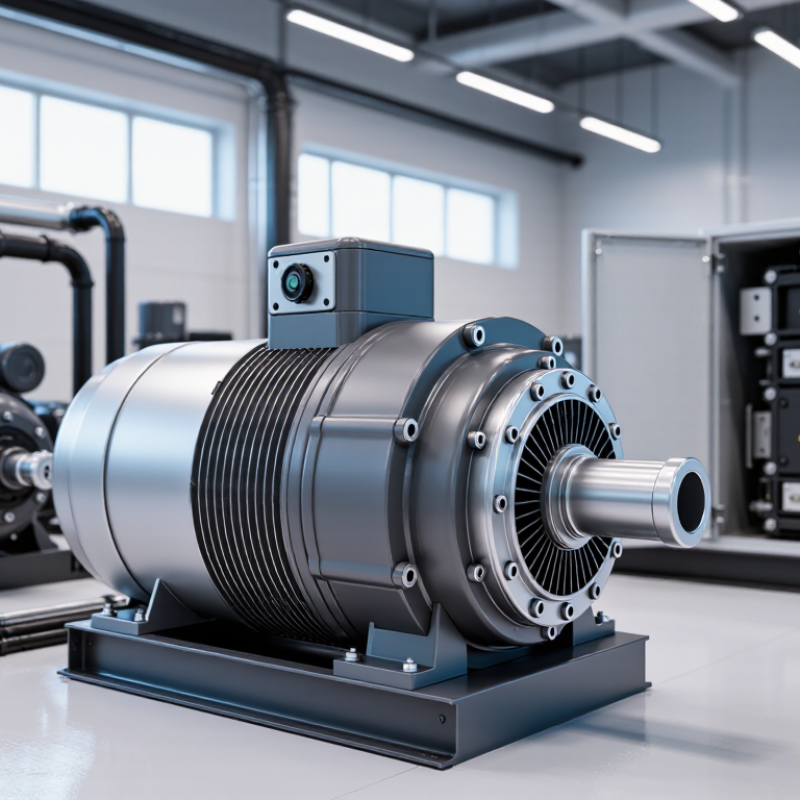
Table of Contents [Hide]
Understand the Role and Specifications of a Rotorcomp Air End
7 Tips for Buying Rotorcomp Air Ends
Understand the Role and Specifications of a Rotorcomp Air End
An air end is the compression core of a rotary screw compressor. It converts shaft rotation into a steady flow of compressed air. Match its displacement to your actual demand, not the largest number on a brochure. Check working pressure, rated speed, and free air delivery under the same test conditions. Small differences can affect production reliability.
Confirm the air end’s mounting dimensions and shaft requirements before ordering. Verify motor power, rotation direction, oil capacity, and connection sizes. A mismatched shaft can create vibration, heat, and premature bearing wear. Review the compression profile and expected efficiency at your normal load range. Full-load efficiency may hide poor part-load performance. Ask for test data, tolerances, and service intervals. Keep the documents.
In a workshop, listen for uneven noise during a cold start. Inspect oil lines, seals, and the coupling area after several operating hours. I once treated a temperature increase as harmless, and the repair later cost more time than expected. That mistake still influences my checks. Consider ambient temperature, dust, humidity, and daily operating hours. Select bearings and seals suitable for those conditions. Confirm replacement-part availability and technical support before purchase. A low purchase price means little when downtime stops a production line. Recheck every specification against the complete compressor package, because an air end rarely works alone.
Brands
Proudly Trusted by Top Suppliers Worldwide







Let us know and we will automate, together to fit your industrial needs.
 +91-97254 16844
Clients
Proudly Trusted by Top Companies Worldwide


Do you need Help? Get in touch.
X
Please fill out the form below and we will get back to you as soon as possible.