o
p
t
i
m
a
r
o
b
o
t
i
c
s

Make a Call


Make a Call
Blogs
7 Tips for Choosing a Longer Laser Cutter
A Longer Laser Cutter can make long panels, signs, and furniture parts easier to handle without repositioning each piece. But a bigger bed is not automatically the better choice. The machine must fit your workspace, materials, and daily workflow. Measure the longest items you expect to cut, then leave room around the machine for loading, ventilation, and routine maintenance. A tape measure on the workshop floor can reveal problems a product photo will not.
This guide shares seven practical tips for choosing a longer laser cutter, from usable bed dimensions and cutting capability to software, construction, service, and safety features. Check the manufacturer’s specifications carefully, and confirm whether listed dimensions describe the work area or the machine’s outer footprint. These numbers are easy to confuse. Ask suppliers about compatible materials and recommended operating conditions, rather than relying on broad claims about cutting performance. Consider how often you will process full-length stock, too; occasional projects may not justify a larger installation.
Think beyond the purchase price. Power requirements, extraction, delivery access, and replacement parts can all affect ownership. A longer machine may need more space than expected, and moving it later can be difficult. That part is often overlooked. Compare several models against real jobs you plan to make, and verify key details with the manufacturer or a qualified dealer. No checklist removes every uncertainty, but a careful comparison can help you choose equipment that suits your work rather than simply occupying more room.
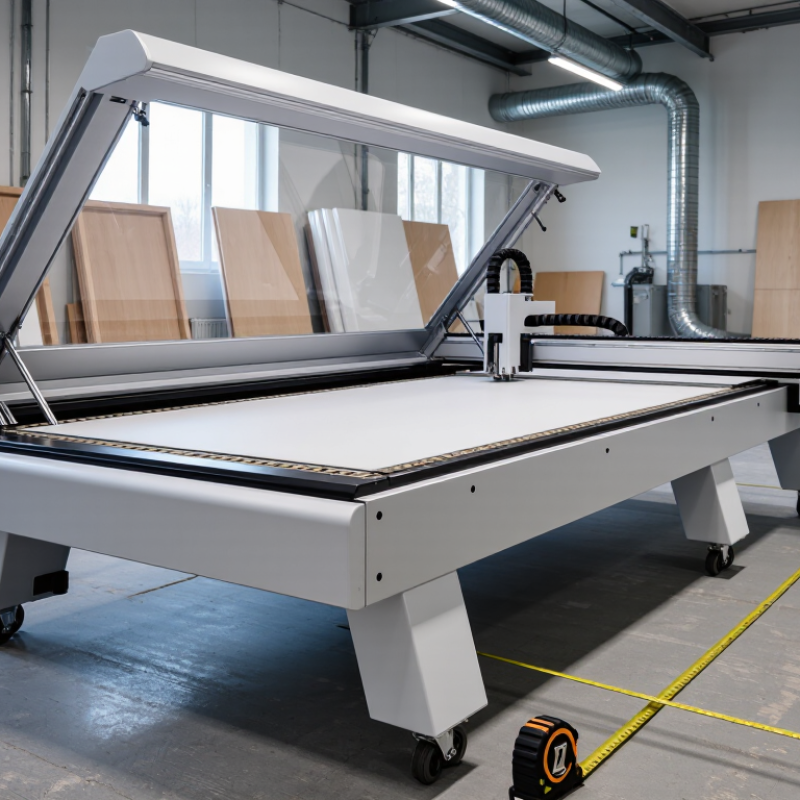
Table of Contents [Hide]
Compare 3,000 mm and 6,000 mm Bed Options With Your Stock Length
A 3,000 mm bed can suit stock cut into shorter blanks; a 6,000 mm bed may reduce repositioning when workpieces approach six metres. Compare usable cutting travel, not just the advertised bed length. Clamps, loading stops, and lead-in space can limit the actual part length. A long bed also needs safe support along the stock, plus enough floor space for loading and unloading.
Tip: Measure the real job. Record your longest regular stock, not an occasional outlier. Add the clearance your operator needs at both ends, then ask the supplier to confirm usable travel and support points. A 6,000 mm option may be wasteful if most jobs use short pieces. It may also slow handling if long stock is awkward to move. I would check this with a real production layout; a paper measurement can miss a tight aisle.
For context, the World Steel Association’s World Steel in Figures 2024 reports 1,892.2 million tonnes of crude steel production in 2023. That figure describes global output, not local stock lengths, so confirm available formats with your material supplier. Test both bed options against actual order records: stock length, remnant size, and setup time. A simple cut plan can expose a costly mismatch.
Brands
Proudly Trusted by Top Suppliers Worldwide







Let us know and we will automate, together to fit your industrial needs.
 +91-97254 16844
Clients
Proudly Trusted by Top Companies Worldwide


Do you need Help? Get in touch.
X
Please fill out the form below and we will get back to you as soon as possible.