o
p
t
i
m
a
r
o
b
o
t
i
c
s

Make a Call


Make a Call
Blogs
10 Tips for Choosing Surface Mining Equipment?
Choosing Surface Mining Equipment is a production decision, not a simple purchasing task. The wrong machine can leave a haul road crowded, a crusher underfed, and maintenance crews waiting beside idle assets. Ore hardness, bench geometry, haul distance, climate, fuel access, operator skill, and planned mine life all deserve attention. Small details matter.
Mining engineer and author Howard L. Hartman wrote, “The selection of mining equipment is a key factor in the success of a mine.” His observation remains practical today. A modern fleet must match the deposit, operating conditions, safety procedures, and measurable production targets. Buyers should compare payload, cycle time, availability, tire or track costs, fuel consumption, automation support, and parts access. Manufacturer brochures help, but verified field data matters more.
This guide presents ten practical tips for choosing Surface Mining Equipment with fewer expensive surprises. It considers excavators, wheel loaders, haul trucks, drills, dozers, graders, and support machines as one connected system. A larger truck may appear efficient, yet poor road design can erase its advantage. Electric equipment may reduce site emissions, but charging infrastructure can complicate planning. No checklist is perfect. That is worth remembering.
The strongest decision combines supplier evidence, operator feedback, maintenance history, and realistic production modeling. Ask difficult questions. Test assumptions. Review the numbers after each operating season. Reliable Surface Mining Equipment should support safe work, consistent output, manageable costs, and long-term site resilience—not merely impressive specifications.
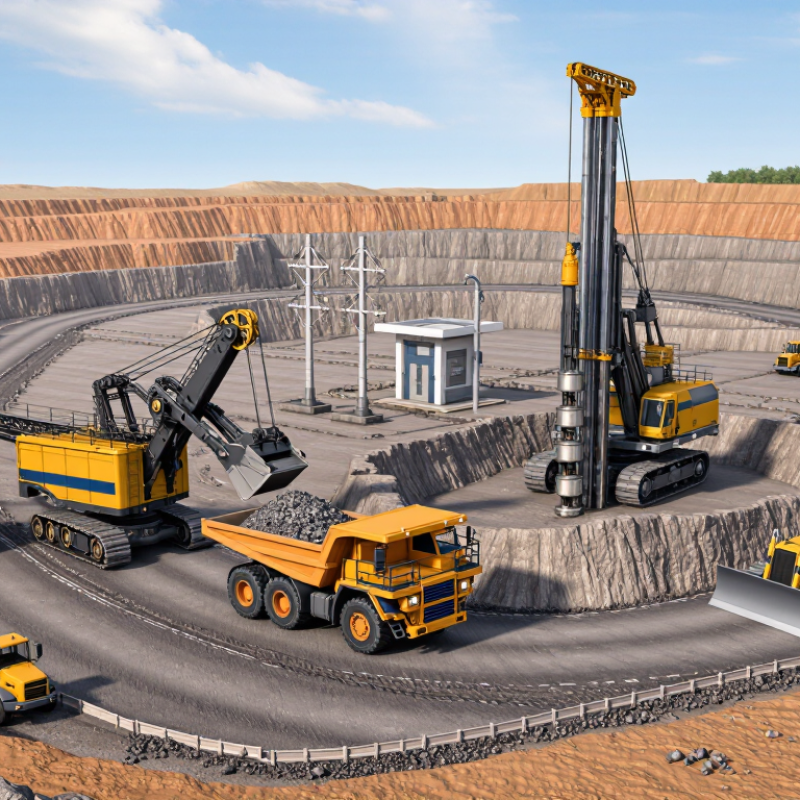
Table of Contents [Hide]
Define the Mining Site, Materials, and Operating Conditions
Start with the ground. Define the mining site before comparing equipment specifications. Map bench heights, haul-road widths, gradients, drainage paths, and turning areas. Record rainfall, temperature, altitude, dust, and ground-bearing capacity. A machine that performs well on dry rock may struggle in saturated clay. That difference can damage schedules and increase maintenance pressure.
Material properties deserve equal attention. Measure hardness, density, moisture, fragmentation, and abrasiveness from representative samples. The USGS Mineral Commodity Summaries 2024 estimated global iron ore mine production at 2.5 billion metric tons in 2023. This scale shows why small efficiency losses can become significant costs. The IEA’s Global Critical Minerals Outlook 2024 reported that lithium demand increased by nearly 30% in 2023. Changing material streams may require different loading, crushing, and hauling arrangements.
Match the equipment to the operating conditions, not only to rated capacity. Calculate payload using real road gradients and expected weather interruptions. Check whether tires, tracks, cooling systems, and filtration suit the site environment. Use a field trial when possible. It reveals delays that spreadsheets miss. I have seen planning teams overvalue peak production and undervalue access time. That is an avoidable mistake. Recheck fuel use, cycle time, operator visibility, and service access after the trial. Also document assumptions. Some will be wrong. That is useful, if the review happens before procurement. (Sources: USGS, Mineral Commodity Summaries 2024; IEA, Global Critical Minerals Outlook 2024.)
Brands
Proudly Trusted by Top Suppliers Worldwide







Let us know and we will automate, together to fit your industrial needs.
 +91-97254 16844
Clients
Proudly Trusted by Top Companies Worldwide


Do you need Help? Get in touch.
X
Please fill out the form below and we will get back to you as soon as possible.