o
p
t
i
m
a
r
o
b
o
t
i
c
s

Make a Call


Make a Call
Blogs
10 Tips for Choosing the Best Drill Accessories?
Choosing the right Drill Accessories can change a frustrating project into a controlled, accurate job. A worn bit may create heat, rough holes, and wasted material. A suitable accessory can improve cutting speed, surface quality, and user confidence. The difference often appears in small details, such as a clean pilot point or a secure chuck connection.
Roy Berendsohn, a longtime tool editor and practical workshop authority, offers a useful reminder: “Choose the right tool for the job.” This principle applies directly to Drill Accessories. A masonry bit belongs on brick or concrete. A brad-point bit is better suited to clean holes in timber. Metal requires sharper geometry, proper speed, and sometimes cutting fluid. These choices are not merely technical preferences. They affect safety, durability, and the final result.
The following ten tips examine those decisions from a practical angle. They consider material compatibility, size accuracy, shank design, coating quality, storage, and realistic workload. A professional may need premium accessories for daily use. A homeowner might value versatility more than extreme service life. Neither choice is automatically correct.
There is no perfect kit.
Even experienced users make mistakes. I have seen a seemingly minor mismatch damage a bit within seconds. That lesson is easy to remember: compare the accessory with the drill, the material, and the task before pressing the trigger. These guidelines aim to make that check faster, clearer, and more reliable.
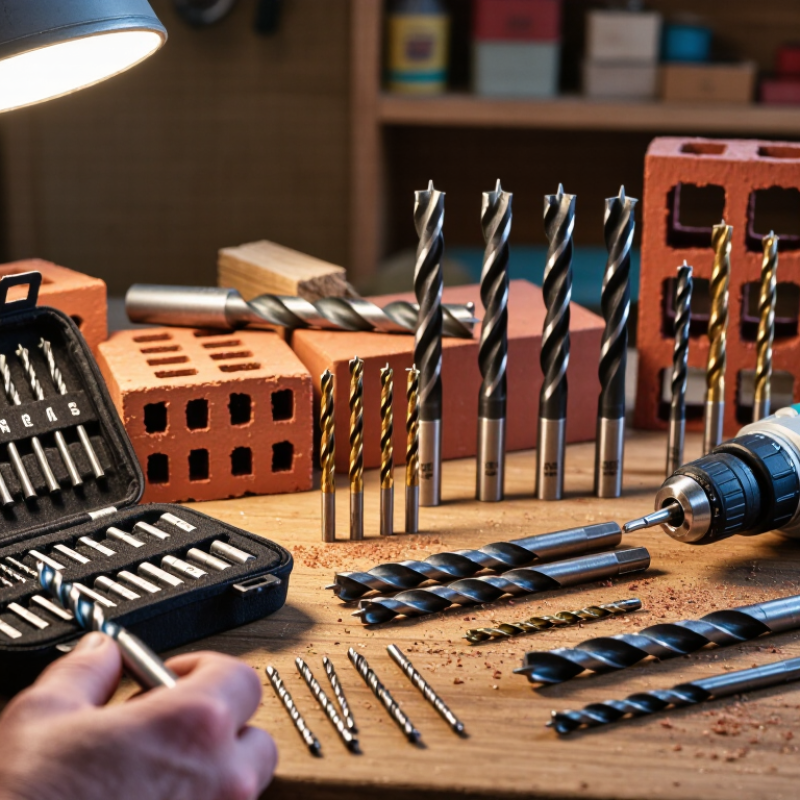
Table of Contents [Hide]
Understanding Drill Accessory Types and Their Primary Uses
Choosing drill accessories starts with the material, not the drill. Twist bits suit wood, plastic, and metal. Masonry bits use carbide tips for brick and concrete. Spade bits make fast holes in timber, while hole saws create wider openings for pipes and cables. Driver bits handle screws, and sanding drums shape edges or remove surface residue.
Tip 1: Match the bit to the surface. A metal bit can overheat in concrete. A masonry bit may leave wood fibers torn.
Tip 2: Check the shank size and chuck compatibility before buying. According to Grand View Research’s 2024 power tools market report, the global market was estimated at about 40 billion dollars in 2023. That scale reflects broad demand, but it does not prove every accessory suits every task. Selection still depends on speed, pressure, and material.
Tip 3: Inspect the cutting edge. A sharp tip should enter cleanly, without excessive force.
Tip 4: Use a pilot hole for large diameters. This reduces wandering and improves control. Safety data from the U.S. Bureau of Labor Statistics continues to identify hand and power tools among common sources of workplace injuries, so eye protection and stable workpieces remain practical requirements. I still keep one slightly worn bit for rough jobs, although that habit is not ideal. It can hide cracks. Replace accessories when cutting becomes slow, heat rises, or the tip shows visible damage.
Brands
Proudly Trusted by Top Suppliers Worldwide







Let us know and we will automate, together to fit your industrial needs.
 +91-97254 16844
Clients
Proudly Trusted by Top Companies Worldwide


Do you need Help? Get in touch.
X
Please fill out the form below and we will get back to you as soon as possible.