o
p
t
i
m
a
r
o
b
o
t
i
c
s

Make a Call


Make a Call
Blogs
Top 10 304 Stainless Steel Plate Suppliers Worldwide
Choosing a reliable supplier for 304 Stainless Steel Plate requires more than comparing online prices. Material quality, production consistency, documentation, and delivery performance can directly affect fabrication results. This guide reviews ten notable suppliers worldwide, using practical criteria that purchasing teams and engineers commonly consider.
The evaluation focuses on stainless steel grade verification, plate thickness tolerance, surface finish, mill certificates, testing procedures, and export experience. It also considers whether suppliers support custom dimensions, edge treatment, packaging, and technical communication. A polished website proves little. Real reliability appears in traceable heat numbers, clear inspection records, and plates that arrive without deep scratches, warped edges, or moisture stains.
Details matter.
The selected companies represent different manufacturing regions and business models. Some operate large integrated mills, while others specialize in processing, distribution, or project-based supply. Their strengths may differ by application, order volume, and destination market. A supplier excellent for heavy industrial projects may not suit a small fabrication workshop.
This ranking should not be treated as an absolute verdict. Supplier capabilities can change, and published information may not reveal every operational weakness. Buyers should request current certificates, confirm applicable standards, inspect sample plates, and clarify delivery terms before placing an order. Even experienced purchasers can overlook packaging quality or small tolerance differences. That is worth remembering.
The following overview offers a practical starting point for comparing global suppliers of 304 Stainless Steel Plate. It aims to support informed decisions, not replace independent technical verification.
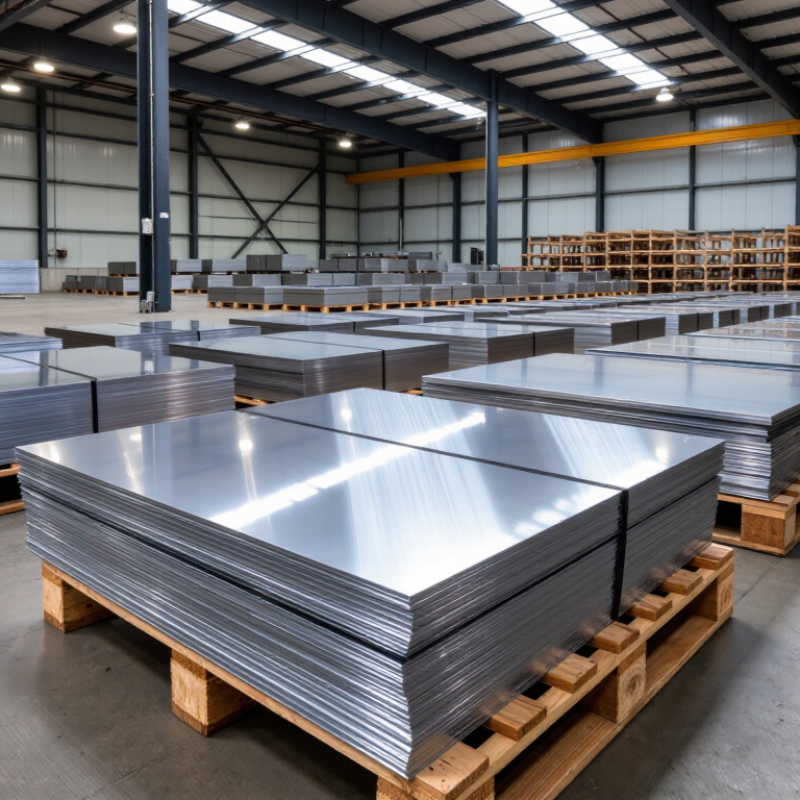
Table of Contents [Hide]
What Is 304 Stainless Steel Plate?
304 stainless steel plate is a flat, corrosion-resistant product made from an austenitic stainless steel grade. It usually contains about 18% chromium and 8% nickel, with a low carbon level. Chromium forms a thin protective oxide film on the surface. That film can repair itself when exposed to oxygen.
It is widely used for food-processing equipment, kitchen surfaces, storage tanks, architectural panels, and general fabrication. The plate can be cut, bent, welded, and polished with suitable equipment.
It remains non-magnetic or only slightly magnetic after normal processing. Common thicknesses range from thin sheet-like gauges to heavy industrial plate. Surface finishes may include brushed, polished, or mill finish.
304 is capable, not invincible. Chloride-rich water, salt spray, and stagnant moisture can cause staining or pitting. It may not be the best choice for severe coastal or chemical environments.
Fabricators should verify thickness, surface condition, chemical composition, and mill test certificates before production. Positive material identification can also reduce costly mix-ups.
In practice, poor cleaning may damage an otherwise suitable plate. This detail is easy to overlook. Specifications such as ASTM A240 are often used for purchasing and inspection, but the final selection should match the actual temperature, chemical exposure, and forming requirements.
Brands
Proudly Trusted by Top Suppliers Worldwide







Let us know and we will automate, together to fit your industrial needs.
 +91-97254 16844
Clients
Proudly Trusted by Top Companies Worldwide


Do you need Help? Get in touch.
X
Please fill out the form below and we will get back to you as soon as possible.