o
p
t
i
m
a
r
o
b
o
t
i
c
s

Make a Call


Make a Call
Blogs
Top 10 Types of Chamfering Cutters for Buyers?
Choosing a Chamfering Cutter is not simply a matter of selecting the sharpest tool. Buyers must match cutter geometry, material, angle, diameter, coating, and machine capability. A 45-degree cutter may suit a general deburring task, while a carbide indexable cutter may perform better on repeated production runs. Small details matter. A poor choice can leave burrs, chatter marks, or an uneven edge.
Dr. Tony L. Schmitz, a respected machining dynamics researcher, offers a valuable principle: “The tool, workpiece, and process must be considered as one dynamic system.” This idea guides the comparison behind the Top 10 Types of Chamfering Cutters for Buyers. Each type has a practical role, from countersink cutters and adjustable chamfer mills to solid carbide and insert-based designs. Their performance changes with steel hardness, aluminum’s tendency to build up, spindle speed, coolant use, and workholding stability.
No list is perfect. Some cutter categories overlap, and supplier descriptions are not always consistent. Buyers should still verify dimensions, included angles, cutting-edge quality, and replacement-part availability. Look closely at the finished edge under bright light. It should appear clean, continuous, and free from tearing. A trial cut on the actual material remains more reliable than a catalog promise. This guide therefore focuses on useful differences, common limitations, and purchasing details that can prevent expensive mistakes. Good tooling saves time. Better judgment saves more.
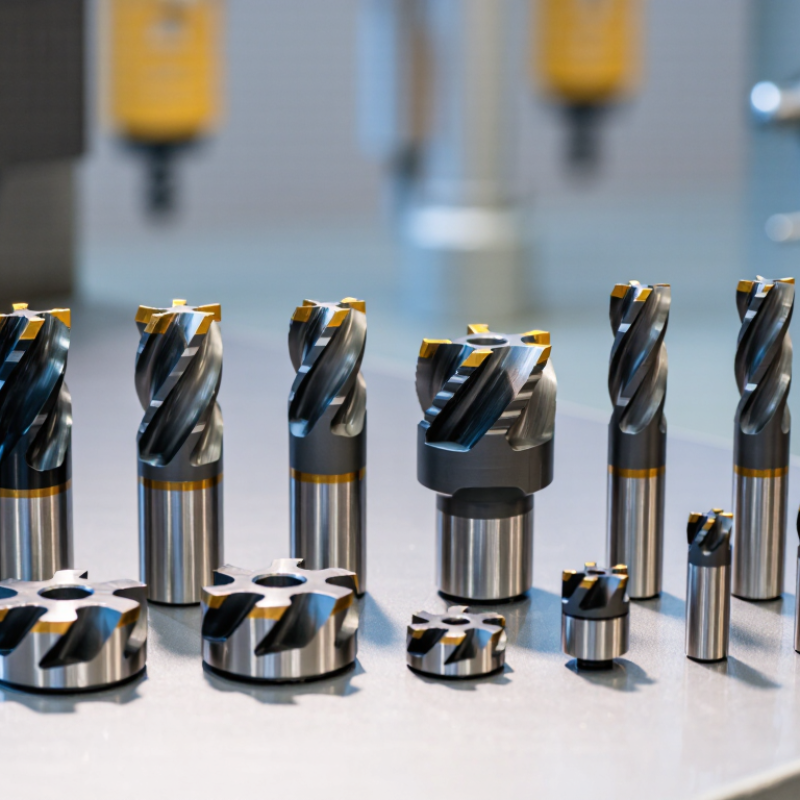
Table of Contents [Hide]
Chamfer Cutter Fundamentals: 45° and 90° Angles in Industry
Top 10 Types of Chamfering Cutters for Buyers?
Chamfering cutters remove sharp edges, prepare weld joints, and guide fasteners into holes. The 45° cutter is the general-purpose choice. It creates a balanced edge break and usually needs less cutting force than steeper profiles. A 90° cutter produces a wider, flatter recess for countersunk screw heads. It demands better spindle rigidity and careful feed control. Small errors become visible rings.
The ten common families include solid-carbide, high-speed-steel, indexable, single-flute, multi-flute, countersink, back-chamfer, deburring, adjustable, and form cutters. Buyers should match the angle with material hardness, hole diameter, coating, and machine stability. ISO 13715 provides guidance for defining undefined edges, but it does not replace a production trial. That distinction matters.
Grand View Research estimated the global cutting-tools market at about USD 23 billion in 2023, with growth continuing through 2030. This expansion reflects wider machining demand, but market size cannot identify the correct cutter. U.S. Cutting Tool Institute and AMT monthly reports also track cutting-tool shipments by value, showing why purchasing teams should compare tool life, not only unit price. In practice, a 45° tool may last longer on aluminum, while a 90° tool may improve seating accuracy in steel. I have seen drawings specify an angle without stating edge width. That is a costly omission. Test one cutter, inspect the burr, and measure the finished chamfer before ordering hundreds.
Top 10 Types of Chamfering Cutters for Buyers? - Chamfer Cutter Fundamentals: 45° and 90° Angles in Industry
| No. | Chamfering Cutter Type | Common Included Angle | Typical Cutting Edge | Suitable Materials | Typical Industrial Uses | Key Advantages | Buyer Considerations |
|---|---|---|---|---|---|---|---|
| 1 | Single-Flute Chamfer Mill | 90° | One cutting edge | Aluminum Plastics Soft steel | Edge breaking, deburring, countersinking, and light chamfering on CNC machines. | Good chip clearance and reduced cutting force; useful for softer materials. | Choose a rigid tool holder and suitable feed rate; less productive than multi-flute tools in some operations. |
| 2 | Two-Flute Chamfer Mill | 90° | Two cutting edges | Aluminum Steel Brass | General-purpose chamfering, countersinking, and profiling. | Balanced option between productivity, chip space, and surface finish. | Confirm flute geometry and coating compatibility with the workpiece material. |
| 3 | Multi-Flute Chamfer Mill | 45° or 90° | Three or more cutting edges | Steel Stainless steel Non-ferrous alloys | High-volume edge finishing and consistent chamfer production. | Higher potential feed rate and efficient material removal when machine rigidity is adequate. | Smaller chip gullets require proper chip evacuation and stable machining conditions. |
| 4 | Indexable Chamfer Cutter | 45°, 60°, or 90° | Replaceable carbide inserts | Cast iron Steel Stainless steel | Production chamfering, heavy-duty edge preparation, and large workpieces. | Insert replacement can restore cutting performance without replacing the cutter body. | Check insert availability, screw security, runout, and the required chamfer width. |
| 5 | Solid Carbide Chamfer Mill | 45° or 90° | Integrated carbide cutting edges | Hardened steel Tool steel Titanium alloys | Precision CNC machining, small components, and hard or abrasive materials. | High rigidity, good wear resistance, and accurate edge geometry. | Higher purchase cost; avoid excessive tool deflection and use appropriate coolant practices. |
| 6 | High-Speed Steel Chamfer Cutter | 45° or 90° | HSS cutting edges | Mild steel Brass Aluminum | Manual milling, maintenance work, low-to-medium production, and general workshop use. | Lower cost and greater toughness than carbide in interrupted or less rigid setups. | Use lower cutting speeds than carbide; edge life may be shorter in abrasive materials. |
| 7 | Micro Chamfer Cutter | 45° or 90° | Small-diameter precision edge | Tool steel Aluminum Engineering plastics | Medical components, electronics parts, miniature molds, and fine mechanical components. | Designed for very small chamfers and detailed edge control. | Requires low runout, high spindle accuracy, and careful tool handling to prevent breakage. |
| 8 | Back Chamfer Cutter | 45° or 60° | Offset or undercutting edge | Steel Aluminum Non-ferrous metals | Chamfering the rear side of holes, slots, and features that are difficult to access from the front. | Performs front and back edge preparation with reduced workpiece repositioning. | Verify clearance, tool reach, machine travel, and the required pilot or neck diameter. |
| 9 | Adjustable Chamfer Cutter | Usually 45° or 90° | Adjustable blade or insert position | Steel Aluminum Cast iron | Variable chamfer widths, repair work, and applications with changing edge requirements. | One cutter can cover a range of chamfer dimensions when correctly set. | Setup accuracy is critical; inspect locking mechanisms and verify repeatability before production. |
| 10 | Combination Chamfer and Countersink Cutter | Typically 90° | Chamfering and countersinking geometry | Steel Aluminum Brass | Preparing holes for flat-head fasteners while also removing sharp edges. | Combines two operations and can reduce tool changes in repetitive work. | Match the included angle and cutting diameter to the fastener head and hole specification. |
Brands
Proudly Trusted by Top Suppliers Worldwide







Let us know and we will automate, together to fit your industrial needs.
 +91-97254 16844
Clients
Proudly Trusted by Top Companies Worldwide


Do you need Help? Get in touch.
X
Please fill out the form below and we will get back to you as soon as possible.