o
p
t
i
m
a
r
o
b
o
t
i
c
s

Make a Call


Make a Call
Blogs
What Are the Top 10 Industrial Floor Scrubber Types?
Choosing the right Industrial Floor Scrubber is rarely as simple as selecting the largest machine. Floor size, surface texture, soil type, traffic, and water access all influence the decision. A compact walk-behind scrubber may suit a crowded retail aisle. A ride-on model may clean a warehouse floor faster, but only with enough turning space.
Hartmut Jenner, CEO of Kärcher, has described the wider purpose of professional cleaning: “Cleaning creates safety, health, and quality of life.” That idea applies directly to industrial floors. A scrubber should remove oil residue, dust, rubber marks, and embedded grime without damaging the surface. It should also support safer movement, controlled water use, and consistent results between operators. This guide examines ten major Industrial Floor Scrubber types, including walk-behind, ride-on, robotic, cylindrical, disk, orbital, battery-powered, and ride-on sweeper-scrubber machines. Each design has a different working rhythm.
Some machines look impressive but perform poorly in narrow aisles. Others seem modest yet deliver excellent results on sensitive floors. That detail matters. It is easy to overestimate speed and underestimate maintenance, drying time, or operator training. The best choice depends on actual site conditions, not showroom appeal. Readers should compare brush pressure, tank capacity, runtime, recovery performance, noise levels, and service access. No single scrubber wins everywhere. That assumption deserves a second look.
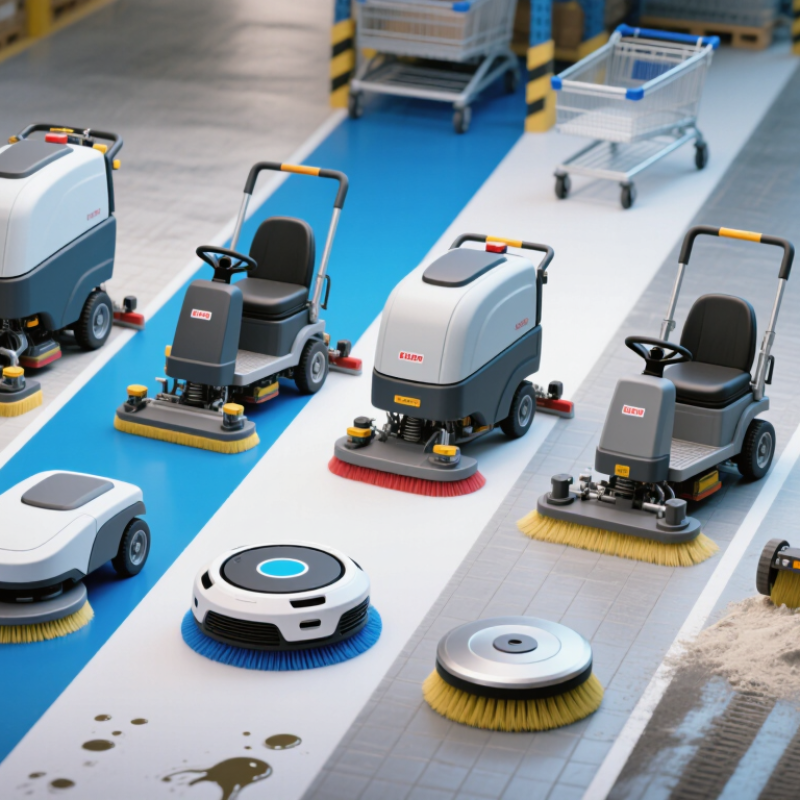
Table of Contents [Hide]
Industrial Floor Scrubbers: Purpose, Design, and Main Categories
Industrial Floor Scrubbers: Purpose, Design, and Main Categories
Industrial floor scrubbers remove soil, grease, and water from large hard surfaces. Their design combines solution tanks, rotating brushes, vacuum recovery, and controlled pressure. Grand View Research valued the global floor scrubber market at approximately USD 3.2 billion in 2023, reflecting demand for faster, more consistent cleaning.
The ten main types include walk-behind, ride-on, robotic, compact, cylindrical, disc, orbital, battery-powered, corded, and sweeper-scrubber machines. Disc models suit smooth warehouse floors, while cylindrical brushes reach shallow grout lines and textured concrete. Ride-on units cover expansive logistics facilities quickly. Compact machines work better around columns, doorways, and narrow production aisles. Robotic scrubbers add route programming, sensors, and lower routine labor demands, but they still require supervision.
Battery systems reduce cable hazards, yet charging schedules affect productivity. Corded units offer steady power but restrict movement. MarketsandMarkets projects continued growth in automated cleaning equipment as facilities pursue measurable labor efficiency. That data supports automation, but not every site needs it. I have seen specifications look impressive while dirty recovery tanks reduce real performance. Floor condition, drainage, operator training, and detergent control matter just as much. A thoughtful selection begins with soil type, aisle width, floor texture, water access, and daily cleaning hours. Sometimes, the less powerful machine cleans better.
Brands
Proudly Trusted by Top Suppliers Worldwide







Let us know and we will automate, together to fit your industrial needs.
 +91-97254 16844
Clients
Proudly Trusted by Top Companies Worldwide


Do you need Help? Get in touch.
X
Please fill out the form below and we will get back to you as soon as possible.