o
p
t
i
m
a
r
o
b
o
t
i
c
s

Make a Call


Make a Call
Blogs
Top 10 Long Range RFID Readers for Global Buyers?
Choosing the right Long Range Rfid reader starts with the operating environment, not a glossy specification sheet. A reader that performs well across an open loading dock may struggle beside steel racks, liquid-filled containers, or dense pallet traffic. Global buyers must examine read distance, antenna design, connection options, tag sensitivity, and regional radio approvals. Small details matter. A misplaced antenna can create a costly blind spot.
Industry evidence supports careful evaluation. The RAIN Alliance Annual Industry Report has documented sustained growth in RAIN RFID adoption and tag shipments across retail, logistics, healthcare, and manufacturing. GS1 guidance also emphasizes standardized identification, data quality, and reliable capture at operational checkpoints. Meanwhile, ABI Research and MarketsandMarkets reports identify supply-chain visibility as a major RFID growth driver. These reports describe direction, not a universal buying answer. Market forecasts can also age quickly.
This guide compares ten long-range readers for international purchasing teams. It considers practical performance at dock doors, conveyor lanes, warehouse portals, and outdoor inventory areas. The review also examines EPC Gen2v2 support, API availability, environmental protection, power requirements, and integration with WMS or ERP platforms. Security deserves attention, too. Buyers should verify FCC, CE, UKCA, or other applicable regional approvals before deployment. No ranking fits every facility. A rugged reader may be excessive for a clean indoor portal, while a cheaper model may disappoint in reflective environments. That is the uncomfortable part. Specifications rarely predict the entire installation experience. Practical trials remain essential.
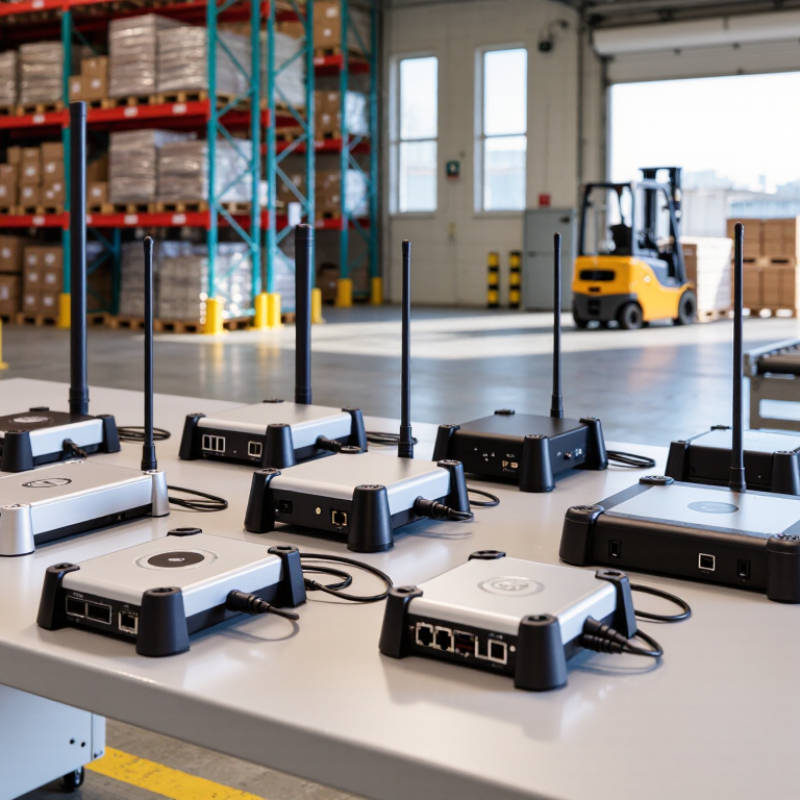
Table of Contents [Hide]
What Long-Range RFID Readers Are and How They Work
Long-range RFID readers use radio waves to identify tagged objects from several meters away. Most systems operate in the UHF range, where a reader sends energy through an antenna. The passive tag captures that energy and reflects a coded response. The reader then decodes the tag’s identity and stored data. No direct line of sight is required. However, distance alone is not enough.
In a warehouse, a reader may scan pallet tags near a loading door while forklifts pass through. Performance depends on antenna placement, tag orientation, reader power, and nearby materials. Metal can reflect signals, while liquids can weaken them.
Regional radio requirements also affect suitable operating frequencies and power levels. A claimed reading distance is only a test result, not a promise. Real sites are messier.
Tips: Test representative tags on actual cartons, pallets, and equipment. Create a controlled read zone to reduce unwanted scans. Check performance at different speeds and angles. Keep cables short and inspect connectors regularly. Record missed reads, not only successful scans. This often reveals the real weakness. Buyers should also confirm data interfaces, environmental protection, and local compliance before installation. A technically impressive reader can still fail when the antenna faces the wrong direction.
Brands
Proudly Trusted by Top Suppliers Worldwide







Let us know and we will automate, together to fit your industrial needs.
 +91-97254 16844
Clients
Proudly Trusted by Top Companies Worldwide


Do you need Help? Get in touch.
X
Please fill out the form below and we will get back to you as soon as possible.