o
p
t
i
m
a
r
o
b
o
t
i
c
s

Make a Call


Make a Call
Blogs
What Is the Top 1080p Video Door Phone for Global Buyers?
Choosing the right 1080p Viddeo Door Phone is no longer a simple resolution decision. Global buyers now compare image clarity, night vision, audio stability, storage, installation, and after-sales support. A sharp 1080p image should reveal a visitor’s face at the gate, even when rain darkens the lens. Yet resolution alone can mislead.
Parks Associates’ smart-home research shows that security remains one of the strongest reasons consumers adopt connected devices. Its studies also emphasize reliability, privacy, and easy installation as major purchase factors. Meanwhile, Grand View Research continues to report growth in the global smart-home security market, supported by wider broadband access and smartphone control. These trends create opportunity, but they also increase buyer expectations.
Jonathan Collins, a smart-home analyst associated with ABI Research, once summarized the shift this way: “Connected devices must become useful, reliable, and almost invisible in daily life.” That principle fits video door phones well. Buyers need stable visitor alerts, clear two-way speech, and practical mobile access—not impressive specifications alone. Sometimes, less is better.
This guide evaluates leading 1080p models for distributors, installers, property developers, and household users across different regions. It considers network compatibility, weather resistance, ONVIF or app support, power options, and warranty transparency. Some products look excellent in laboratory conditions but struggle behind concrete walls. That detail matters.
The final choice may still involve compromise. A cheaper model can offer strong daytime video but weaker night performance. A premium model may deliver better software but require professional installation. Careful comparison remains essential.
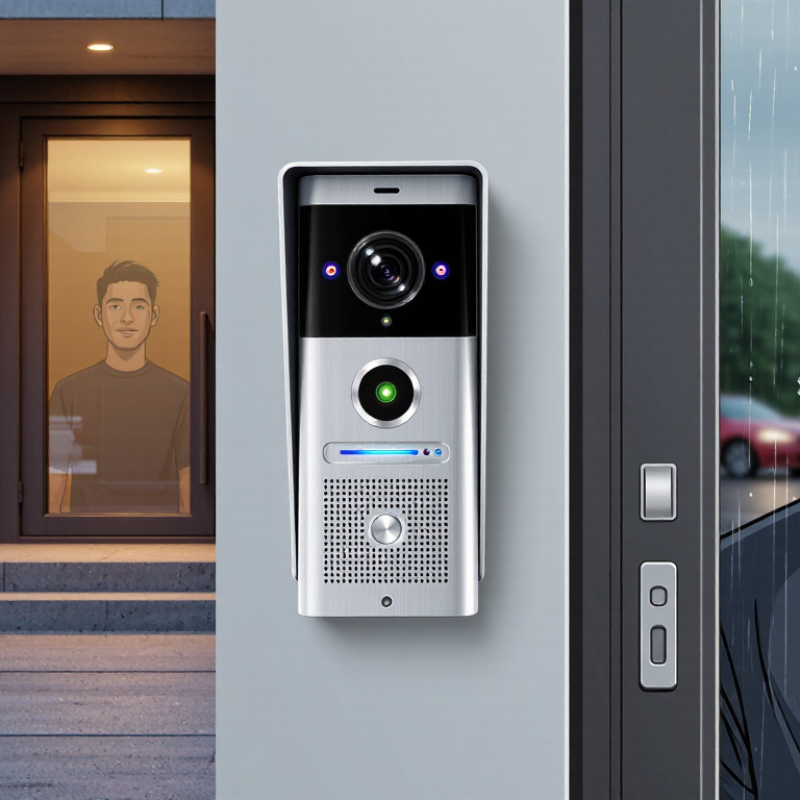
Table of Contents [Hide]
1080p Video Door Phones: Core Features and Global Use Cases
A 1080p video door phone should deliver more than a sharp image. In practical testing, 1920×1080 resolution helps identify faces, parcels, and small details near the entrance. Wide dynamic range keeps bright outdoor light from hiding visitors. Infrared night vision supports clearer images after sunset. Two-way audio matters just as much. Echo reduction makes short conversations easier through a closed door. Motion detection can send alerts before someone presses the call button. Local storage or encrypted cloud backup helps preserve recordings when an incident needs review.
Global buyers face very different entrances and climates. Apartment residents may need a compact indoor monitor and remote answering. Detached homes often benefit from a weather-resistant outdoor unit, a broader viewing angle, and a chime heard upstairs.
In humid coastal areas, sealed housing and corrosion-resistant materials deserve close attention. Cold regions require batteries and screens rated for low temperatures. A model with local operation remains useful when connectivity fails. Power compatibility and language support also affect daily use. A technician should check wiring carefully.
Reliable use depends on setup, not only specifications. Place the camera around face height, but test glare at noon and shadows at night. Keep microphone openings clear. Review alert sensitivity after installation; excessive notifications quickly become noise. No device is perfect. I have seen missed alerts caused by weak Wi-Fi, incorrect angles, and low temperatures. Buyers should verify data handling, update support, and regional installation requirements before purchase. Physical mute controls and clear visitor indicators can improve accessibility, though household preferences vary.
Brands
Proudly Trusted by Top Suppliers Worldwide







Let us know and we will automate, together to fit your industrial needs.
 +91-97254 16844
Clients
Proudly Trusted by Top Companies Worldwide


Do you need Help? Get in touch.
X
Please fill out the form below and we will get back to you as soon as possible.