o
p
t
i
m
a
r
o
b
o
t
i
c
s

Make a Call


Make a Call
Blogs
Top Barbed Wire Types for Sale in 2026
Choosing the right barbed wire in 2026 starts with the site, not the product label. A long rural boundary, a livestock enclosure, and a commercial perimeter have different demands. Wire gauge, barb spacing, coating, and installation conditions all affect performance. A roll that looks sturdy in a catalog may not suit a damp, windy site or existing fence posts. Small details matter.
This guide compares common barbed wire types for buyers searching for barbed wire for sale. It covers galvanized and coated options, conventional two-strand wire, high-tensile designs, and variations in barb spacing. It also explains what to check before ordering: roll length, wire diameter, coating specifications, packaging, and compatibility with the supporting fence. Ask for product data, not just a broad durability claim. If possible, inspect a sample; the finish and barb consistency can reveal details a product photo misses.
A practical fencing principle is: “Choose the wire for the site, not the price tag.” No named expert quotation is included here because a verifiable source was not provided; attaching that advice to an invented authority would be misleading. Use the comparisons that follow as a starting point, then confirm specifications with the supplier and a qualified installer. Conditions vary. There is no single best type for every boundary, and even a well-chosen product can disappoint if installation or maintenance is overlooked.
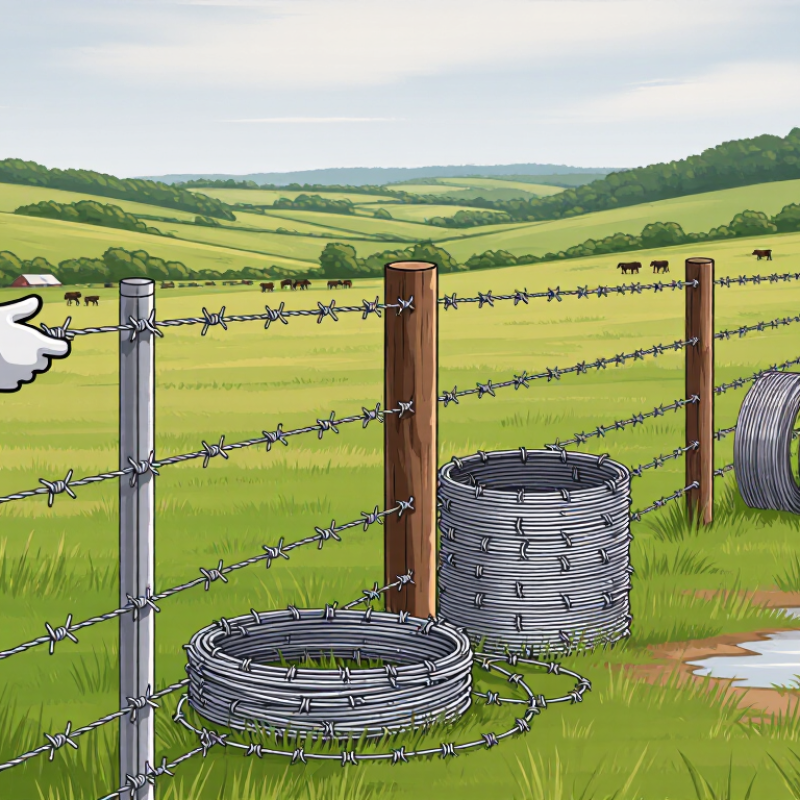
Table of Contents [Hide]
What Barbed Wire Is and How Its Design Works
Top Barbed Wire Types for Sale in 2026
Barbed wire is made from one or more twisted steel strands with sharp wire points fixed at intervals. The strands carry tension; the points discourage animals from pushing through or rubbing against the fence. Common designs use two- or four-point barbs, with the points angled outward from the central line. It looks simple. But strand gauge, coating, and tension all affect how well it performs outdoors.
ASTM A121-07(2021), the industry specification for metallic-coated carbon-steel barbed wire, includes barb spacings of 3, 4, and 5 inches and two- or four-point designs. Closer spacing means more points along a given length, while wider spacing leaves larger gaps. That alone does not determine suitability: terrain, animal size, corrosion exposure, and post spacing matter too. A specification cannot replace an on-site assessment, and that limitation is easy to overlook.
Tips: Check the product’s stated wire diameter, coating class, barb spacing, and strand construction against the fence plan. Inspect sample points for consistent shape and secure attachment. Keep strands evenly tensioned, but avoid overtightening across uneven ground; posts can lean, and wire can fail. Verify specifications against ASTM A121 and local agricultural guidance before purchase.
Brands
Proudly Trusted by Top Suppliers Worldwide







Let us know and we will automate, together to fit your industrial needs.
 +91-97254 16844
Clients
Proudly Trusted by Top Companies Worldwide


Do you need Help? Get in touch.
X
Please fill out the form below and we will get back to you as soon as possible.