o
p
t
i
m
a
r
o
b
o
t
i
c
s

Make a Call


Make a Call
Blogs
Top Brackish Water RO System Suppliers for Global Buyers
Water stress is pushing utilities, farms, and factories to consider brackish groundwater as a dependable supply. UNESCO’s United Nations World Water Development Report 2024 notes that 2.2 billion people lacked safely managed drinking water in 2022. That figure does not make reverse osmosis the right answer everywhere. Feedwater quality, power costs, and concentrate management can change a project’s economics.
A Brackish Water Ro System uses pressure and membranes to reduce dissolved salts, but performance depends on careful site design. The U.S. National Research Council’s 2008 report, Desalination: A National Perspective, describes energy use and concentrate disposal as important considerations in desalination planning. Buyers should therefore compare more than a supplier’s advertised capacity. Ask for pilot or reference-site results, feedwater limits, expected recovery, pretreatment details, and membrane replacement assumptions. Small details matter: a variable well-water analysis can affect scaling, cleaning frequency, and uptime.
This guide introduces suppliers serving global buyers and the questions that help distinguish suitable partners from polished brochures. Compare engineering experience, component traceability, commissioning support, spare-parts access, and documented performance under similar water conditions. Request operating data, not just design claims. Not every site. A system sized for one aquifer may perform poorly at another, even when the headline salinity looks similar. Treat published figures as starting points, then verify them against independent testing and local operating conditions.
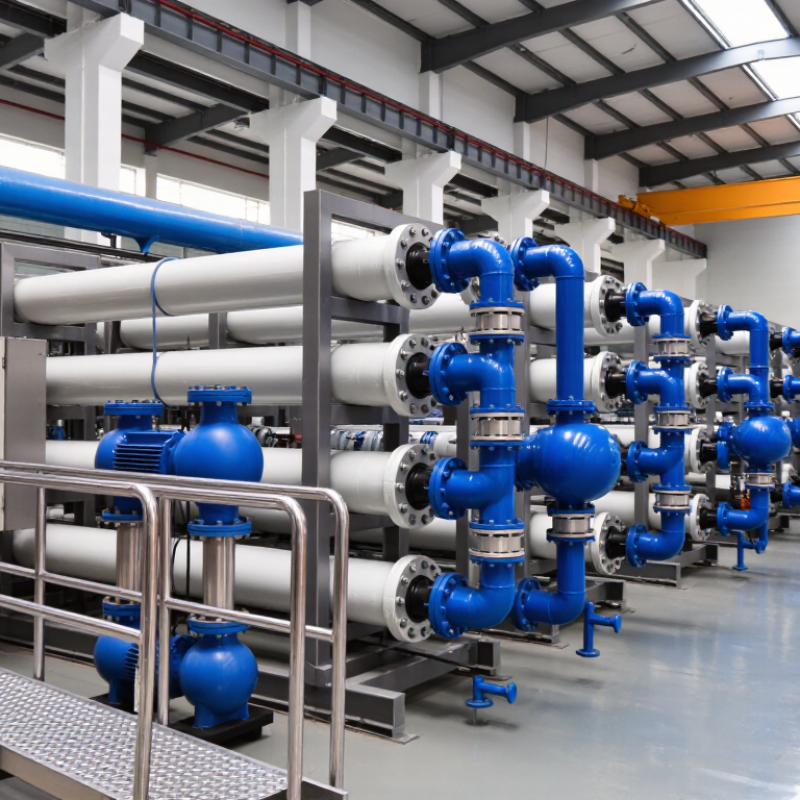
Table of Contents [Hide]
How Brackish Water Reverse Osmosis Systems Work
Brackish water reverse osmosis (RO) uses pressure to push feedwater through a semipermeable membrane. The membrane allows water molecules to pass while rejecting much of the dissolved salt and other impurities. Groundwater can vary widely, so operators should test its composition before selecting a system. Pretreatment often removes suspended particles and reduces the risk of membrane fouling. A feed pump then supplies pressure sufficient to overcome the water’s natural osmotic pressure. Not magic. The right pressure depends on water quality, temperature, and membrane design.
The membrane produces two streams: permeate, the treated water, and concentrate, which carries away much of the rejected material. Recovery describes how much feedwater becomes permeate; pushing it too high can encourage scaling and shorten membrane life. Details matter. Operators commonly track feed pressure, flow rates, and permeate conductivity. A rising pressure difference may point to fouling, while changing conductivity can signal performance loss. Yet readings alone do not explain every problem. A system may appear steady while its source water changes seasonally. Regular sampling and maintenance records help reveal that shift, though they are sometimes overlooked.
Brands
Proudly Trusted by Top Suppliers Worldwide







Let us know and we will automate, together to fit your industrial needs.
 +91-97254 16844
Clients
Proudly Trusted by Top Companies Worldwide


Do you need Help? Get in touch.
X
Please fill out the form below and we will get back to you as soon as possible.