o
p
t
i
m
a
r
o
b
o
t
i
c
s

Make a Call


Make a Call
Blogs
Top 10 Dismantling Joint Manufacturers for Global Buyers
For global buyers, choosing a dismantling joint is not a simple catalogue decision. It affects installation time, pipeline alignment, maintenance access, and long-term leakage control. A well-made joint can absorb small dimensional differences between flanges. It can also reduce the struggle around pumps, valves, and meters during replacement.
The need is substantial. The WHO and UNICEF Joint Monitoring Programme reported that 2.2 billion people lacked safely managed drinking water in 2022. The World Bank has also noted that non-revenue water can reach 30% globally, with some utilities losing more than half their supply. These figures do not prove that every leakage problem comes from a dismantling joint. They do show why dependable connection hardware deserves closer attention.
George A. Antaki, a recognized piping and pipeline engineering specialist, emphasizes a practical principle: “A piping system is only as reliable as its weakest component.” That observation remains useful when comparing manufacturers. Material grade, flange tolerance, coating, bolt design, pressure rating, and field support all matter. So does documented testing.
This guide reviews ten dismantling joint manufacturers for international buyers. It considers technical capability, certifications, manufacturing experience, product range, and after-sales support. Some rankings remain debatable. Regional standards differ. Price data also changes quickly. A lower quotation may hide weaker coatings, limited testing, or expensive installation delays. Buyers should verify current certificates, drawings, and project references before ordering. Even a strong manufacturer is not automatically the right choice for every pipeline.
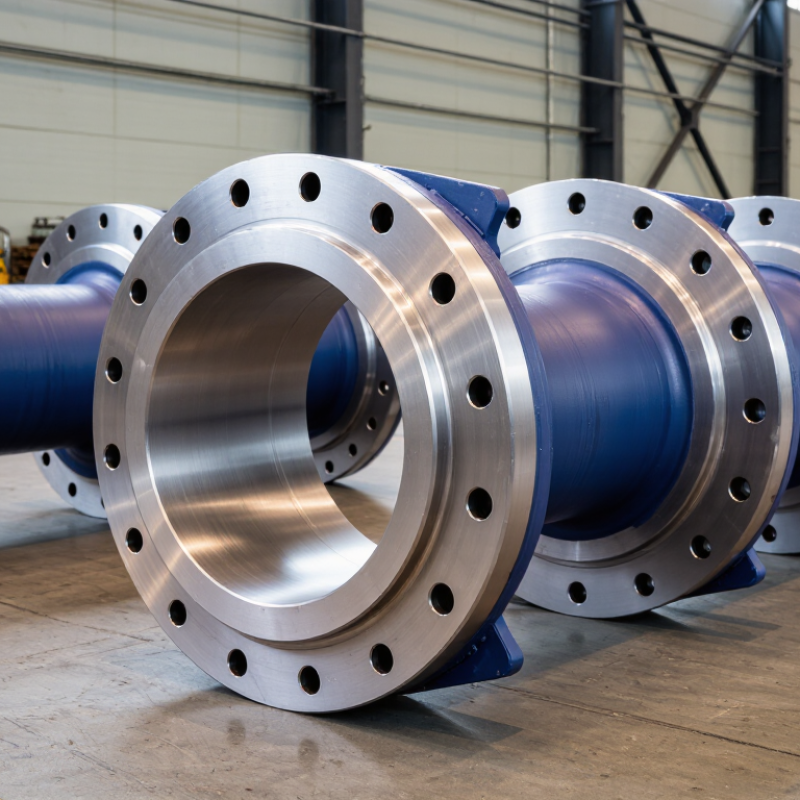
Table of Contents [Hide]
What Dismantling Joints Are and Why They Matter in Piping Systems
What Dismantling Joints Are and Why They Matter in Piping Systems
A dismantling joint is a flanged mechanical fitting that connects valves, pumps, meters, and pipe sections. Its adjustable length creates working space during installation and removal. A typical assembly includes a center flange, spigot flange, sealing gasket, and tie rods. These parts transfer pressure safely when selected and tightened correctly. It is not an expansion joint. That distinction matters.
In a treatment plant, a technician may need to remove a heavy valve without cutting nearby pipework. The joint allows controlled axial adjustment, often within a specified range. This reduces downtime and protects expensive equipment. It can also help align flanges when site conditions are less perfect than drawings suggest. Small detail. It matters.
Experienced buyers should check pressure class, nominal diameter, flange drilling, coating system, gasket material, and bolt grade. Material compatibility is critical in seawater, wastewater, and chemical service. Installation records should include bolt torque, joint position, and leakage-test results. Uneven tightening can damage the gasket or distort the flange. I have found that many failures begin with rushed alignment, not poor steel. That assumption deserves review. Reliable manufacturers provide dimensional drawings, test documentation, traceability, and clear installation instructions. Buyers should also confirm adjustment limits before approving a substitute design.
Brands
Proudly Trusted by Top Suppliers Worldwide







Let us know and we will automate, together to fit your industrial needs.
 +91-97254 16844
Clients
Proudly Trusted by Top Companies Worldwide


Do you need Help? Get in touch.
X
Please fill out the form below and we will get back to you as soon as possible.