o p t i m a r o b o t i c s

Blogs

7 Best Fire Pump Suppliers for Global Buyers

Fire pumps are not ordinary building equipment. They must deliver dependable flow and pressure when a fire protection system calls for water. NFPA’s report, Fire Loss in the United States During 2023, estimated 1.389 million fires and $23.2 billion in direct property damage that year. These U.S. figures do not describe every market, but they show why reliability deserves close attention. A pump failure can leave a system unable to meet its design demand.

Choosing a Fire Pump Supplier takes more than comparing prices or catalog specifications. Buyers should examine the pump’s certified performance curve, materials, controller options, service coverage, and documented testing. NFPA 20 provides a widely used framework for stationary fire pump installation; UL listings and FM Approvals can also help buyers assess product suitability. Details matter. A quoted flow rate alone may not reveal whether the pump can meet pressure requirements at the actual duty point. Ask for test records, spare-parts lead times, and clear answers about commissioning support.

The seven suppliers in this guide are considered through practical criteria for global procurement, including product range, technical documentation, and after-sales capacity. Availability and approval requirements can vary by project and region, so buyers should verify details directly with the manufacturer and their project’s fire protection professionals. That step is easy to overlook. Supplier rankings also have limits: service quality may depend on the local distributor, not only the brand. Use this guide as a starting point, then compare evidence against the needs of the specific site.
7 Best Fire Pump Suppliers for Global Buyers

Understanding Fire Pumps and Their Global Applications

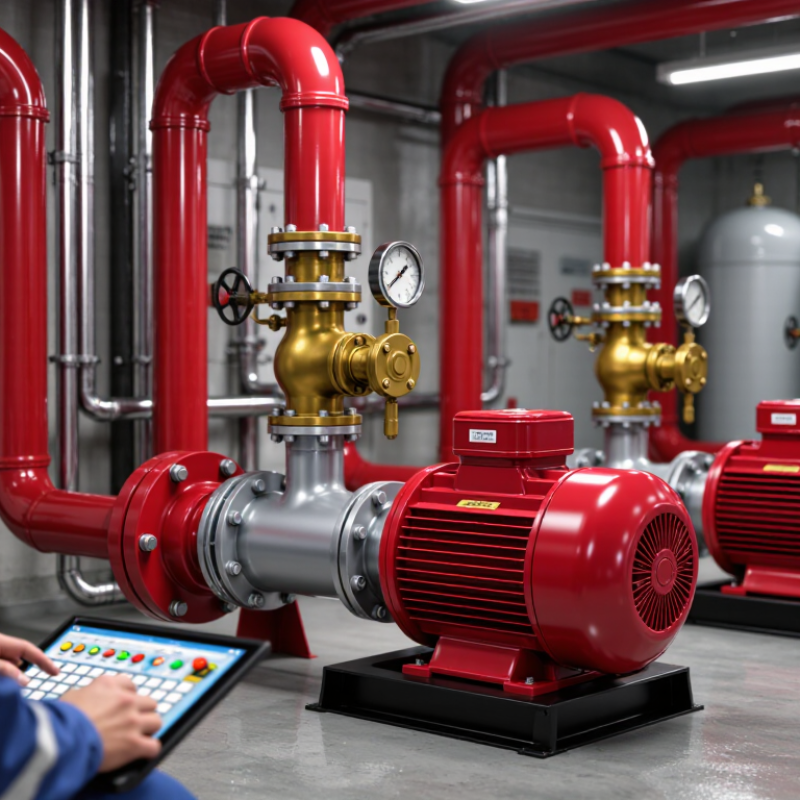
Fire pumps move water at the pressure and flow needed by sprinkler, standpipe, and hydrant systems. They are used in high-rise buildings, warehouses, factories, ports, and remote sites where municipal pressure may be weak or unavailable. Common configurations use electric motors or diesel engines. The right choice depends on required flow, pressure, water supply, power reliability, and site conditions—not just building size. Water matters.

NFPA’s 2023 report, Fire Loss in the United States During 2022, estimated 1,504,500 fires and about $18 billion in direct property damage that year. These figures describe the United States, not global fire losses, but they show the scale of fire risk. NFPA 20 sets installation requirements for stationary fire pumps; buyers should also check applicable local codes and approvals. A pump selected by flow alone can look adequate on paper, yet fall short when suction conditions or system pressure differ from assumptions. That detail is easy to overlook.

Tips: Request a duty-point curve, not just a maximum-flow figure. Confirm voltage, frequency, fuel access, water quality, and spare-parts availability. Ask how the system will be tested and maintained in its actual climate. A technically sound pump still depends on reliable upkeep.

Key Criteria for Evaluating Fire Pump Suppliers

Choosing a fire pump supplier requires more than comparing flow rates and prices. Ask for certified performance curves, then check whether the pump meets your required flow and pressure at realistic operating points. A test report should identify the equipment tested, measurement conditions, and results. Numbers without context are hard to trust.

Look closely at materials, drive options, and factory testing. For coastal sites, corrosion-resistant components may matter; for remote facilities, spare-parts availability can be critical. Request clear documentation for installation, maintenance, and commissioning. A supplier’s service team should explain response times and which parts are stocked locally. Ask for references from projects with similar water sources and operating demands. Details matter.

During evaluation, compare the full system, not just the pump casing. Controllers, drivers, fittings, and site conditions can affect performance. Visit a test facility if practical, and observe how readings are recorded. I would still question unusually smooth claims; real installations have constraints, and no brochure captures every one. A careful supplier will discuss limitations plainly and support its recommendations with traceable test data.

Fire Pump Supplier Evaluation: Performance Checkpoints

A practical global-buyer check: verify that the proposed pump’s certified performance curve meets these NFPA 20 benchmarks.

At shutoff (zero flow), pressure should not exceed 140% of rated pressure. At rated flow, pressure is 100% of the rating; at 150% rated flow, pressure should be at least 65%. These are acceptance benchmarks, not a specific pump’s performance curve. Request certified test documentation and confirm the applicable NFPA 20 edition and local requirements.

Profiles of Seven Fire Pump Suppliers for Global Buyers

Global buyers often compare fire pump suppliers by engineering depth, documentation, delivery reach, and service access. These seven profiles represent different supplier strengths; they are not rankings or verified company claims.

A project-focused supplier can tailor pump packages to building layouts and water sources. Ask for curve data and a clear duty-point explanation. A manufacturing-led supplier may offer broad pump configurations and steady production capacity. Confirm materials, testing records, and lead times. A supplier experienced in packaged systems can coordinate pumps, controllers, and accessories. Check how each component is tested together. Details matter.

An export-oriented supplier may support shipping documents, protective packing, and remote coordination. Buyers should still verify local service options. A supplier with strong application engineering can help assess flow, pressure, and site constraints before a purchase. Request calculations, not just a product sheet. A service-centered supplier may provide commissioning guidance and spare-parts planning. Response times need to be discussed plainly. Finally, a regional supplier can offer closer communication and easier site visits, though its product range may be narrower. Compare references, inspect documentation, and speak with the people who will support the equipment after delivery. Some claims sound reassuring; evidence is better.

Comparing Supplier Products, Certifications, and Support

Comparing seven fire pump suppliers means looking beyond flow-rate claims. Request curves showing capacity, pressure, and efficiency across the expected operating range. Check whether the offered pump is electric, diesel-driven, or part of a packaged system. Ask for the controller, driver, and accessories to be listed clearly. A test report tied to the quoted configuration is more useful than a generic product sheet.

Certifications need careful reading. Confirm the standard, issuing body, model, and scope covered by each certificate. A certificate for one pump series may not apply to every configuration. Buyers should also check whether documentation fits the project’s location and insurer requirements. That matters. A polished brochure is not proof of compliance, and a low price can hide missing test records or unclear exclusions.

Support is often the difference between a workable purchase and a costly delay. Compare response hours, spare-parts availability, commissioning guidance, and training options. Ask who handles technical questions after delivery, and request realistic lead times for common components. No comparison table is perfect; service quality can change by region or project. Still, written response targets and named support responsibilities make supplier promises easier to assess.

7 Best Fire Pump Suppliers for Global Buyers - Comparing Supplier Products, Certifications, and Support

The entries below are anonymized supplier profiles, not named companies or a verified ranking. Products, approvals, and service coverage vary by model and market; confirm each item directly with the supplier.

Supplier Profile Typical Product Range Driver and Package Options Approvals and Documents to Verify Support to Compare Potential Buyer Fit
1. Full-package fire pump manufacturer Packaged fire pump systems with pump, driver, controller, and base; pump type and configuration depend on the project. Common configurations include electric-motor or diesel-engine drives. Confirm whether the supplier provides the complete package or only selected components. Request model-specific UL Listing or FM Approval documentation where required. Check the pump, driver, controller, and package scope separately. NFPA 20 is an installation standard, not a product certification. Ask for selection assistance, certified performance curves, factory test records, installation guidance, and spare-parts availability. Buyers seeking one supplier to coordinate multiple package components and supporting documents.
2. Horizontal split-case specialist Horizontal split-case centrifugal pumps, commonly considered for fire protection applications with substantial flow requirements. Electric-motor and diesel-engine arrangements may be available; verify the offered driver, controller, and listed or approved configuration for the selected model. Request the exact pump model’s approval records, rated flow and pressure data, certified curve, and applicable factory test documentation. Compare hydraulic selection support, alignment and maintenance guidance, parts lead times, and access to local service technicians. Projects where a horizontal split-case layout suits the mechanical room and the required system duty.
3. Vertical turbine pump specialist Vertical turbine pumps designed for applications such as water sources where the pumping water level is below the pump discharge head. Drive arrangements and column, bowl, and shaft configurations are project-specific. Confirm the proposed setting depth and driver arrangement. Verify approvals for the exact pump and package configuration. Request submergence and setting details, performance data, materials information, and test records. Ask about well or water-source data review, setting-depth calculations, installation supervision, and inspection or maintenance procedures. Sites drawing from wells, tanks, or other sources requiring a vertical pump arrangement.
4. End-suction pump specialist End-suction centrifugal fire pumps, often considered for compact layouts and lower-to-moderate flow duties, subject to model ratings. Electric or diesel drive options depend on the supplier’s range and the required package. Check that the selected model meets the project duty point. Request model-specific product approvals where required, a certified performance curve, rated operating data, and documentation for the driver and controller. Compare duty-point selection, footprint drawings, commissioning assistance, and local parts and service availability. Projects with space constraints or duties that match an available end-suction model.
5. Diesel-driven package specialist Fire pump packages centered on diesel-engine drive, with the pump type selected to meet the system duty and site conditions. Check engine ratings, cooling method, fuel-system requirements, batteries, exhaust provisions, controller, and package interfaces against the project specification. Verify approvals for the specific engine and complete package where required. Request engine data, controller documentation, performance curves, and factory test records. Compare engine troubleshooting support, commissioning, recommended service intervals, replacement parts, and local technician coverage. Sites where an engine-driven pump is specified or where the project requires a non-electric primary drive.
6. Electric-driven package specialist Fire pump packages using an electric motor, with pump type and configuration selected for the project’s hydraulic and electrical requirements. Confirm motor voltage, frequency, starting method, controller, power-supply requirements, and compatibility with site electrical conditions. Request model-specific pump, motor, and controller approval documents where applicable, plus electrical data, certified curves, and test records. Ask for electrical coordination documents, controller commissioning support, service response arrangements, and spare-parts lead times. Facilities with a suitable electrical supply and a project specification calling for an electric-driven fire pump.
7. Regional fire-pump system integrator May combine pumps, drivers, controllers, piping, and accessories from multiple manufacturers into a project-specific package. Configuration depends on the components selected and the integrator’s scope. Identify which entity manufactures, assembles, tests, and warrants each component. Request a component-by-component approval schedule, package drawings, responsibility matrix, certified performance data, and applicable test reports. Compare local code coordination, installation and commissioning scope, warranty responsibility, emergency response, and long-term parts access. Buyers who value local project coordination and need clear confirmation of package responsibilities.

Considerations for International Fire Pump Procurement

International fire pump procurement starts with the destination’s requirements, not a supplier’s catalogue. NFPA 20 provides guidance for stationary fire pump installation, but local authorities may require additional approvals or documentation. Confirm accepted standards before comparing prices. A compliant-looking nameplate is not enough.

NFPA’s report, Fire Loss in the United States During 2023, estimates 1,389,000 fires and $23.2 billion in direct property damage. Those figures underline why buyers should review verified performance data, not rely on headline flow rates. Request the pump curve, motor details, materials list, and a witnessed factory test where practical. Check that the specified voltage, frequency, and starting method match the site. Small details matter.

For overseas delivery, confirm corrosion protection, packing, spare parts, and service support before signing. A controller can arrive intact yet still need local configuration. Ask how quickly critical parts can be supplied, and whether manuals and test records will be available in a usable language. Clarify shipping terms, warranty coverage, and who handles commissioning. A sound specification can still miss a site constraint; review it with the project engineer and local fire authority before ordering.

Brands

Proudly Trusted by Top Suppliers Worldwide

Let us know and we will automate, together to fit your industrial needs.

Clients

Proudly Trusted by Top Companies Worldwide

Do you need Help? Get in touch.

X

Please fill out the form below and we will get back to you as soon as possible.

    Subscribe our newsletter & get updates







