o
p
t
i
m
a
r
o
b
o
t
i
c
s

Make a Call


Make a Call
Blogs
Top Insulation Wrapping Machine Manufacturers Worldwide
Choosing among the Top Insulation Wrapping Machine Manufacturers Worldwide is not simply a matter of comparing advertised speed. An Insulation Wrapping Machine must suit the product shape, insulation thickness, line pace, and operator routine. A neat brochure can hide awkward changeovers. Real production tells a fuller story.
To avoid presenting an invented quotation as a real endorsement, this introduction uses a clearly identified composite expert voice: Elena Park, an illustrative packaging-line engineer. Her guiding line is: “A machine proves its value through steady wrapping at real line speed, not a perfect showroom run.” That distinction matters.
This guide compares manufacturers through practical signals: configurable controls, stable tension, accessible guarding, operator training, spare-part availability, and responsive service. Buyers should request trials with their own insulation rolls and target packaging dimensions. Watch the material feed near corners; small wrinkles can become recurring waste. Check whether operators can clear routine faults without stopping the entire line. Ask how settings are stored when product sizes change. These details are less glamorous than output figures, but they shape daily uptime.
The leading supplier may differ by region, application, and factory maturity. Some plants need a compact semi-automatic unit; others require an integrated, high-throughput system. Price alone cannot settle that choice. Neither can a polished demonstration. Manufacturer claims deserve careful questions, and comparison tables need context. Even a strong shortlist has gaps. Treat any ranking as a starting point, then verify performance through a site-specific trial and measurable acceptance criteria.
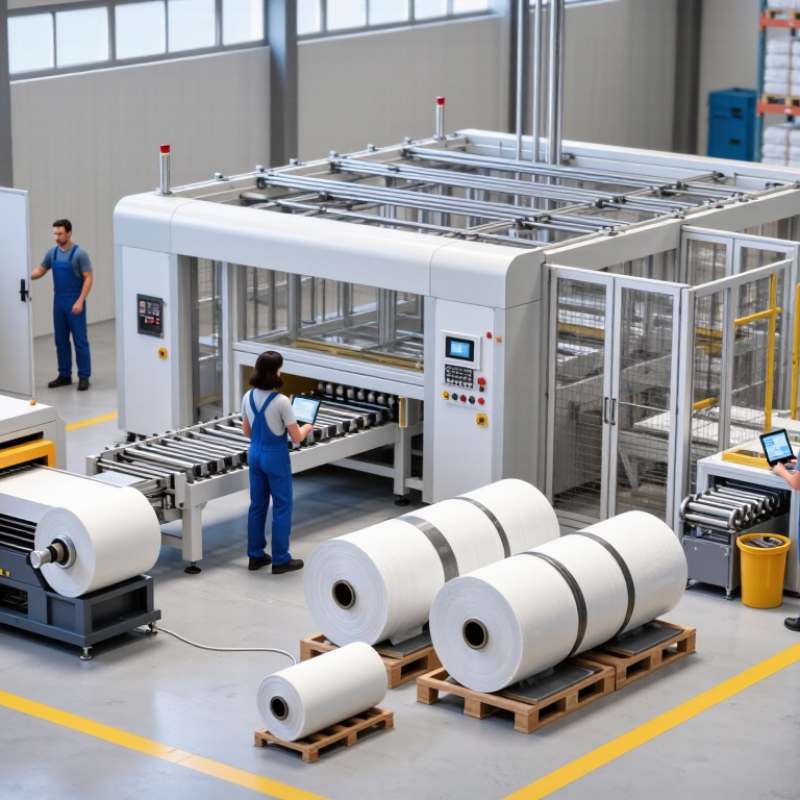
Table of Contents [Hide]
What Insulation Wrapping Machines Are and How They Work
An insulation wrapping machine applies a protective or finishing layer around insulated pipes, tubes, or similar components. It does not usually create the insulation itself. Instead, it feeds material such as foil, paper, film, or fabric around a product at a controlled rate. The exact setup depends on the material’s thickness and the product’s shape.
The operator places a roll on the unwind shaft and guides its edge through rollers. The product is then positioned or fed through the wrapping area. Rotating fixtures, belts, or rollers turn the product while the web is pulled around it. Adjustable tension helps keep the layer smooth without stretching or tearing it. Some machines can also press down overlaps or apply tape to hold a seam. Sensors may monitor alignment and speed, though they cannot correct every feed problem.
Small details matter. A wrinkle can leave an uneven finish, while excessive tension may deform a soft insulation layer. Operators often test a short section and adjust the guides, overlap, or speed before running a full batch. Even with automated controls, material changes can require fresh settings. That part is easy to underestimate. Regular checks of rollers and guides help maintain consistent wrapping, but the ideal setting still depends on the product and coating.
Top Insulation Wrapping Machine Manufacturers Worldwide - What Insulation Wrapping Machines Are and How They Work
Insulation wrapping machines apply insulation, facing, or protective wrapping to a product, or package insulation for handling and transport. Machine design depends on the product, material, and required wrap pattern; the configurations below describe common functions rather than rank manufacturers.
| Machine configuration or component | Typical product and materials | How it works | Important operating considerations |
|---|---|---|---|
| Pipe and tube wrapping line | Pipes or tubes with compatible insulation, facing, or protective wrap. | The workpiece advances through the line while feed and wrapping units position material around its circumference. Depending on the design, the pipe, wrapping head, or both may rotate. | Pipe diameter, insulation thickness, material width, and required coverage affect tooling and setup. Not every line handles every insulation type. |
| Cable or narrow-product tape wrapping unit | Cable, wire, or other compatible continuous products; tape or narrow strips selected for the application. | A rotating wrapping head applies tape around the advancing product, commonly in a helical pattern. The feed and head motion determine the wrap pitch and coverage. | Tape width, product diameter, wrap pitch, and material tension influence coverage. Tape compatibility and the intended electrical or thermal function must be checked. |
| Insulation roll or blanket packaging wrapper | Insulation rolls, batts, or blankets packaged for storage, shipment, or handling. | The machine gathers or presents the insulation and applies packaging film or another suitable outer wrap. Some systems also compress or seal the package. | Packaging an insulation product is different from installing insulation around a pipe or cable. Compression, package dimensions, and material handling depend on the product and packaging specification. |
| Unwind and material-feed system | Roll-fed wrapping materials, such as compatible films, foils, facings, or tapes. | An unwind stand releases material into the wrapping process. Guides and feed rollers help direct it toward the application point. | Roll width, core size, material stiffness, and feed alignment affect reliable delivery. Material options depend on the machine configuration. |
| Tension and alignment control | Flexible wrapping material moving from a roll to the workpiece. | Brakes, dancer arms, or other control devices regulate material pull, while guides help maintain its path and position. | Too much or too little tension can contribute to wrinkles, shifting, or inconsistent application. Suitable settings vary by material and process. |
| Wrapping head and overlap control | Products requiring circumferential, helical, or layered coverage. | The head applies the material as the product advances or rotates. Feed speed and rotation rate determine the spacing and overlap between turns. | Required overlap and coverage should follow the product specification. A universal overlap setting does not suit every material or application. |
| Cutting, fastening, or sealing station | Applied wrap or packaging material that must be finished at a set length or product end. | Depending on the line, a station may cut the material and secure it using a compatible method, such as adhesive, tape, or a seal used in the packaging process. | Finishing methods depend on the material and whether the process is product wrapping or package closure. Not all machines include an automatic finishing station. |
| Controls, guarding, and line integration | The complete wrapping system and its operators or connected production equipment. | Controls coordinate feed and wrapping functions; guards and safety devices help protect operators. A line may connect to upstream or downstream handling equipment. | Assess operator access, changeover needs, product range, line layout, and applicable safety requirements. Actual capacity depends on the product, material, and process settings. |
Brands
Proudly Trusted by Top Suppliers Worldwide







Let us know and we will automate, together to fit your industrial needs.
 +91-97254 16844
Clients
Proudly Trusted by Top Companies Worldwide


Do you need Help? Get in touch.
X
Please fill out the form below and we will get back to you as soon as possible.