o
p
t
i
m
a
r
o
b
o
t
i
c
s

Make a Call


Make a Call
Blogs
What Are the Top Roll Crusher Types in 2026?
Choosing a Roll Crusher in 2026 is less about finding one universal winner and more about matching the machine to the material. Smooth-roll, single-roll, double-roll, and toothed-roll designs each handle feed and reduction differently. A smooth-roll unit may suit controlled reduction of relatively friable material, while teeth can grip larger, tougher pieces. Double-roll arrangements can offer a predictable crushing gap, but the result still depends on feed conditions and machine setup.
Small details matter. Wet, sticky feed may build up on surfaces. Abrasive rock can accelerate wear. A narrow gap can produce a finer product, yet it may also increase power demand or affect throughput. There is no magic setting. Operators should compare feed size, moisture, target product, capacity, and maintenance access against the manufacturer’s specifications. Where possible, test a representative sample; a clean showroom demonstration may not reflect a dusty, variable production line.
This guide looks at the leading roll-crusher types and explains where each can fit, what trade-offs to expect, and which questions to ask before purchase. It also distinguishes conventional roll crushers from high-pressure grinding rolls, which use a different operating approach. Names can blur across product catalogs. That deserves a closer look. The best choice is the one supported by reliable performance data, practical service access, and the realities of the site—not by a label alone.
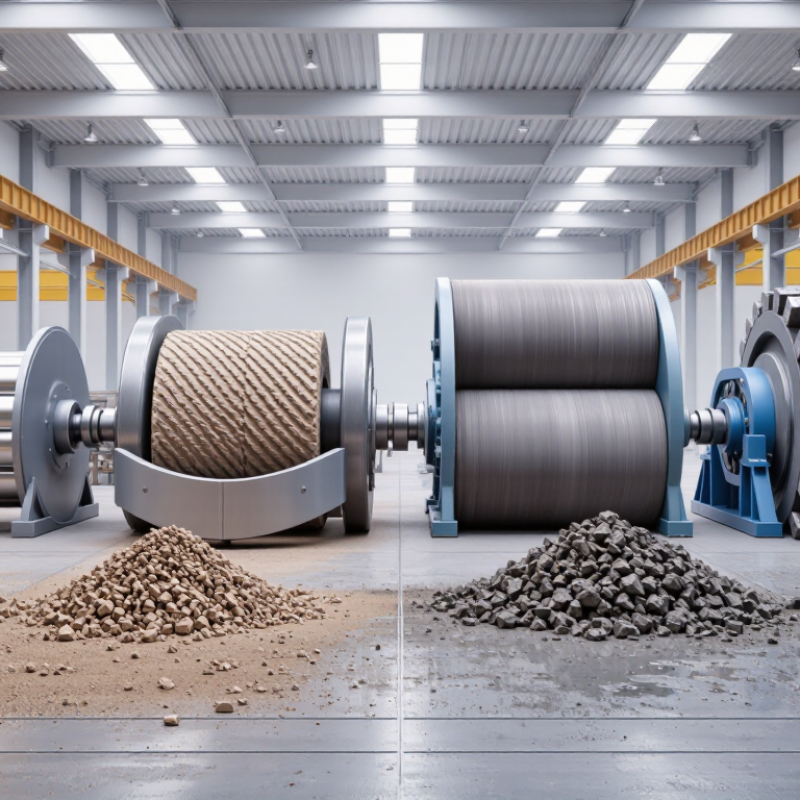
Table of Contents [Hide]
What a Roll Crusher Is and How It Works
What Are the Top Roll Crusher Types in 2026?
What a Roll Crusher Is and How It Works
A roll crusher reduces material between two rotating cylinders. The rolls turn inward, drawing feed into the gap and breaking it mainly by compression. Depending on the design and material, some shearing may occur too. Smooth rolls suit many brittle, relatively uniform feeds; toothed rolls can grip larger, lumpier pieces. The choice depends on feed size, moisture, hardness, and the product you need—not just a machine label.
The gap between the rolls helps determine the discharged particle size, though feed variation can affect results. Operators may adjust the setting to suit the process, then check the product rather than assume the dial tells the whole story. Roll speed, wear, and uneven feeding matter as well. In practice, a crusher can behave less neatly than a diagram suggests. That is worth remembering.
Tips: Keep feed reasonably even, and inspect the rolls for wear. A changing product size may point to a gap or feed issue. Follow the equipment maker’s operating and maintenance instructions, and use suitable guarding during inspection.
Brands
Proudly Trusted by Top Suppliers Worldwide







Let us know and we will automate, together to fit your industrial needs.
 +91-97254 16844
Clients
Proudly Trusted by Top Companies Worldwide


Do you need Help? Get in touch.
X
Please fill out the form below and we will get back to you as soon as possible.