o
p
t
i
m
a
r
o
b
o
t
i
c
s

Make a Call


Make a Call
Blogs
Top 10 Science Museum Exhibits for Global Buyers
For global buyers, Science Museum Exhibits are more than attractive displays. They are learning environments, visitor experiences, and long-term investments. A successful exhibit must explain complex ideas clearly, withstand daily public use, and adapt to different languages, cultures, and educational systems. Buyers often examine durability, maintenance access, accessibility, safety documentation, and evidence of learning impact before approving a purchase.
Alan Friedman, a respected science-museum consultant and former director of the New York Hall of Science, once said, “The purpose of science museums is not to teach science, but to make people comfortable with science.” That principle guides this selection of the top ten exhibits. Each option is considered through a practical buyer’s lens, from interactive physics tables and human-body models to climate simulators and space displays. A child should be able to turn a handle, see a result, and ask a better question. The technology should support that moment, not replace it.
Real-world procurement is less perfect than product brochures suggest. A spectacular prototype may become difficult to repair after heavy use. A multilingual screen may still confuse younger visitors. Even a scientifically accurate model can fail without thoughtful interpretation. These concerns matter. This guide therefore considers visitor engagement, engineering quality, educational value, installation requirements, and after-sales support. The final choices are not universal answers, but they offer reliable starting points for museums, schools, cultural centers, and international buyers seeking exhibits with lasting value.
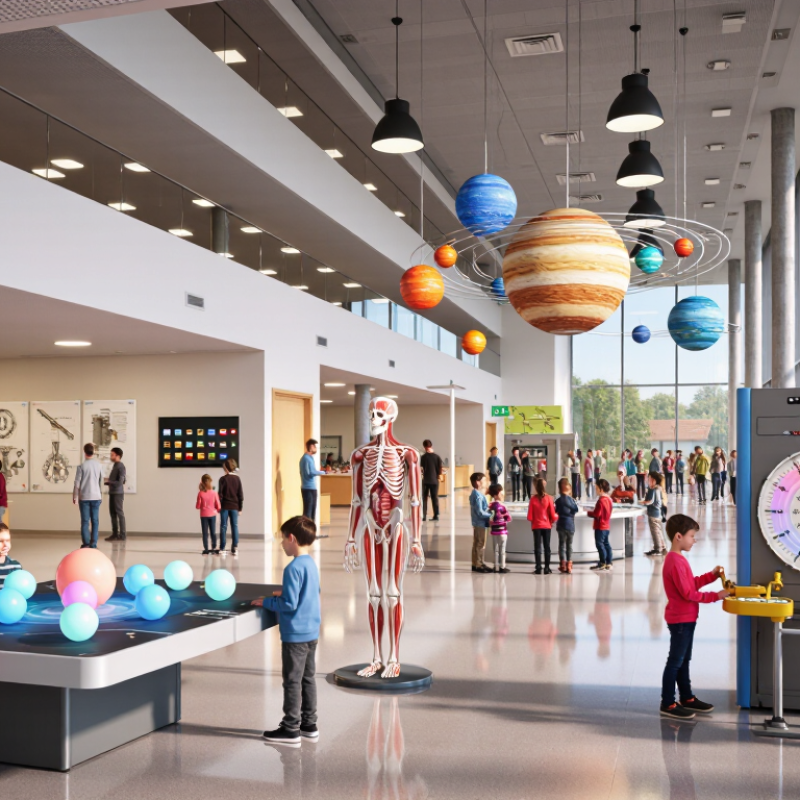
Table of Contents [Hide]
Defining the Criteria for the Top Science Museum Exhibits
Top 10 Science Museum Exhibits for Global Buyers
Defining the Criteria for the Top Science Museum Exhibits
The strongest science exhibits begin with accurate, reviewable content. Museum buyers should examine expert citations, update schedules, and the evidence behind every claim. Interactive features must explain real scientific principles, not simply produce impressive lights or sounds. A useful exhibit invites visitors to test, predict, and revise their ideas.
Accessibility is essential for international audiences. Check multilingual labels, readable contrast, adjustable audio, and physical access for different visitors. Durable materials matter in busy galleries. Buyers should request maintenance records, safety documentation, training plans, and realistic installation requirements. A clear evaluation framework can score learning value, visitor engagement, reliability, inclusivity, and total ownership cost. No exhibit is perfect. A scoring model may still hide cultural bias.
Tips: Ask for a live demonstration. Test the exhibit with children, educators, and visitors with disabilities. Observe confusion, waiting times, and repeat use. These details often reveal more than a sales presentation. Require measurable learning outcomes, but leave room for curiosity and play. Avoid selecting an exhibit only because it photographs well.
Global buyers should also assess climate suitability, replacement-part access, data privacy, and local technical support. An exhibit designed for one building may fail in another. Humidity, language, staff expertise, and visitor habits can change performance. Pilot testing is valuable, although it adds time and cost. The best purchase decision combines verified evidence with practical museum experience.
Brands
Proudly Trusted by Top Suppliers Worldwide







Let us know and we will automate, together to fit your industrial needs.
 +91-97254 16844
Clients
Proudly Trusted by Top Companies Worldwide


Do you need Help? Get in touch.
X
Please fill out the form below and we will get back to you as soon as possible.