o
p
t
i
m
a
r
o
b
o
t
i
c
s

Make a Call


Make a Call
Blogs
What Are the Top Types of Passive DAC Cables?
Data-center links often look simple from the front of a server. A short copper cable connects two ports, and the link comes up. Yet choosing a Passive Dac Cable requires more than matching plug shapes. Speed, port type, cable length, and equipment compatibility all matter. Small details matter.
The common options include SFP+ DACs for 10-gigabit links, SFP28 models for 25-gigabit links, and QSFP+ or QSFP28 cables for higher-bandwidth connections. Some QSFP cables split into several lanes, making breakout versions useful when one switch port connects to multiple devices. These cables use twinax copper and fixed transceivers at both ends. Unlike active optical cables, passive DACs do not contain signal-conditioning electronics, which keeps them simple and often economical for short runs.
But “short” depends on the installation. A one-meter cable may fit neatly inside a rack, while a longer route may create clutter or exceed the reliable reach of a particular link. Check the switch and network-card documentation, supported data rates, connector family, and vendor coding before ordering. Not always obvious. Two cables that look identical may not work equally well across different hardware.
This guide compares the main passive DAC types and explains where each makes sense. It also considers practical limits, including reach and compatibility. I would not choose by price alone; measuring the route and confirming both endpoints can prevent an avoidable return.
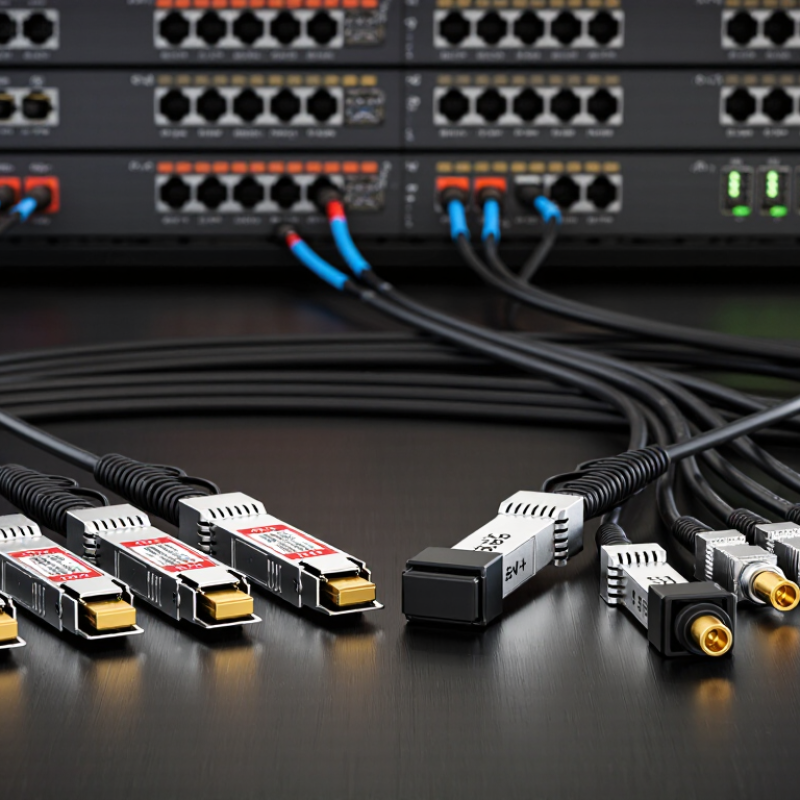
Table of Contents [Hide]
How Passive DAC Cables Connect Network Devices
Passive DAC cables connect network devices through a short copper link with factory-attached connectors at both ends. A common setup runs from a switch port to a server’s network interface, carrying data directly between them. The cable’s twinax copper conductors and integrated ends avoid separate optical modules. No extra power is needed for signal amplification.
Different connector formats suit different ports. SFP+ and SFP28 cables commonly link individual switch and server ports, while QSFP+ and QSFP28 options serve higher-density ports. Some QSFP cables split into several smaller links, useful when one switch port must connect to multiple devices. Check the equipment documentation: matching connector shape alone does not guarantee compatibility. It matters.
Passive DACs are typically chosen for short connections inside a rack or between nearby racks. Their low latency and simple installation can make cable management easier, though thick bundles may be awkward in a crowded cabinet. Keep the run within the supported distance, and leave enough slack for service access. A tidy-looking cable route can still block airflow. I have seen teams focus on speed ratings and overlook bend space; that small detail deserves a second look.
Brands
Proudly Trusted by Top Suppliers Worldwide







Let us know and we will automate, together to fit your industrial needs.
 +91-97254 16844
Clients
Proudly Trusted by Top Companies Worldwide


Do you need Help? Get in touch.
X
Please fill out the form below and we will get back to you as soon as possible.