o
p
t
i
m
a
r
o
b
o
t
i
c
s

Make a Call


Make a Call
Blogs
What Are the Top Types of Tee Head Bollards?
A Tee Head Bollard is recognized by its horizontal crosspiece, which gives the post a clear, distinctive profile. That shape can help people identify a barrier or locate a handhold, depending on the installation. Yet appearance is only part of the choice. Material, fixing method, site conditions, and maintenance needs all affect which design is suitable.
Common options include fixed, removable, and surface-mounted Tee Head Bollards. Fixed models are generally chosen where a permanent boundary is needed. Removable versions can provide access when a post must be taken out, while surface-mounted designs may suit locations where digging is difficult. Materials such as steel and stainless steel offer different finishes and upkeep requirements. The right choice depends on exposure, expected use, and the ground beneath the post. Small details matter.
This guide compares the main types and explains where each may be useful. It also considers practical features such as base plates, finish, visibility, and installation. A polished product image cannot show how a bollard will perform on a busy walkway or beside a loading area. Site measurements and a review of the manufacturer’s specifications are essential. No single style fits every location. Some choices may look right at first, then prove inconvenient to maintain. Careful comparison helps property owners, designers, and contractors select a Tee Head Bollard that balances function, durability, and appearance.
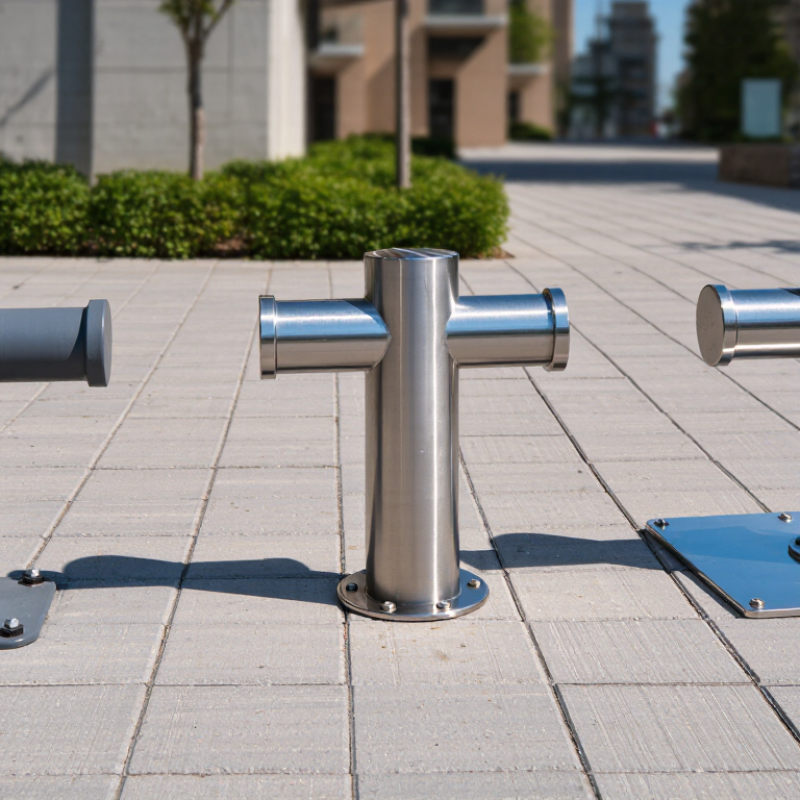
Table of Contents [Hide]
Defining Features of Tee Head Bollards
A tee head bollard is identified by its upright post and a horizontal bar across the top. The crossbar creates a clear T shape, making the bollard easy to recognize in a streetscape, parking area, or pedestrian zone. The form is simple. Its proportions can vary: some models have a compact, rounded head, while others use a longer, flatter bar.
That top bar is more than decoration. It can offer a handhold, help people distinguish the post from a plain vertical bollard, and provide a convenient point for linking a chain where the design allows. The post itself is commonly made from metal, with a protective finish chosen for the site’s weather and expected use. Check how it is anchored, too. A strong-looking head cannot compensate for an unsuitable foundation.
Tee head bollards may be fixed in place or designed to be removable, depending on access needs. Their crossbars can also affect spacing: leave enough room for people to pass comfortably and for maintenance equipment to reach the area. Small details matter. A broad bar can catch sleeves or bags in a crowded walkway, and that drawback is easy to overlook on a drawing. Review the actual dimensions and installation conditions before choosing a style.
Brands
Proudly Trusted by Top Suppliers Worldwide







Let us know and we will automate, together to fit your industrial needs.
 +91-97254 16844
Clients
Proudly Trusted by Top Companies Worldwide


Do you need Help? Get in touch.
X
Please fill out the form below and we will get back to you as soon as possible.