o
p
t
i
m
a
r
o
b
o
t
i
c
s

Make a Call


Make a Call
Blogs
What Are the Top Types of Ventless Electric Fireplaces?
Choosing the right Ventless Electric Fireplace is not only a design decision. It also affects room comfort, installation effort, operating cost, and everyday safety. Wall-mounted models suit compact apartments, while recessed fireplaces create a cleaner architectural appearance. Freestanding units offer flexibility, especially when furniture layouts change.
Fireplace specialist John C. Banta offers a practical reminder: “The manual is part of the appliance.” That advice sounds simple, but many buyers overlook it. A model may appear ready for any room, yet its heating range, clearance requirements, electrical load, and mounting method still matter. Check the manufacturer’s instructions before selecting a unit for a bedroom, media wall, or older home.
This guide examines the top types of Ventless Electric Fireplace, including wall-mounted, recessed, freestanding, insert, and corner designs. Each type has strengths and limitations. Some produce convincing flame effects but provide modest heat. Others warm a larger space but consume more electricity. Flame color can also look different under bright daylight.
Real-world use is rarely perfect. A fireplace that looks elegant online may feel too shallow in person. A compact model may fit beautifully but struggle in a drafty room. That is why measurements, outlet placement, room size, and control features deserve careful attention. We will compare these options clearly, using practical details rather than relying only on appearance or marketing claims.
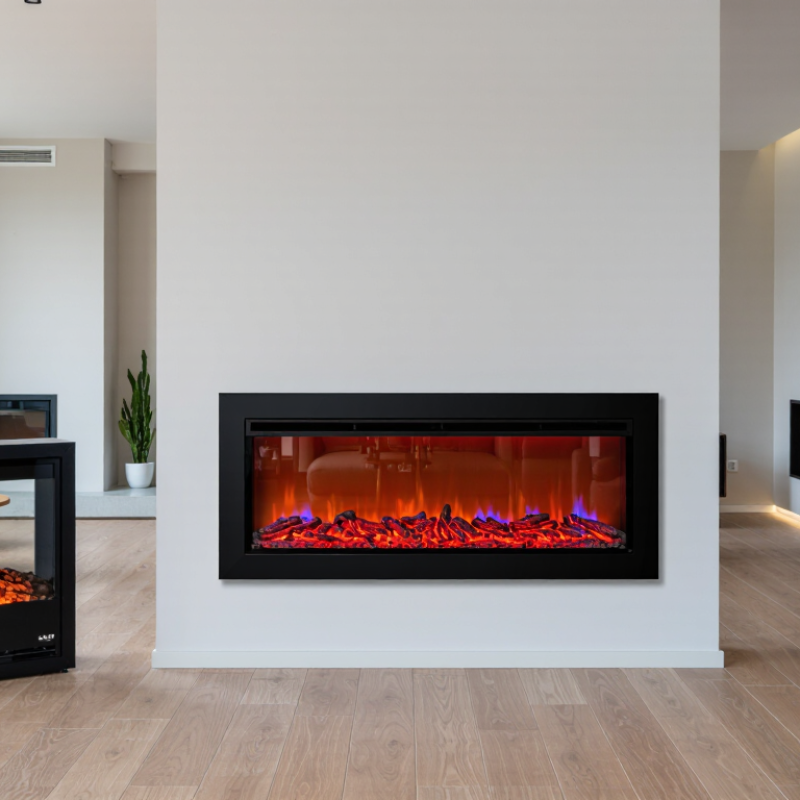
Table of Contents [Hide]
What Are Ventless Electric Fireplaces and How Do They Work?
Ventless electric fireplaces create warmth and flame effects without a chimney, gas line, or outdoor vent. They use electricity to power a heating element, usually placed behind a screen or log display. A fan moves warm air into the room, while LED lighting creates the appearance of burning wood. The flame effect can often operate without heat, which is useful during mild evenings. Unlike fuel-burning fireplaces, these units do not produce smoke or combustion gases. Still, they need careful placement and a suitable electrical outlet.
Common types include wall-mounted, recessed, freestanding, and corner models. Wall-mounted units suit apartments or compact rooms, while recessed designs can resemble built-in fireplaces. Freestanding models offer easier installation and can move between rooms. In my experience, heat distribution depends on room size, insulation, and furniture placement. A fireplace may feel warm nearby but less effective across a large open space. That limitation is easy to overlook.
Tips: Check the heating area before buying. Keep curtains, paper, and furniture away from the heater outlet. Do not block ventilation openings. Use a properly rated outlet, and avoid relying on a loose extension cord. Clean the screen and air intake regularly to reduce dust buildup. Read the safety instructions carefully, even if installation seems simple. These fireplaces are convenient, but they are not maintenance-free.
What Are the Top Types of Ventless Electric Fireplaces? – What Are Ventless Electric Fireplaces and How Do They Work?
Ventless electric fireplaces use electricity to create a flame effect and, when enabled, produce heat without a chimney, flue, gas line, or combustion. The flame display is generally created with LED lighting and reflective or digital visual effects, while heating is commonly provided by a fan-assisted heater or infrared heating element.
| Fireplace Type | Typical Installation | How It Works | Typical Heating Profile | Main Advantages | Important Considerations |
|---|---|---|---|---|---|
| Wall-Mounted Electric Fireplace | Mounted directly on a suitable interior wall, often above or below eye level. | LED flame effects create the appearance of a fire. A built-in electric heater circulates warmed air when the heat function is selected. | Many household models use approximately 1,500 watts on a standard 120-volt circuit, although specifications vary. | Easy to install, space-saving, and suitable for rooms where floor space is limited. The flame effect can often operate without heat. | Requires secure wall mounting and access to a suitable electrical outlet. The wall must support the unit’s weight and clearances. |
| Recessed or Built-In Electric Fireplace | Installed partially or fully inside a framed wall opening, media wall, or custom enclosure. | The firebox is placed into the enclosure, while internal LED lighting and an electric heating assembly provide the visual and heating functions. | Heating output depends on the model and electrical circuit. A 1,500-watt unit is a common maximum for many residential plug-in designs. | Creates a streamlined architectural appearance and can be integrated into a feature wall or entertainment area. | Needs careful planning, framing, ventilation clearance around the appliance, and electrical access. Installation may be more involved than wall mounting. |
| Freestanding Electric Fireplace Stove | Placed on the floor as a standalone appliance, usually against a wall or in a corner. | A stove-style cabinet houses the LED flame system and an electric heater. Some designs use fan-forced warm air, while others use infrared heating elements. | Often designed for supplemental heating in a single room rather than whole-home heating. | Portable compared with built-in models, visually resembles a traditional stove, and generally requires minimal installation. | Needs a stable, level surface and adequate clearance from furnishings. It occupies floor space and should not be used as a primary heating system unless specifically rated for that purpose. |
| Electric Fireplace Insert | Fitted into an existing fireplace opening or a purpose-built cabinet. | The insert fills the opening with an electric firebox. It produces a flame image without using the existing chimney and may include a fan heater. | Typically provides supplemental heat for the room containing the fireplace opening. | Can update an unused masonry or decorative fireplace while avoiding wood, ash, gas combustion, and chimney operation. | The opening must be measured accurately. The chimney does not normally need to function as a vent, but the insert still requires the manufacturer’s specified clearances and electrical connection. |
| Electric Fireplace TV Stand | Used as a freestanding media console with an integrated electric fireplace compartment. | The lower or central section contains the LED flame display and electric heater, while the upper surface supports a television within the furniture’s load rating. | Generally intended for supplemental room heating; output varies by unit and electrical design. | Combines heating, decorative flame effects, and media storage in one piece of furniture. | Requires a level floor, appropriate television support, and unobstructed airflow around the heater. It is less suitable where a built-in appearance is required. |
| Corner Electric Fireplace | Installed in or placed against a room corner, either as a freestanding cabinet or a corner-oriented wall unit. | Uses the same basic electric process: LED lighting produces the flame effect and an electric heating element provides optional warmth. | Designed primarily for localized supplemental heating in compact or irregularly shaped rooms. | Makes efficient visual use of a corner and can preserve open wall space in smaller rooms. | Corner dimensions, outlet location, and clearance requirements must be checked before purchase. Heat distribution may be less uniform in larger rooms. |
How ventless electric fireplaces work: Unlike ventless gas appliances, electric fireplaces do not burn fuel and therefore do not produce combustion gases, smoke, or carbon monoxide during normal operation. They still consume electricity, may warm the surrounding air, and should be installed and operated according to the product’s electrical, clearance, and safety instructions. The stated heating area is only an estimate because room size, insulation, ceiling height, outdoor temperature, and circuit capacity affect performance.
Brands
Proudly Trusted by Top Suppliers Worldwide







Let us know and we will automate, together to fit your industrial needs.
 +91-97254 16844
Clients
Proudly Trusted by Top Companies Worldwide


Do you need Help? Get in touch.
X
Please fill out the form below and we will get back to you as soon as possible.