What Is a Box Manufacturing Machine?
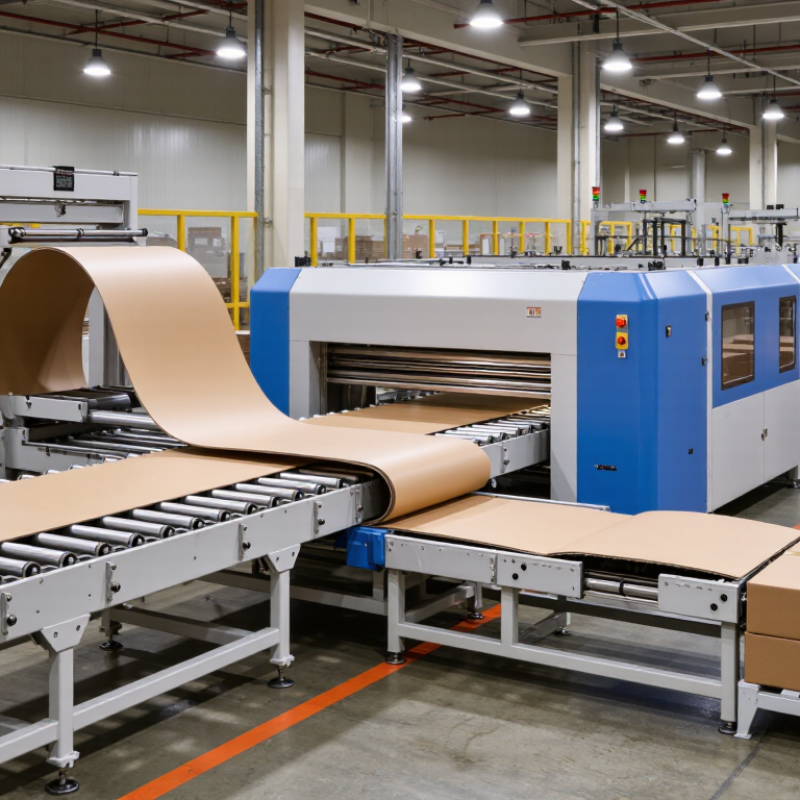
A Box Manufacturing Machine turns flat paperboard or corrugated sheets into boxes through coordinated feeding, printing, slotting, folding, and gluing. On a production floor, its work is easy to picture: sheets move along belts, rollers apply pressure, and folded blanks emerge ready for packing. The exact configuration depends on box style, board thickness, order volume, and the level of automation required.
The need for dependable box production is clear. The U.S. Environmental Protection Agency’s 2018 recycling data reported that 96.5% of corrugated containers were recycled. That figure reflects a large material stream—and makes consistent cutting, folding, and adhesive application practical concerns, not minor details. FEFCO’s industry statistics also track European corrugated output in billions of square meters, underscoring the scale at which converting equipment operates. These figures describe packaging and recycling, not machine performance; buyers should verify speed, changeover time, waste rates, and service support using supplier data and their own production trials.
A machine’s output depends on more than its advertised speed. Board quality, operator setup, maintenance, and job changes all affect the finished box. Small setup errors can become a stack of unusable blanks. That deserves attention. No source material was provided for a named Box Manufacturing Machine expert’s exact quotation, so attributing one here would risk inventing evidence. A verified interview or trade-publication source should be checked before adding a direct expert quote.
Core Definition and Purpose of a Box Manufacturing Machine
What Is a Box Manufacturing Machine?
Core Definition and Purpose of a Box Manufacturing Machine
A box manufacturing machine converts sheet material, often corrugated board, into packaging. Depending on its design, it may print, slot, crease, cut, fold, and join the board. Some machines combine several operations in one line; others handle only a specific step. The purpose is to make boxes with consistent dimensions, ready for packing or shipment.
Consider a flat sheet entering a feeder. Rollers guide it beneath cutting and creasing tools, which shape the panels and folding lines. Printing units may add product details or handling marks before the blank is folded and glued or stitched. A finished carton should open cleanly, hold its shape, and fit the intended product. Small setup errors matter. A crease placed a few millimeters off can make a flap resist folding or leave the box uneven.
The machine’s value is repeatability, not simply speed. Operators adjust settings for board thickness and box style, then inspect samples as production begins. Moisture, worn tooling, or uneven sheets can affect results, so maintenance and quality checks remain important. Not every line performs every task. “Box manufacturing machine” can describe different equipment across factories, so the label alone may not reveal which operations are included.
What Is a Box Manufacturing Machine? - Core Definition and Purpose of a Box Manufacturing Machine
| Machine or Equipment Type | Main Input | Core Operation | Typical Output | Primary Purpose |
| Corrugating line | Rolls of paper for liner and fluting | Forms a fluted paper medium, bonds it between liner sheets, and produces corrugated board. | Continuous sheets or rolls of corrugated board | Makes the board material used for many shipping and storage boxes. |
| Flexographic printer-slotter | Corrugated board sheets | Prints designs or text and cuts slots and fold lines needed to form a box blank. | Printed, slotted, creased box blanks | Prepares corrugated blanks for folding and joining. |
| Die-cutting machine | Corrugated board or carton board | Uses a shaped cutting die to cut a blank and form creases, openings, or other specified features. | Custom-shaped box or carton blanks | Produces box designs that may require more complex shapes than standard slotted boxes. |
| Folder-gluer | Printed and cut box blanks | Folds the blank along its creases and applies adhesive to join the required panels. | Folded and glued cartons or box blanks | Forms flat, joined packages that can be shipped or prepared for filling. |
| Stitching or jointing machine | Folded corrugated box blanks | Joins the box manufacturer's joint using staples or another specified joining method. | Joined box blanks ready for use | Provides an alternative to adhesive joining when the box design or application calls for it. |
| Bundling and strapping equipment | Finished or flat box blanks | Counts or groups boxes and secures the bundles for handling and transport. | Organized, secured bundles | Supports end-of-line handling and shipment; it does not form the box itself. |
| Core definition: A box manufacturing machine is equipment used to convert paper-based materials—such as corrugated board or carton board—into box blanks or formed boxes through operations such as printing, cutting, creasing, folding, and joining. A production line may combine several machine types; no single machine performs every step for every box design. |
Main Components and Their Functions
A box manufacturing machine turns flat corrugated sheets into printed, folded cartons. Its exact layout depends on box style and production volume. The sheet feeder uses vacuum belts or rollers to pull boards into the machine. Guides keep each sheet square. Alignment matters. A printing unit then transfers ink through plates and rollers, while sensors help detect feeding or registration faults.
Downstream, creasing and slotting tools form fold lines and cut flap openings. A rotary die cutter handles custom outlines; a folder-gluer applies adhesive and closes the blank. The delivery section counts and stacks finished boxes for bundling. Small errors travel. A crease that sits slightly off can make a carton resist folding, even when the print looks perfect. In practice, I still find setup checks easy to rush, especially when changing board thickness.
These details matter at industrial scale. FEFCO’s 2023 European Database reports that the region produced about 50.2 billion square metres of corrugated board in 2022. That figure describes board, not finished boxes, but it shows why stable feeding and repeatable conversion are essential. A machine’s control system records settings such as feed speed and print alignment, helping operators reproduce jobs. It cannot replace careful inspection: warped sheets, worn rollers, and uneven glue can still spoil a batch.
What Is a Box Manufacturing Machine? Main Components and Their Functions
Typical process order in a corrugated flexo folder-gluer line
The bars show process sequence, not machine output or performance. A feeder moves sheets into the line; printing units apply graphics; a slotter or die cutter forms slots and blanks; the folder-gluer folds and bonds the blank; and the counter-ejector counts and stacks finished boxes. Exact layouts vary by machine configuration.
How the Box Manufacturing Process Works
A box manufacturing machine turns flat paper reels into protective packaging through a sequence of linked operations. The process starts at the corrugator. Heated rollers shape the fluted medium, and starch adhesive bonds it to a liner. A second liner creates a rigid board. The board then passes through slitting and scoring units, which trim its width and form fold lines. Slotters or rotary die-cutters create flaps, hand holes, or custom shapes. Finally, folding and gluing produce a flat box ready for shipment. Small changes matter. A slightly misaligned score can make a carton buckle when stacked.
Production settings depend on board grade, box design, and order volume. Operators adjust feed speed, adhesive application, and cutting pressure, then check dimensions and bond strength. In practice, a machine can run smoothly while still producing weak folds; visual checks alone may miss the problem. Eurostat’s 2022 packaging-waste statistics report that paper and cardboard made up 40.8% of packaging waste in the EU. That scale helps explain why efficient material use and reliable converting are important. Scrap from inaccurate cuts or poor setup is not just untidy. It consumes board, time, and energy. Eurostat, “Packaging Waste Statistics,” 2022 data.
Common Machine Types and Box Materials
A box manufacturing machine can refer to several machines working together, rather than one all-purpose unit. A corrugating line turns paper rolls into corrugated board, forming flutes between flat liner sheets. Operators adjust heat, pressure, and adhesive as the board moves through the line. Small changes matter. Too much moisture can weaken a sheet; uneven flute formation may cause poor stacking.
A flexo folder-gluer prints, cuts slots, folds, and glues regular shipping cartons. Rotary or flatbed die-cutters make more complex shapes, such as display boxes with curved edges. For smaller runs, a compact converting machine may be more practical than a full production line. The trade-off is real: speed and automation can reduce hands-on work, but setup still takes care.
Common materials include kraft linerboard, recycled linerboard, and corrugating medium. Kraft paper often provides a sturdy outer surface, while recycled grades can vary more in stiffness and appearance. Corrugated board may use a single fluted layer or multiple layers for added cushioning. Folding cartons, by contrast, usually use solid paperboard without fluting. Match the material to the box’s weight, stacking conditions, and expected handling. A specification that looks right on paper may still need testing with the actual product.
Industrial Uses and Production Factors
What Is a Box Manufacturing Machine?
Industrial Uses and Production Factors
A box manufacturing machine converts paperboard or corrugated board into packages through operations such as printing, slotting, cutting, folding, and gluing. Corrugators make the board; converting machines shape it into shipping cases. These systems serve food producers, farms, electronics distributors, and e-commerce warehouses. FEFCO’s 2022 European Database reported about 49.2 billion square metres of corrugated board production across Europe. That scale reflects a simple need: boxes must protect products while moving efficiently through storage and transport.
Production choices affect both output and quality. Board grade and flute profile determine strength and cushioning; box dimensions influence material use and pallet fit. Print requirements, order size, changeover time, and operator skill also shape a line’s real capacity. A machine’s advertised speed is not the whole story. Short runs, worn tooling, or inconsistent board can slow production and increase scrap. I would treat quoted output as a target, not a guarantee.
Tips: Match machine capacity to typical order sizes, not just peak demand. Test a representative board grade and box design before committing. Track usable boxes per shift, setup time, and reject rates. Small details matter. A poorly adjusted glue line can leave a carton open, even when the rest of the line runs smoothly.











