o
p
t
i
m
a
r
o
b
o
t
i
c
s

Make a Call


Make a Call
Blogs
What Is a Straw Beach Bag?
A Straw Beach Bag is a lightweight carryall made from woven straw, raffia, seagrass, or similar plant fibers. Its relaxed texture and roomy shape make it popular for beach days, pool visits, and warm-weather travel. Many styles include cotton lining, leather handles, or a small inner pocket for keys and cards.
In practical use, a Straw Beach Bag can hold a towel, sunscreen, sunglasses, and a water bottle. Its open weave allows air to circulate, but sand may enter easily. That detail matters. A zipper or fabric lining offers better protection for smaller items. Before buying, check the stitching, handle attachment, and base strength. Weak seams can become uncomfortable when the bag is full.
Not every straw bag is equally durable. Natural fibers may soften, fade, or lose shape after repeated exposure to moisture and direct sunlight. Wipe the surface gently, let it dry completely, and store it in a cool place. Avoid treating all plant fibers as automatically sustainable. Farming methods, dyes, transport, and production standards can affect the final environmental impact. A thoughtfully made Straw Beach Bag can combine function, style, and responsible material choices. Still, it is not a perfect product. Its charm often comes with small compromises.
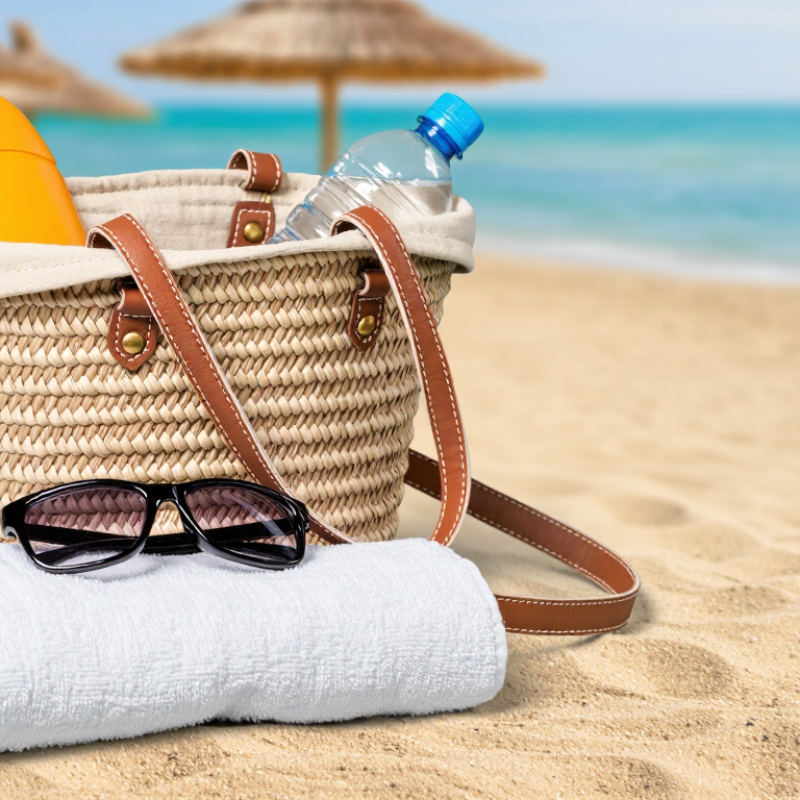
Table of Contents [Hide]
Definition and Key Characteristics of a Straw Beach Bag
What Is a Straw Beach Bag?
Definition and Key Characteristics of a Straw Beach Bag
A straw beach bag is a carryall made from woven natural fibers, paper yarn, or straw-like materials. It usually has a broad opening, flexible handles, and a lightweight structure. Common details include braided edges, cotton lining, magnetic closures, and small interior pockets. The weave often feels slightly rough, with visible color changes and uneven strands. These variations are not always defects. They can show genuine hand-finishing, although quality still deserves careful checking.
A useful test is practical, not decorative. Place a towel, sunglasses case, water bottle, and book inside. The handles should remain comfortable, and the base should resist sagging. Most straw bags are breathable and light, but they are not automatically waterproof. Moisture can soften plant fibers, stain paper yarn, or distort the shape. Sand may also collect between tight woven rows. The label can mislead. Some products imitate straw with synthetic fibers, so material descriptions should be read closely.
Industry data shows why this category remains commercially relevant. Grand View Research valued the global handbags market at approximately 73.32 billion dollars in 2023, with projected growth through 2030. Straw bags represent only one segment, so this figure does not measure them directly. Textile Exchange reported global fiber production at about 124 million tonnes in 2023, highlighting the scale of material choices. For buyers, fiber origin, lining quality, stitching, and repairability matter more than a purely “natural” appearance. A beautiful weave can still fail under heavy daily loads.
What Is a Straw Beach Bag? - Definition and Key Characteristics of a Straw Beach Bag
Brands
Proudly Trusted by Top Suppliers Worldwide







Let us know and we will automate, together to fit your industrial needs.
 +91-97254 16844
Clients
Proudly Trusted by Top Companies Worldwide


Do you need Help? Get in touch.
X
Please fill out the form below and we will get back to you as soon as possible.