o
p
t
i
m
a
r
o
b
o
t
i
c
s

Make a Call


Make a Call
Blogs
What Is a Suction and Discharge Hose?
What Is a Suction and Discharge Hose? It is more than a flexible tube. It is a pressure-rated flow path designed to move liquids, slurries, or selected dry materials safely. The suction side must resist collapse under negative pressure. The discharge side must withstand internal pressure, vibration, and repeated bending. One hose rarely performs both tasks equally well.
Industry data supports its importance. Grand View Research’s Industrial Hose Market report identifies oil and gas, chemicals, water treatment, and agriculture as major demand sectors. MarketsandMarkets also reports continued growth in industrial hose applications, driven by fluid transfer, infrastructure renewal, and stricter safety expectations. These reports describe market direction, not automatic product quality. Selection still depends on actual service conditions.
Details matter. A 100-millimeter hose may look suitable, yet an undersized pump inlet can create damaging vacuum conditions. A hose carrying abrasive slurry needs a different tube compound from one handling clean water. Temperature, chemical compatibility, bend radius, coupling design, and working pressure must be checked together. Standards such as ISO 1823 and EN 1765 provide useful testing and construction references, while manufacturer data confirms the limits of a specific assembly.
Small errors become expensive. A loose coupling can spray fluid across a concrete floor. A sharp bend can restrict flow and accelerate fatigue. Field experience also shows an uncomfortable truth: inspection schedules are often treated as paperwork. They should not be. This guide explains how a Suction And Discharge Hose works, where it is used, and how informed selection improves reliability without replacing professional engineering review.
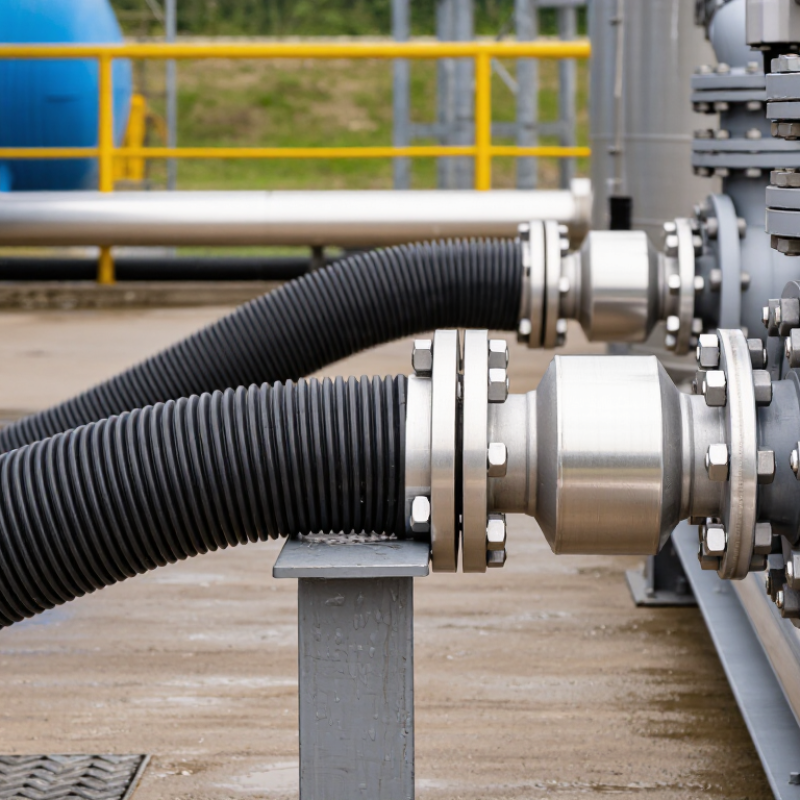
Table of Contents [Hide]
Suction vs. Discharge Hoses: Flow Direction, Pressure, and Vacuum Service
A suction and discharge hose moves liquids, but each design serves different pressure conditions. A suction hose draws fluid toward a pump or vacuum source. Its wall must resist collapse when outside air pressure squeezes inward. Helical reinforcement, thick walls, and firm couplings are common safeguards. Discharge hoses carry fluid away from the pump. They manage internal pressure instead of external vacuum. Still, the terms can overlap. Poor wording causes poor selection.
Flow direction is only the starting point. Check the pump’s inlet and outlet, then trace the liquid path physically. A clear section near the connection can reveal bubbles, flattening, or unexpected flow. Use the hose’s working-pressure rating, not its burst rating. Burst pressure is an emergency limit, not a target. Vacuum service also needs a rated vacuum level. A hose may tolerate pressure yet collapse under suction. That failure can happen quietly. Temperature, fluid chemistry, abrasion, and bend radius matter too. A tight bend near the pump can restrict flow and stress fittings.
During field inspections, I look for soft spots, cracked covers, loose clamps, and exposed reinforcement. I also verify gasket material and coupling security before starting equipment. These checks seem basic. They prevent expensive surprises. One imperfect habit deserves correction: replacing a suction hose by diameter alone is unsafe. The same size may have different vacuum, pressure, and temperature limits. Select the hose from measured service conditions, then inspect it during use. If flow changes, stop and investigate rather than trusting appearance.
Brands
Proudly Trusted by Top Suppliers Worldwide







Let us know and we will automate, together to fit your industrial needs.
 +91-97254 16844
Clients
Proudly Trusted by Top Companies Worldwide


Do you need Help? Get in touch.
X
Please fill out the form below and we will get back to you as soon as possible.