o
p
t
i
m
a
r
o
b
o
t
i
c
s

Make a Call


Make a Call
Blogs
What Is a Substation With Transformer Used For?
What Is a Substation With Transformer Used For? This question reaches beyond a simple definition. A Substation With Transformer receives electrical power, changes its voltage, and directs it toward homes, factories, rail systems, or commercial buildings. The transformer may reduce transmission voltage for local distribution. It may also raise voltage for efficient movement across a network. Inside the yard, busbars, circuit breakers, relays, and cooling systems work together. A failure in one small component can interrupt thousands of customers.
Dr. J. Duncan Glover, a respected power-systems professor and textbook author, explains, “The transformer provides the link between different voltage levels in an electric power system.” That principle remains central today. It can be seen in practical details: oil temperature gauges, porcelain bushings, grounding grids, and audible cooling fans. These features are not decorative. They support insulation, fault control, and dependable operation.
Yet the picture is not perfect. Voltage conversion alone does not make a substation reliable. Engineers must study load growth, short-circuit current, lightning exposure, maintenance access, and environmental conditions. A well-designed installation follows applicable IEC or IEEE practices and includes carefully tested protection systems. Real substations are often noisy, fenced, and visually plain. Their value appears quietly, when stable power reaches a hospital room or a production line.
This guide examines how a Substation With Transformer works, why each major component matters, and where design assumptions can fail. Some explanations may seem simple. The equipment is not.
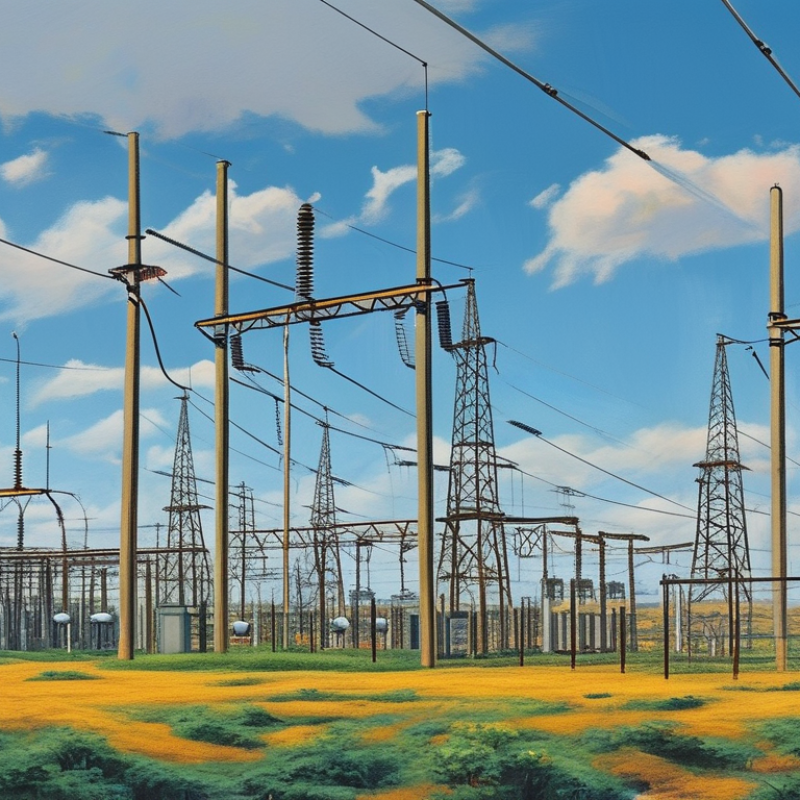
Table of Contents [Hide]
Definition and Core Function of a Transformer Substation
A transformer substation is a controlled electrical facility that changes voltage between different parts of the power network. Its central equipment is the power transformer. Through electromagnetic induction, the transformer raises or lowers alternating voltage without changing the electricity’s frequency. Step-down substations commonly reduce transmission voltage for regional feeders and local distribution lines. Step-up substations perform the opposite task near generating stations.
The core function is controlled energy transfer. High voltage allows electricity to travel long distances with lower current and reduced line losses. Near homes, factories, and commercial buildings, the substation lowers voltage to safer and more usable levels. The transformer does not work alone. Switchgear, circuit breakers, busbars, relays, meters, cooling systems, and grounding equipment support its operation. Protection relays can disconnect a fault within fractions of a second.
Safety matters every day. Operators check temperature readings, oil levels, unusual vibration, and the transformer’s steady hum. A dry-type transformer may serve an indoor installation, while an oil-immersed unit often supports larger outdoor loads. In practice, the textbook definition feels too neat. Real substations face changing demand, weather, aging insulation, and maintenance delays. Even a small connection problem can create heat, noise, or an unexpected outage. Good inspection records and carefully tested protection settings help keep the system reliable, though no design removes every risk.
Brands
Proudly Trusted by Top Suppliers Worldwide





Let us know and we will automate, together to fit your industrial needs.
 +91-97254 16844
Clients
Proudly Trusted by Top Companies Worldwide


Do you need Help? Get in touch.
X
Please fill out the form below and we will get back to you as soon as possible.