o
p
t
i
m
a
r
o
b
o
t
i
c
s

Make a Call


Make a Call
Blogs
Why Is Ammonia Used Around the World?
Why Is Ammonia Used Around the World?
Ammonia rarely attracts attention, yet it supports food production and many everyday industries. Farmers apply nitrogen fertilizers made from ammonia to help crops grow. Manufacturers also use it in products such as plastics, synthetic fibers, and cleaning agents. In cold-storage facilities, ammonia can serve as an industrial refrigerant. Its uses are broad, but they come with real trade-offs.
The International Energy Agency’s Ammonia Technology Roadmap (2021) estimates that global ammonia production reached about 185 million tonnes in 2020. Around 70% was used to make fertilizers. That scale helps explain why ammonia matters to agricultural supply chains, from fertilizer plants to fields of wheat and rice. It is a basic input, not a magic solution: crop yields also depend on soil, water, weather, and careful nutrient management.
There is a cost. The IEA reports that ammonia production is energy-intensive and responsible for substantial carbon dioxide emissions. Conventional production relies heavily on fossil fuels, so demand alone does not tell the whole story. That story is not simple. Lower-emission production methods are developing, but they require investment, clean energy, and reliable infrastructure. Understanding why ammonia is used worldwide means weighing its practical value against the environmental challenges of producing it.
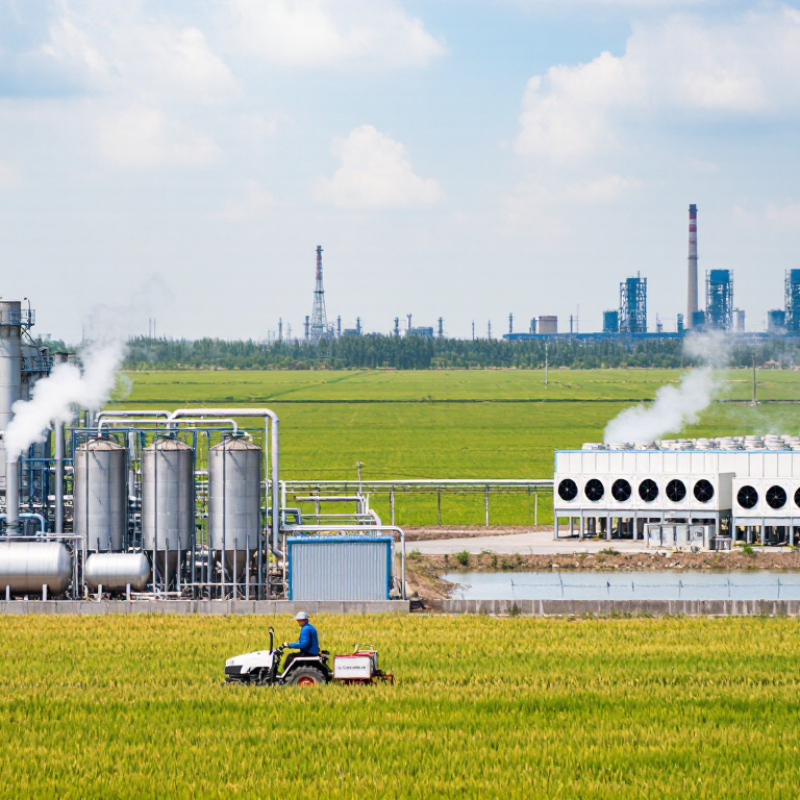
Table of Contents [Hide]
Ammonia’s Properties That Make It Useful
Ammonia is a colorless gas with a sharp, recognizable odor. That smell matters. It can warn of a leak, but it is not a reliable safety test; dangerous exposure may occur before someone can respond. Ammonia also dissolves readily in water, producing an alkaline solution used in some cleaning and industrial processes. Its most important role, however, is supplying nitrogen. Plants need nitrogen to build proteins and grow, so ammonia is a key starting material for many fertilizers. Each molecule carries one nitrogen atom, ready for conversion into forms crops can use.
Ammonia’s physical properties make it useful beyond agriculture. At normal atmospheric pressure, it boils at about minus 33.3 degrees Celsius. When liquid ammonia evaporates, it absorbs heat, making it effective in large refrigeration systems. It can transfer heat efficiently, though performance depends on system design and operating conditions. There is a trade-off. Ammonia is toxic at elevated concentrations and can irritate or damage the eyes, skin, and lungs. Industrial equipment therefore needs careful design, leak detection, and trained operators. The chemistry is elegant; the practical details are less forgiving.
Brands
Proudly Trusted by Top Suppliers Worldwide







Let us know and we will automate, together to fit your industrial needs.
 +91-97254 16844
Clients
Proudly Trusted by Top Companies Worldwide


Do you need Help? Get in touch.
X
Please fill out the form below and we will get back to you as soon as possible.