o
p
t
i
m
a
r
o
b
o
t
i
c
s

Make a Call


Make a Call
Blogs
Why Are Humanoid Robots in High Demand?
Why are humanoid robots attracting so much attention from manufacturers and investors? The appeal is practical: a human-shaped machine could use tools, move through aisles, and handle objects designed for people. In a warehouse, that might mean carrying a tote from a shelf to a packing station. Yet reliable operation across changing tasks remains difficult.
Goldman Sachs Research’s 2024 update projected a potential humanoid-robot market of $38 billion by 2035, with annual shipments reaching 1.4 million units. These are forecasts, not confirmed orders. The International Federation of Robotics reported 4.28 million industrial robots operating worldwide in 2023. That figure shows an established automation base, but it does not measure demand for humanoids. The distinction matters.
NVIDIA CEO Jensen Huang described the broader shift at CES 2025: “The next wave of AI is physical AI.” Humanoid robots sit at the center of that idea, combining AI with sensors, motors, and physical work. Their shape may help them fit existing spaces. Their usefulness still depends on cost, safety, uptime, and performance outside carefully staged demonstrations. No small challenge. A robot that lifts one box on a showroom floor has not yet proved it can repeat the task through a full shift. The opportunity is real, but so is the gap between a striking prototype and a dependable worker. That gap helps explain both the demand—and the caution.
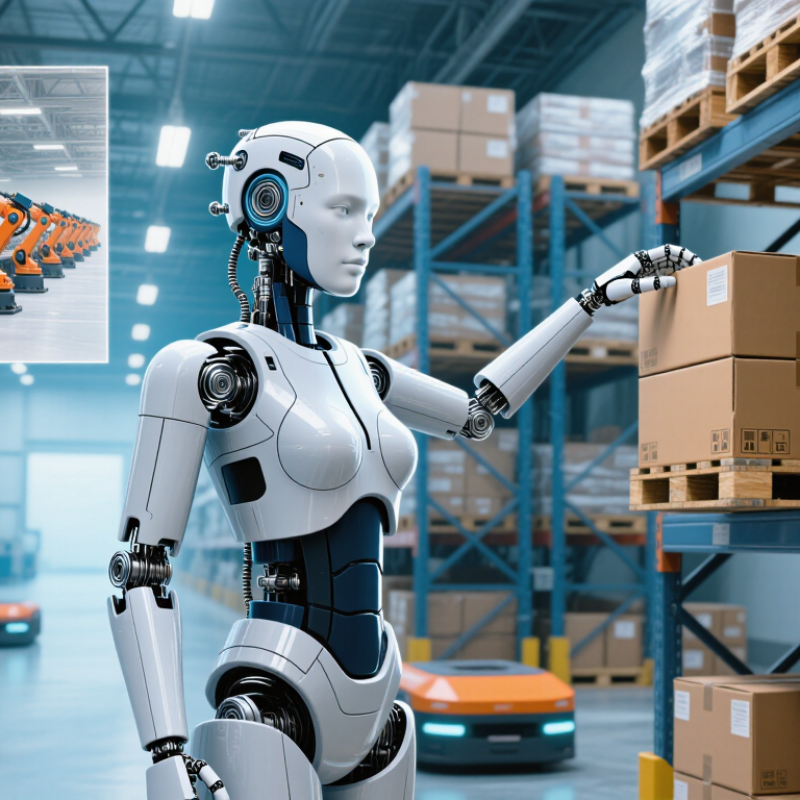
Table of Contents
[Hide]
Defining Humanoid Robots and Their Core Capabilities
A humanoid robot is a machine designed with a body plan resembling a person, often with a head, torso, arms, and legs. The resemblance is practical, not merely visual. Human-sized doors, stairs, handles, and work surfaces can make a human-shaped design useful in places built for people. Yet not every humanoid robot can walk or use every tool.
Its core capabilities usually combine sensing, movement, and control. Cameras and depth sensors help it locate objects and estimate distances. Force sensors can register when a hand presses against a surface. Motors then move joints to reach, lift, or balance. A robot might spot a cup on a counter, grip it, and carry it across a room. That simple task demands several systems working together. Small errors matter.
Some models can also interpret spoken instructions or recognize familiar objects, but performance depends on the environment. Dim lighting, clutter, or a slippery floor can disrupt a task. Not magic. Humanoid form can help a robot fit into human spaces, but it does not automatically make the machine dexterous, safe, or independent. Capability should be judged by repeatable performance in real conditions, not by a polished demonstration. Even then, a successful trial is only one piece of evidence.
Why Are Humanoid Robots in High Demand? - Defining Humanoid Robots and Their Core Capabilities
| Dimension | Description | Why It Matters | Current Practical Consideration |
|---|---|---|---|
| Definition and form | A humanoid robot is designed with a broadly human-like body structure, commonly including a torso, two arms, and a head or sensor unit. Designs vary, and not every robot has all of these features. | A familiar form can help a robot work in spaces and around tools originally designed for people. | A human-like shape does not automatically provide human-level strength, dexterity, balance, or intelligence. |
| Mobility | Humanoid robots may use legs to walk, step over some obstacles, or navigate floors; other designs use wheels or combine different forms of movement. | Mobility can make it possible to move between work areas without relying on fixed tracks or a dedicated conveyor. | Walking and balancing require continuous sensing and control. Uneven surfaces, clutter, and falls remain important challenges. |
| Manipulation | Arms and hands or grippers can be used to reach, grasp, carry, and position objects. | Manipulation supports tasks such as moving items, handling tools, and interacting with equipment built for human workers. | Reliable handling depends on the object’s shape, weight, surface, and position; delicate or highly variable tasks can be difficult. |
| Perception | Cameras and other sensors can help a robot estimate the location of objects, people, and obstacles in its surroundings. | Perception provides information needed to plan movement and carry out tasks in changing environments. | Performance can be affected by poor lighting, occlusion, reflective surfaces, sensor limits, and unexpected changes. |
| Control and autonomy | Software combines sensor input with programmed rules or learned models to select actions and control movement. | Greater autonomy can reduce the need for continuous, direct human control during routine steps. | Many systems still need supervision, carefully defined tasks, or human assistance when they encounter unfamiliar situations. |
| Human interaction | Speech, displays, gestures, and other interfaces can let people give instructions or receive status information. | Accessible interaction can make it easier to assign tasks and coordinate work around people. | Robots need to communicate their intent clearly and operate safely near people; conversational ability alone does not ensure dependable task execution. |
| Workplace flexibility | A humanoid design may allow a robot to use some existing work areas, objects, and tools without redesigning every station. | This potential compatibility is one reason organizations consider humanoids for environments built around human workflows. | Compatibility must be assessed task by task. Changes to safety procedures, workspaces, or tools may still be needed. |
| Demand drivers | Interest is supported by potential uses in repetitive or physically demanding work, advances in robotics and AI, and the possibility of automating tasks across multiple settings. | Organizations are exploring whether one adaptable platform could perform more than a single narrowly defined task. | Commercial value depends on demonstrated reliability, safety, operating time, maintenance needs, and total cost—not on humanoid appearance alone. |
Related Posts
-
Top 10 Humanoid Robots in China for Global Buyers?
-
How to Choose the Best Humanoid Robot for Your Needs?
-
How to Choose the Best Robotic Arm for Your Business?
-
How to Become a Robotics Engineer: Skills, Education, and Career Path
-
How to Choose the Right Collaborative Robots for Your Business Needs
-
Top 10 Robotics Stocks to Watch in 2026 for Investors?
Brands
Proudly Trusted by Top Suppliers Worldwide







Let us know and we will automate, together to fit your industrial needs.
 +91-97254 16844
Clients
Proudly Trusted by Top Companies Worldwide


Do you need Help? Get in touch.
X
Please fill out the form below and we will get back to you as soon as possible.