o
p
t
i
m
a
r
o
b
o
t
i
c
s

Make a Call


Make a Call
Blogs
Why Do Belt Conveyor Rollers Fail?
A belt conveyor roller may look simple: a steel shell, sealed bearings, and a rotating shaft beneath a moving belt. Yet when one roller binds, runs hot, or loses its seal, friction can damage the belt and disrupt material flow. The failure is often gradual. A faint rumble, a warm bearing housing, or a narrow strip of belt wear may be the first clue.
Industry sources help frame the risk, but they do not provide a universal roller-failure rate. The U.S. Mine Safety and Health Administration’s Mine Injury and Worktime data document hazards associated with mining operations, while CEMA’s Belt Conveyors for Bulk Materials explains conveyor design and operating factors. Neither should be mistaken for a global database of roller failures. That distinction matters. Site conditions differ sharply.
In practice, dust, moisture, impact loading, misalignment, poor sealing, and inconsistent lubrication can all shorten service life. A roller that turns freely in a workshop may struggle under a loaded belt, abrasive fines, and repeated washdowns. Small differences matter. So does maintenance history. This article examines why belt conveyor roller failures occur, how to recognize early warning signs, and which inspection details can prevent avoidable downtime. Field diagnosis is rarely neat; one symptom can have several causes, and replacing a roller without checking alignment or loading may only postpone the next failure.
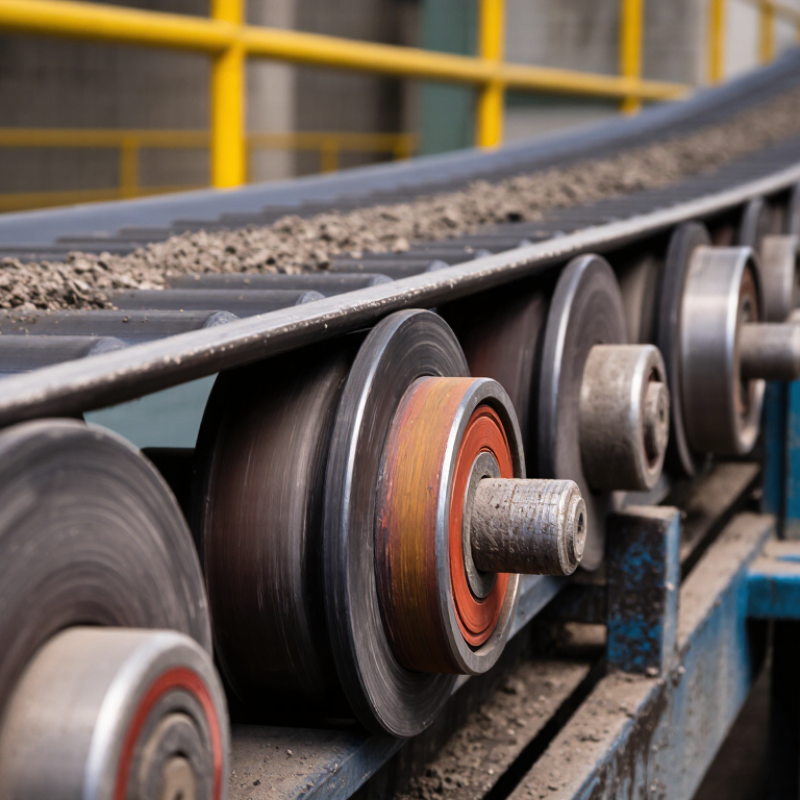
Table of Contents [Hide]
How Belt Conveyor Rollers Support Material Movement
On a belt conveyor, rollers do more than carry the belt. They create a moving support surface that keeps material traveling along a planned route. As each roller turns, it reduces sliding resistance and helps limit belt wear. Beneath a loaded section, idlers support the belt and reduce sag. At transfer points, impact rollers absorb some force from falling material. Poor spacing or misalignment can make the belt wander, spill material, or place uneven loads on individual rollers. Small details matter.
Rollers also help keep material movement steady. A seized bearing can increase drag, while packed fines may stop a roller from turning freely. Listen closely. Squealing, wobbling, unusual heat, or visible buildup can signal trouble, though one symptom alone does not prove a roller has failed. It is easy to blame the roller too quickly; belt tension, alignment, and loading patterns may also contribute. Regular checks during planned shutdowns can reveal wear before it disrupts material flow. Inspectors should follow site procedures and avoid contact with moving equipment. The ideal roller arrangement depends on belt speed, material weight, and transfer-point impact, so general spacing advice needs to be checked against actual operating conditions.
Brands
Proudly Trusted by Top Suppliers Worldwide







Let us know and we will automate, together to fit your industrial needs.
 +91-97254 16844
Clients
Proudly Trusted by Top Companies Worldwide


Do you need Help? Get in touch.
X
Please fill out the form below and we will get back to you as soon as possible.