o
p
t
i
m
a
r
o
b
o
t
i
c
s

Make a Call


Make a Call
Blogs
Why Choose a Dancing Water Fountain for Your Project?
A Dancing Water Fountain can turn an ordinary public space into a memorable, living experience. Water rises, pauses, twists, and falls in coordinated patterns. Light catches each movement, creating changing reflections across stone, glass, and nearby faces. This visual rhythm can strengthen a hotel entrance, shopping center, resort, plaza, or cultural destination.
Mark Fuller, founder of WET Design and a leading water-feature designer, once said, “Water is the most dramatic and powerful element in the world.” His observation explains the appeal of a Dancing Water Fountain. It combines engineering precision with emotional impact. Programmable pumps, underwater lighting, filtration systems, and carefully designed nozzles control the performance. When these elements work together, a fountain can support branding, visitor engagement, and nighttime atmosphere without overwhelming the surrounding architecture.
Good design requires more than attractive animation. Project teams must examine water consumption, maintenance access, pump noise, splash control, weather conditions, and public safety. A fountain that looks impressive on opening day may become expensive if technicians cannot reach its equipment easily. That is a real concern. It deserves honest planning. Designers should also test the choreography from different viewing distances, because a pattern that looks elegant nearby may appear weak from across a plaza. With experienced engineering, durable materials, and realistic maintenance planning, a Dancing Water Fountain can become a dependable landmark rather than a short-lived decoration.
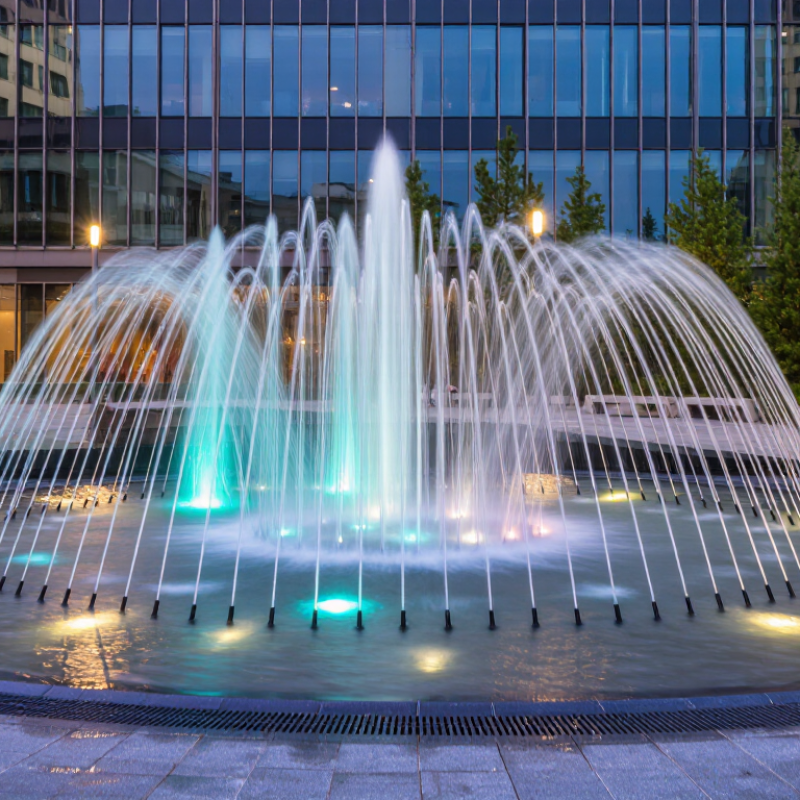
Table of Contents [Hide]
What Is a Dancing Water Fountain?
A dancing water fountain is an engineered display where water jets move in timed patterns. Pumps, valves, nozzles, lights, and digital controls work together. Some systems respond to music, while others follow programmed sequences. The water may rise, curve, pulse, or cross in midair. It looks playful, but careful hydraulic planning supports every movement.
In a real project, the performance begins with stable water pressure. Pumps deliver water through separate channels, while valves adjust each jet’s timing. Nozzles shape the streams into thin arcs, tall columns, or soft sprays. Waterproof lights can add color after sunset. Sensors may monitor water levels and equipment conditions. Small details matter. A slight pressure difference can make one jet appear weaker than its neighbors.
From a design perspective, a dancing fountain should fit its location, audience, and maintenance plan. A plaza may need broad movement and moderate sound. A hotel entrance might require quieter patterns and refined lighting. I used to think dramatic height created the best effect. That is not always true. Excessive spray can wet nearby paths and increase cleaning work. Reliable designs leave room for inspection, drainage, safe electrical separation, and seasonal adjustments. The most attractive sequence can still fail if technicians cannot reach the valves easily.
Brands
Proudly Trusted by Top Suppliers Worldwide







Let us know and we will automate, together to fit your industrial needs.
 +91-97254 16844
Clients
Proudly Trusted by Top Companies Worldwide


Do you need Help? Get in touch.
X
Please fill out the form below and we will get back to you as soon as possible.