o
p
t
i
m
a
r
o
b
o
t
i
c
s

Make a Call


Make a Call
Blogs
Why Choose a Jacquard Driving Board for Your Loom?
A loom’s patterning system depends on controlled, repeatable movement. The Jacquard Driving Board helps coordinate electronic signals with the loom’s lifting mechanism. It can support accurate warp selection, cleaner pattern definition, and steadier production. The difference is visible.
When the board matches the loom’s controller, harness, and communication protocol, pattern changes can become more reliable. Operators may notice fewer missed selections during dense designs. They may also spend less time correcting uneven motifs or unexpected stops. These results depend on proper installation, tested wiring, and suitable software settings. A component alone cannot solve every weaving problem.
Practical evaluation should begin with compatibility, response speed, output stability, and service access. Check the board’s voltage range, connector layout, cooling needs, and replacement availability. A supplier with documented testing procedures can provide useful evidence, including inspection records and operating limits. Small errors matter. A loose connector, poor grounding, or outdated firmware may create symptoms that resemble mechanical failure. Experienced technicians should compare the board’s signals with the loom manufacturer’s specifications before changing production settings.
Choosing this board is not simply a search for higher speed. Fabric quality, loom age, design complexity, and maintenance skills also influence the decision. Some users may gain better control, while others may see limited improvement on an older system. That uncertainty deserves attention. A careful trial with a repeat pattern, fabric inspection, and downtime records can reveal whether the Jacquard Driving Board offers measurable value for your loom.
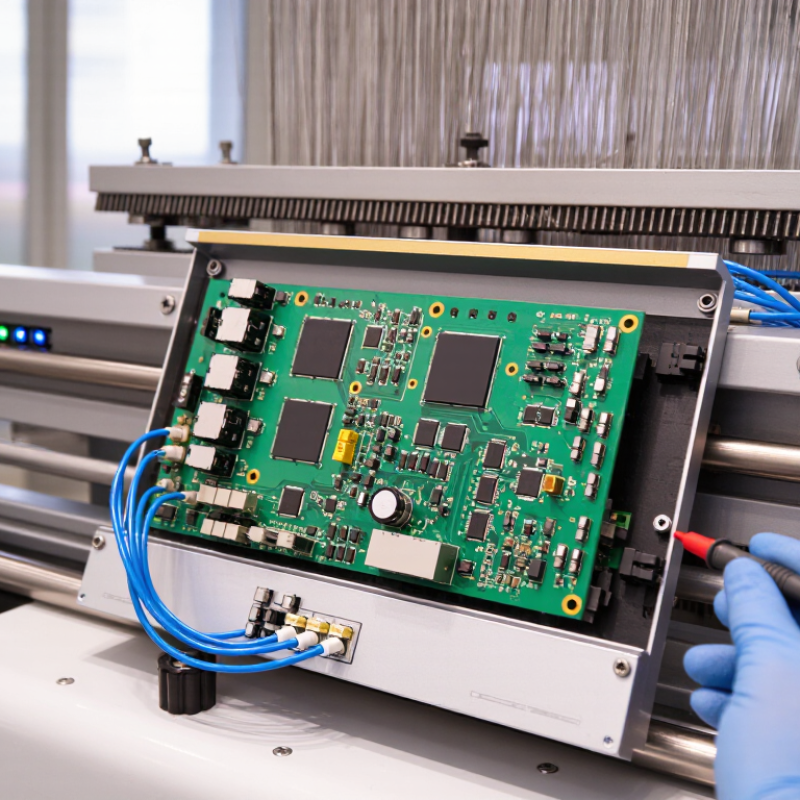
Table of Contents [Hide]
Jacquard Driving Boards: Definition and Role in Loom Operation
A Jacquard driving board is a control component that guides selected hooks, needles, or lifting mechanisms during loom operation. It converts pattern instructions into precise mechanical movement. In practical terms, the board helps decide which warp threads rise for each pick. This creates detailed motifs, sharp outlines, and controlled repeats. Its exact structure varies by loom design, so compatibility matters.
Experienced weavers often choose a suitable driving board for accuracy and stable production. A well-fitted board can reduce missed selections and uneven pattern lines. It also supports consistent timing between the Jacquard mechanism and the loom.
I have found that small alignment errors can become visible after only a few woven meters. It is not a magic fix. Yarn tension, maintenance, and setup still influence the final fabric. Some older boards may require more frequent inspection than expected.
Tips: Check the board’s dimensions, connection points, and operating requirements before installation. Keep the surface clean and inspect moving parts for wear. Test a simple pattern first. Watch for delayed lifting, unusual noise, or repeated design faults. Recording these observations improves troubleshooting, although the first diagnosis is not always correct.
Brands
Proudly Trusted by Top Suppliers Worldwide







Let us know and we will automate, together to fit your industrial needs.
 +91-97254 16844
Clients
Proudly Trusted by Top Companies Worldwide


Do you need Help? Get in touch.
X
Please fill out the form below and we will get back to you as soon as possible.