o
p
t
i
m
a
r
o
b
o
t
i
c
s

Make a Call


Make a Call
Blogs
Why Choose a Level 3 EV Charger for Your Business?
A Level 3 Ev Charger can turn a business car park into a practical stop for drivers who need a fast top-up. These DC fast chargers can add substantial range in less time than many AC units, though actual charging speed depends on the vehicle, battery condition, and site capacity. That distinction matters. A charger’s advertised power is not a promise that every car will receive it.
Fatih Birol, Executive Director of the International Energy Agency, has described a wider shift: “The world is entering the Age of Electricity.” For businesses, that shift presents an opportunity, but not an automatic return. A well-placed charger may attract customers, support fleet operations, or create a paid service. Yet installation can require electrical upgrades, careful parking design, and ongoing maintenance. The figures deserve close scrutiny.
Picture a driver arriving with 20 percent battery, rain on the pavement, and only a short break before the next appointment. Clear signs, reliable payment, and a working connector matter as much as peak output. A Level 3 EV Charger can serve that moment well. Or it can sit underused. That possibility is easy to overlook. The sections ahead examine costs, site readiness, customer experience, and utilization, so business owners can judge whether fast charging fits their actual traffic—not just the promise of a growing market.
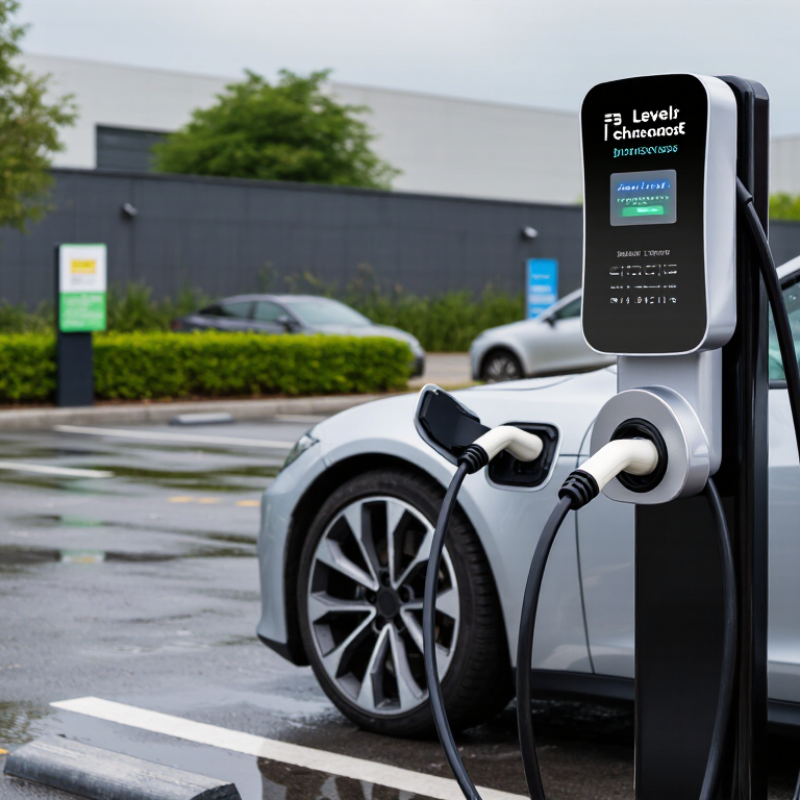
Table of Contents [Hide]
Level 3 EV Charging Defined: DC Fast Chargers Deliver 50–350 kW
Level 3 charging generally means DC fast charging, with equipment rated from 50 to 350 kW. The U.S. Department of Energy’s Alternative Fuels Data Center classifies DC fast chargers as 50 kW or higher. At a site, that power can turn a brief stop into a useful top-up. Yet the charger’s rating is not the vehicle’s guaranteed charging speed. Battery temperature, state of charge, and the vehicle’s charging limit all affect the result. Not every car.
For a business, this distinction matters when choosing equipment and setting customer expectations. A 350 kW unit cannot deliver 350 kW to every vehicle, and shared power can reduce output when several cars plug in together. The International Energy Agency’s Global EV Outlook 2024 reports that public fast-charging points grew by 55% in 2023, reflecting rising demand for quicker charging. Site planning should also consider electrical capacity, expected dwell time, and local utility tariffs, which may include demand charges. A charger beside a busy café serves a different purpose than one at a workplace where cars remain parked for hours. The numbers help, but real charging sessions can be less predictable than the spec sheet suggests.
Brands
Proudly Trusted by Top Suppliers Worldwide







Let us know and we will automate, together to fit your industrial needs.
 +91-97254 16844
Clients
Proudly Trusted by Top Companies Worldwide


Do you need Help? Get in touch.
X
Please fill out the form below and we will get back to you as soon as possible.