o
p
t
i
m
a
r
o
b
o
t
i
c
s

Make a Call


Make a Call
Blogs
Why Choose a Mixing Machine for Your Business?
Why Choose a Mixing Machine for Your Business?
A Mixing Machine can turn separate ingredients into a consistent, repeatable product. That matters when every batch must match the last one. A dry powder blend may look uniform in the vessel, yet still fail during filling or testing. Mixing quality depends on blade design, speed control, vessel geometry, moisture, and product density. Small details matter.
Industry data supports this investment. Grand View Research identifies industrial mixers as a growing equipment segment, driven by food, chemicals, pharmaceuticals, and advanced materials manufacturing. Its market analysis highlights automation, process consistency, and reduced production time as major purchasing factors. PMMI’s State of the Industry reports also continue to emphasize labor efficiency, automation, and flexible machinery across packaging and processing operations. These findings suggest that a mixer is not merely a production tool. It can support broader operational resilience.
The practical benefits are visible on the factory floor. An operator can monitor torque, adjust speed, and record batch conditions instead of relying only on visual checks. A well-selected machine may reduce rework, shorten cleaning cycles, and protect product quality. However, the cheapest model is rarely the safest choice. That sounds obvious, but businesses still overlook maintenance access, sanitation requirements, noise, and future capacity. Equipment suppliers should provide documented performance data, material specifications, and validation support. Standards from organizations such as EHEDG and 3-A SSI can also guide hygienic design decisions. No machine solves a weak process by itself. Careful testing remains essential.
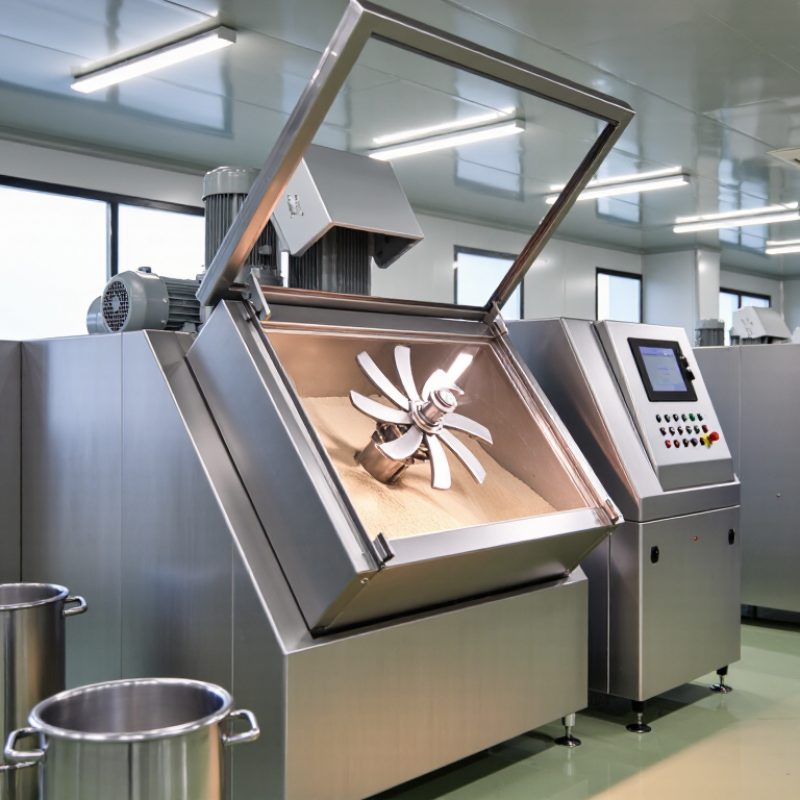
Table of Contents [Hide]
Define Mixing Machines by Process Type, Capacity, and Industry Application
Why Choose a Mixing Machine for Your Business?
Mixing machines should be defined by process type, capacity, and industry application. Batch mixers suit products made in measured lots, such as dough, coatings, or powdered supplements. Continuous mixers support steady production and reduce pauses between material feeds. High-shear systems break down particles quickly, while paddle or ribbon mixers handle dry powders more gently. Vacuum mixing can reduce trapped air in creams, sealants, and thick pastes.
Capacity means more than the tank’s total size. A 500-liter vessel may not safely process 500 liters of material. Working volume, fill ratio, viscosity, and expansion all affect output. A small test mixer can reveal problems before a full-scale purchase. It may expose uneven blending, excessive heat, or difficult discharge. That step often saves money, though it can feel slow.
Industry demands also shape the design. Food processors may need smooth surfaces, controlled temperatures, and easy cleaning. Pharmaceutical production requires precise control, traceability, and validated procedures. Chemical plants may prioritize corrosion resistance and sealed operation. Construction materials often need strong torque for dense compounds. Cosmetics require gentle handling to protect texture and appearance. I once underestimated cleaning time in a production estimate. That mistake changed the equipment review. Operators also need practical access, safe controls, and replacement parts that can be obtained reliably.
Brands
Proudly Trusted by Top Suppliers Worldwide







Let us know and we will automate, together to fit your industrial needs.
 +91-97254 16844
Clients
Proudly Trusted by Top Companies Worldwide


Do you need Help? Get in touch.
X
Please fill out the form below and we will get back to you as soon as possible.