o
p
t
i
m
a
r
o
b
o
t
i
c
s

Make a Call


Make a Call
Blogs
Why Choose a Swivel Recliner Chair for Modern Living?
Modern living often demands furniture that works harder without looking complicated. A Swivel Recliner Chair can combine comfortable seating, flexible movement, and practical support in one compact design. Its rotating base helps users face a television, window, reading lamp, or conversation area without dragging the chair across the floor. That small movement can make a room feel more adaptable.
From everyday use, comfort depends on more than soft padding. A reliable recliner should offer steady lumbar support, smooth reclining control, durable upholstery, and a stable frame. The footrest should extend without sudden resistance. The seat should also suit the user’s height and body shape. These details matter after several hours, not only during a quick showroom test.
Room size deserves equal attention. A large Swivel Recliner Chair may feel luxurious in a spacious lounge but crowded in a small apartment. Measure doorways, walking paths, and the chair’s full reclining distance before buying. Look for clear product specifications and credible warranty information. Independent reviews can help, although comfort remains personal. One model may feel supportive to one person and too firm to another. That is worth admitting.
A carefully chosen chair can support reading, resting, nursing, or relaxed conversation. It may also reduce unnecessary movement for older adults or people with limited mobility, though it should not replace professional medical advice. Good design is useful. It is also quiet. The best choice blends into daily routines, offers dependable comfort, and leaves enough space for life around it.
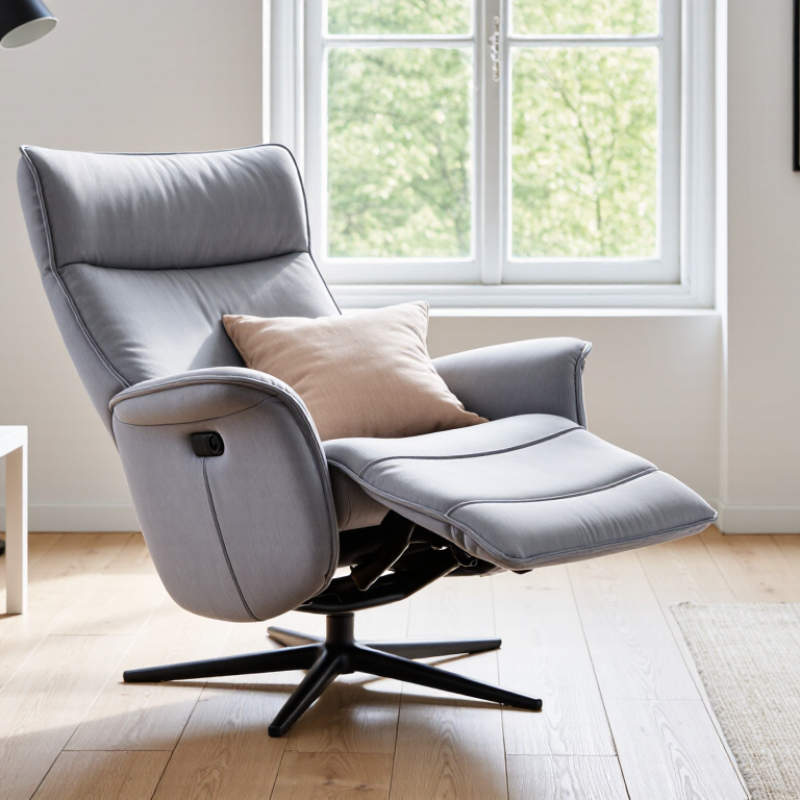
Table of Contents [Hide]
Definition and Core Features of a Swivel Recliner Chair
A swivel recliner chair combines two everyday functions: controlled reclining and smooth seat rotation. Its base turns from side to side, while the backrest and footrest adjust for reading, resting, or conversation. Unlike a fixed armchair, it lets users change direction without dragging the chair across the floor.
The core feature is a stable swivel mechanism beneath the seat. A well-designed base should rotate quietly and return smoothly without sudden movement. The reclining system may use a manual lever, push-back action, or powered control. Each option feels different in daily use. Manual controls are simple. Powered controls offer finer adjustments, but they need a nearby outlet.
Support also depends on more than soft padding. A properly shaped backrest should support the lower back and shoulders without forcing one posture. Broad armrests can reduce shoulder tension during reading. A padded footrest helps elevate the legs, although excessive softness may make standing harder. Measure the chair carefully. It must fit the room, doorway, and the user’s leg length.
From practical testing, swivel motion is useful beside windows, tables, and shared living areas. Still, rotation can feel loose when the base is poorly balanced. That detail is easy to miss. Upholstery also affects comfort, cleaning, and heat retention. Fabric feels warmer and more breathable, while synthetic surfaces usually wipe clean faster. The best choice depends on real habits, not appearance alone.
Brands
Proudly Trusted by Top Suppliers Worldwide







Let us know and we will automate, together to fit your industrial needs.
 +91-97254 16844
Clients
Proudly Trusted by Top Companies Worldwide


Do you need Help? Get in touch.
X
Please fill out the form below and we will get back to you as soon as possible.