o
p
t
i
m
a
r
o
b
o
t
i
c
s

Make a Call


Make a Call
Blogs
Why Choose a Turn Mill CNC Machine for Your Business?
Choosing the right machine can shape production quality, delivery times, and long-term operating costs. For many manufacturers, a Turn-Mill Cnc Machine offers a practical way to combine turning and milling operations. One machine can complete several features without repeated workholding. That means fewer alignment errors and less movement between stations. It can also simplify production for shafts, fittings, medical components, and complex connectors. The result is not automatically better. It depends on the machine’s rigidity, control system, tooling, and maintenance support.
In a typical workshop, an operator may load a steel bar, turn its diameter, drill a center hole, and mill a slot. These operations can happen in one controlled setup. Live tooling and a sub-spindle may reduce handling further. Fewer setups often improve consistency between batches. However, cycle time should be tested with real materials and actual tool paths. Catalog claims rarely show the complete production picture. Coolant delivery, chip control, and tool wear also deserve careful attention.
A Turn-Mill Cnc Machine can support higher flexibility, but it requires skilled programming and disciplined inspection. Operators must understand workholding, offsets, cutting forces, and probing routines. Quality teams should verify critical dimensions with calibrated equipment. Small mistakes can become expensive when several processes share one setup. That risk is easy to underestimate. Businesses should compare workload, tolerance requirements, floor space, and service availability before investing. The best choice is not always the most advanced model. It is the machine that performs reliably every day, with measurable results and room for honest improvement.
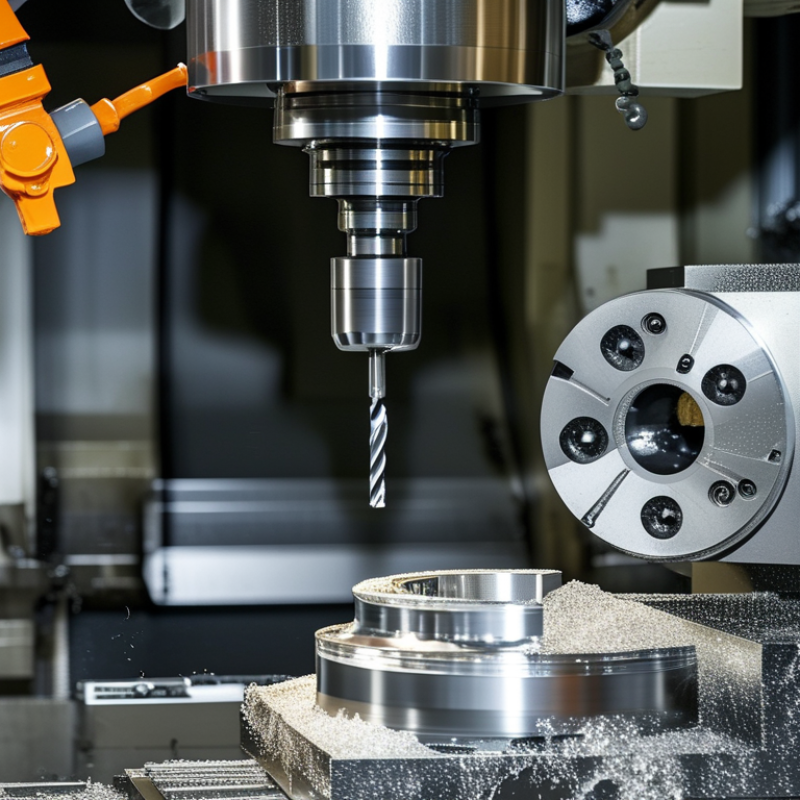
Table of Contents [Hide]
Turn-Mill CNC Machines Defined: Turning, Milling, and Multi-Tasking Functions
A turn-mill CNC machine combines turning and milling in one controlled workspace. Turning rotates the workpiece against a cutting tool, creating diameters, shoulders, grooves, and threads. Milling moves rotating tools across the part, producing slots, flats, holes, and angled features. One machine handles both operations.
This multi-tasking function can reduce setup changes and repeated fixturing. A shaft may receive an external diameter, cross-drilled hole, and milled keyway without leaving the chuck. That matters. Fewer transfers can improve alignment and shorten production time. It also reduces handling marks and measurement interruptions.
However, performance depends on programming quality, tool access, workholding, and operator judgment. The machine is capable, not magical.
In daily production, the strongest advantage is process control. A programmer can combine turning, live-tool milling, probing, and automatic tool changes within one sequence. Fewer separate operations may simplify inspection records and improve repeatability across batches. Careful engineers still check chip evacuation, spindle loading, tool wear, and thermal growth. Small errors can become expensive when several features share one setup. I would not choose a turn-mill system only because it offers more functions. The part geometry, yearly volume, tolerance requirements, and available skills must support that decision. Sometimes a simpler machine remains the more reliable choice.
Brands
Proudly Trusted by Top Suppliers Worldwide







Let us know and we will automate, together to fit your industrial needs.
 +91-97254 16844
Clients
Proudly Trusted by Top Companies Worldwide


Do you need Help? Get in touch.
X
Please fill out the form below and we will get back to you as soon as possible.